Mrithunjoy Kaushik
6 min read
Shares of Snail, Inc. SNAL have lost 40.8% over the past month compared with the Zacks Gaming industry’s 37.2% decline. The stock has underperformed the Zacks Consumer Discretionary sector’s decline of 17.1% and the S&P 500’s rise of 20% over the aforementioned period.
Investor sentiment surrounding Snail has likely been weighed down by weak bookings, elevated development expenses and concerns over Nasdaq compliance. Nasdaq recently granted conditional approval for continued listing, requiring the company to restore stockholders’ equity to at least $2.5 million and disclose the transactions undertaken to achieve compliance. While the outcome remains uncertain, the risk of delisting if the conditions are not met has likely added to investor caution toward SNAL shares.
SNAL One-Month Price Performance
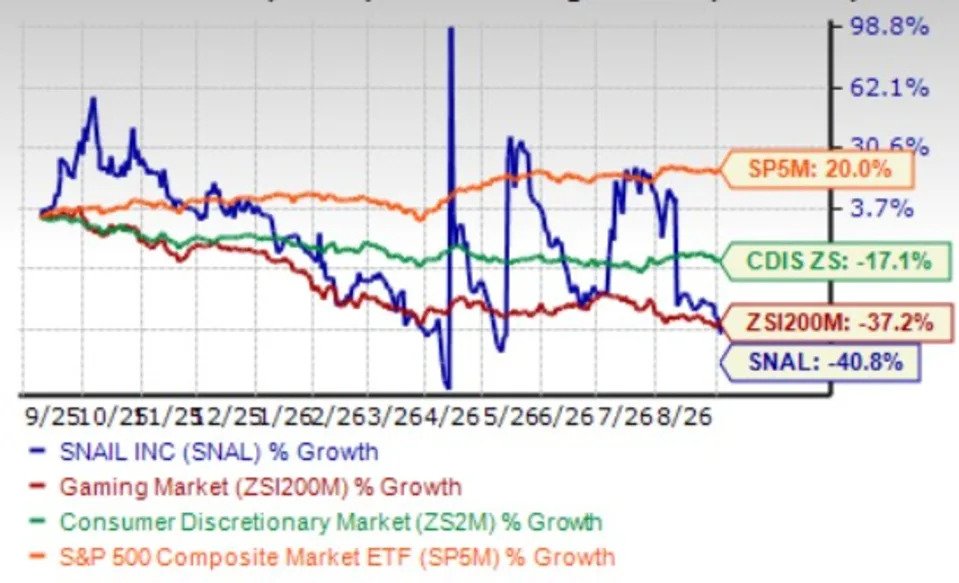
Image Source: Zacks Investment Research
From a technical perspective, SNAL stock is currently trading below its 50-day moving average, indicating weak near-term momentum.
SNAL Stock Trades Below 50-Day Moving Average
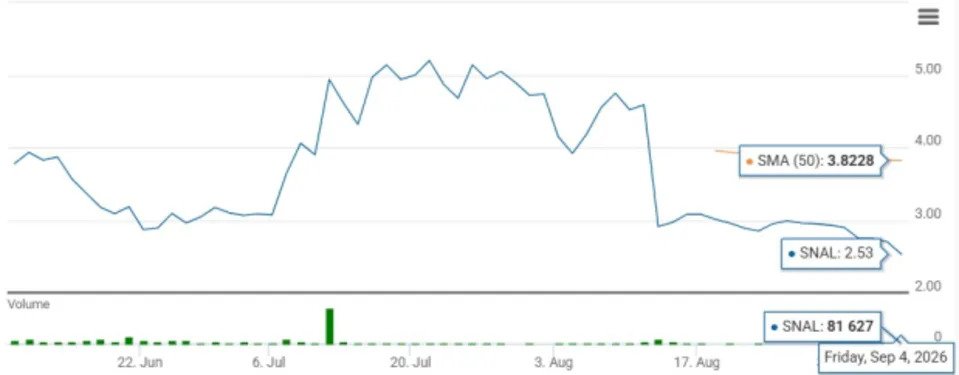
Image Source: Zacks Investment Research
Given the significant pullback, investors might be tempted to buy the stock. But is this the right time to invest in SNAL? Let’s find out.
Weaker Bookings and Higher Expenses Weigh on SNAL
Snail faces softer sales across its core ARK titles. Second-quarter sales of ARK: Survival Ascended and ARK: Survival Evolved decreased $4.2 million and $1.8 million, respectively, year over year. Bookings declined to $21.8 million from $27.1 million, primarily due to lower sales of these titles. The continued maturation of Survival Evolved and the shift toward Survival Ascended and its related downloadable content could make it more challenging to sustain franchise revenues.
First-half performance also points to uneven monetization. Total units sold increased to 4.2 million from 3.7 million a year earlier, but bookings declined to $48.7 million from $49.4 million. Sales of ARK: Survival Ascended and Bellwright benefited from promotional pricing, while ARK: Survival Evolved continued to mature. Higher unit volume therefore did not translate into stronger bookings, highlighting the challenge of converting sales activity into increased customer spending.
Development spending and administrative expenses present another hurdle. Higher research and development and general and administrative costs weighed on operating performance, with the quarterly EBITDA loss widening to $3 million from $2.4 million a year earlier. Although net loss narrowed to $3 million from $16.6 million a year earlier, the improvement was primarily driven by the absence of a sizable prior-year income tax provision, limiting its significance as evidence of an underlying operating recovery.