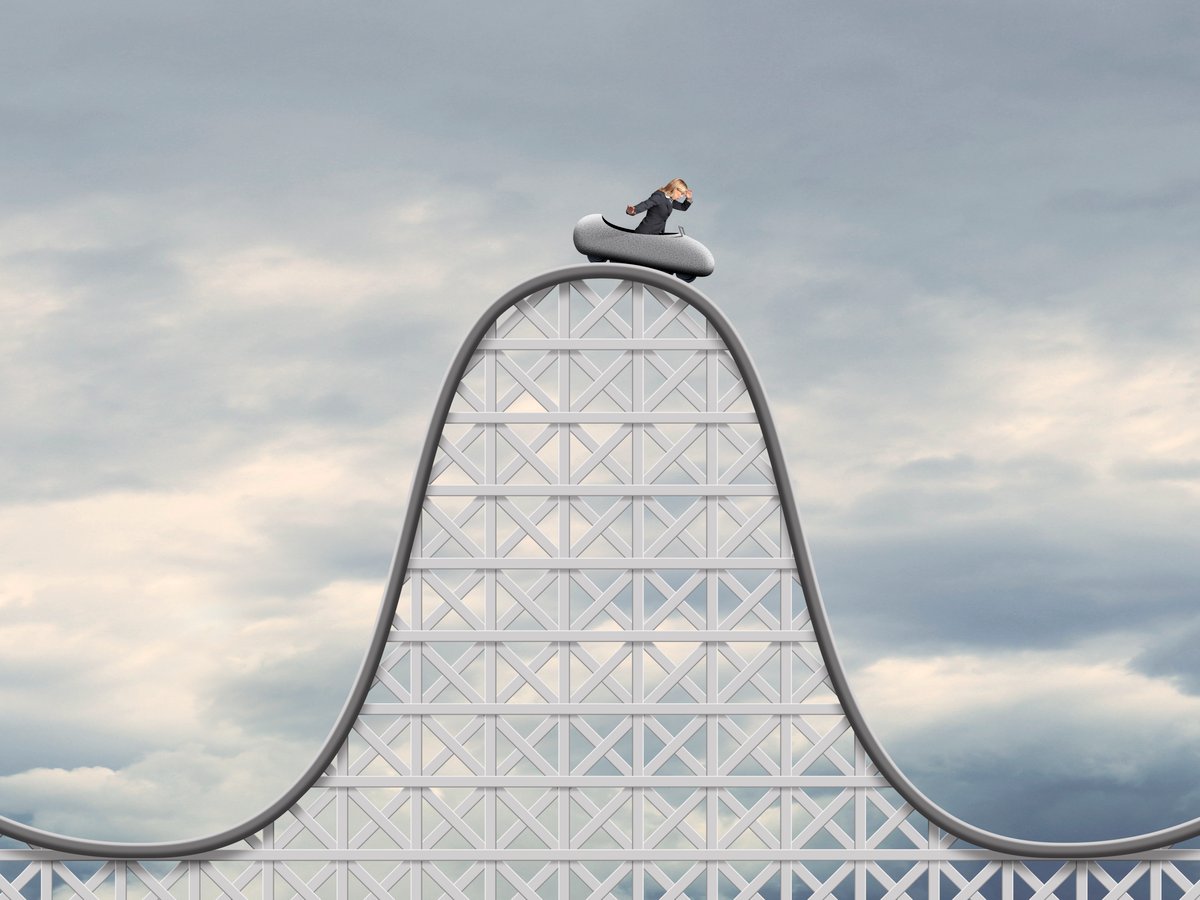
Nobody enjoys watching their portfolio lose money.
A $100,000 portfolio that drops 20% suddenly shrinks to just $80,000. If the decline deepens to 30%, the balance drops to $70,000. When those losses start piling up, the natural reaction is to hope stocks recover as quickly as possible.
Missed Nvidia in 2009? This Rare Signal Is Flashing Again. In 2009, a “Double Down” signal flashed for a little-known chipmaker called Nvidia. For the first time in years, that same “Total Conviction” signal is flashing for a company 1/100th the size of Nvidia. Continue »
But investors who are still years or decades away from retirement might want to look at market sell-offs differently.
Falling stock prices may reduce the value of the investments you already own. But they also reduce the price you pay for new shares. And history shows just how valuable those opportunities can become.

Big declines have historically produced big opportunities
Fidelity recently did a study that looked at S&P 500 (SNPINDEX: ^GSPC) returns following corrections and bear markets over more than 70 years of data.
Following the bottom of a 10% to 19% correction, the S&P 500 returned an average of 30% over the following year. After bear market losses of more than 20%, the average one-year return following the bottom was even better at 37%.
Of course, there’s no guarantee the next sell-off will produce similar results. And there’s definitely no way to know exactly when the market has reached its bottom before it happens. That’s why there’s no point in trying to predict it.
Instead, the best course of action would be to keep investing regularly in something, such as the Vanguard S&P 500 ETF (NYSEMKT: VOO).
Here’s a good example to consider for why this works.
Suppose you’re investing $500 every month. If the Vanguard S&P 500 ETF trades at $500 per share, that investment buys one share. If a bear market drops the price down to $400, that same $500 investment buys 1.25 shares. You’re accumulating 25% more shares without doing a single thing differently.
When it comes to considering the impact of a potential recovery, more shares equal better.
The opportunity is bigger for investors with longer time horizons
A market crash will hurt the value of equities, and that’s an important consideration for retirees or anyone who expects to need their money soon.
But the thought process is different for someone with 10, 20, or 30 years until retirement. These folks can still buy stocks at lower prices and allow every new contribution to purchase more shares. Those shares would have more time to participate in an eventual recovery.