- KIM Jaelim
- jaelim@mk.co.kr
- Input :
- 2026-09-27 16:59:09
Despite the shock of U.S. Treasury yields, the domestic stock market is widely expected to strengthen to the 7000-point KOSPI in the fourth quarter of this year on the back of a recovery in investor sentiment in the semiconductor sector.
Of course, the short-term fluctuations are expected to be affected by how the U.S. stock market will respond to government bond rates due to the nature of semiconductor-related stocks that actually determine the flow of the stock market.
In the short term, it is expected to be more sensitive to domestic and foreign indicators such as Korea’s September import and export trends, U.S. memory company Micron’s quarterly earnings, U.S. Personal Consumption Expenditure (PCE) price index and employment.
Currently, the supply and demand of the stock market in the semiconductor industry is led by the “purchase of treasury stocks” of Samjeonics, which is statistically classified as other corporations.
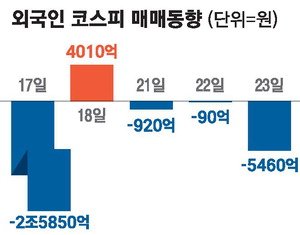
Since the U.S. 10-year Treasury bond yield surpassed 5% during the day on the 14th, foreign net selling has continued, but Samsung Electronics and SK Hynix have bought their own shares, firmly supporting the lower side of the index. Last week, foreigners’ daily net sales exceeded KRW 1 trillion, but stock prices rebounded as the selling intensity weakened ahead of Samsung Electronics’ dividend base date (30th).
In the past, when long-term interest rates rise, it was common for semiconductor stocks, which are representative growth stocks, to weaken. This is because higher interest rates will increase the discount rate applied to future performance, which will be disadvantageous to stock prices.
However, analysts say that semiconductor companies are out of the influence of interest rates as their profit flows have improved significantly recently. Some say that Samsung Electronics and SK Hynix have escaped from the interest rate-sensitive growth stock stage by presenting predictable performance and active shareholder return measures.
Kim Hak-kyun, head of the research center at Shinyoung Securities, said, “In the face of rising interest rates, semiconductors may have a limited impact on stock prices as they belong to industries with a short duration (requiring period) until profits are made.”
Hana Securities presented a scenario in which market interest rates are unlikely to fall in the short term even if international oil prices fall, given the stock market trend led by artificial intelligence (AI) facility investment (CAPEX).
When oil prices fall, industries with rising stock prices are usually diversified to consumer goods, but if investment continues to increase and interest rates rise, upward momentum may be concentrated in some key industries. In other words, buying could be concentrated in a small number of industries such as information technology (IT) hardware, power devices, and semiconductors, which are highly linked to U.S. facility investment.
However, global assets ‘rebalancing (redistribution)’ that occur at the end of the quarter are considered short-term variables. Seo Sang-young, a researcher at Mirae Asset Securities, said, “While the bond market has been sluggish in the aftermath of the interest rate hike, the stock market has risen on AI and performance expectations,” adding, “By the end of the quarter, pension funds and insurance companies, which need to meet their target weight, may have a rebalancing volume to sell stocks and buy bonds.”
On top of that, the fact that Samsung Electronics and SK Hynix’s share buybacks will be almost completed next month could dampen individuals and foreigners’ confidence.
[Reporter Kim Jerim]