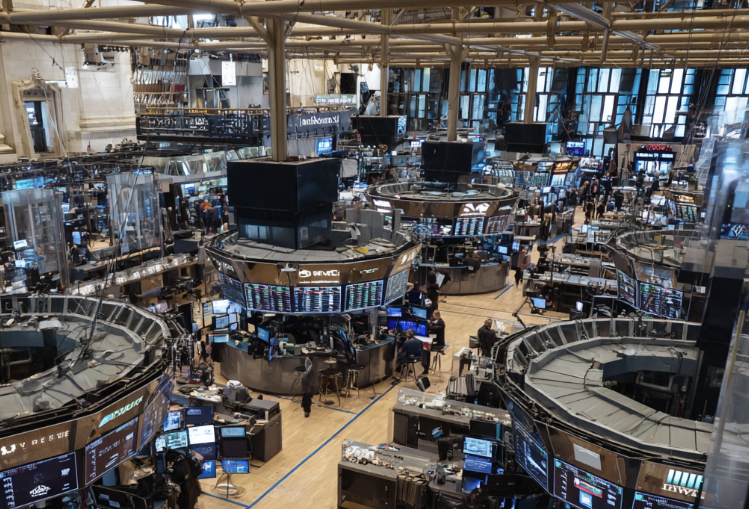
On October 29, 1929, America took a hard turn down a very rocky road.
That day, known as Black Tuesday, marked the final and most devastating leg of the stock market crash that brought the Roaring Twenties to a screeching halt and ushered in the Great Depression.
The numbers from that awful time are staggering.
By 1932, 25% of all American families did not have a single employed wage earner in the household.
One year later, the U.S. unemployment rate had climbed to an astonishing 24.9%, meaning 12.8 million people were entirely without work.
“Once I built a railroad, now it’s done,” Bing Crosby sang in 1932. “Brother, can you spare a dime?”
Average worker wages plummeted by 42.5% between 1929 and 1933, while roughly 75% of those still working were reduced to part-time schedules. Between 1930 and 1933, roughly 9,000 banks collapsed across the nation.
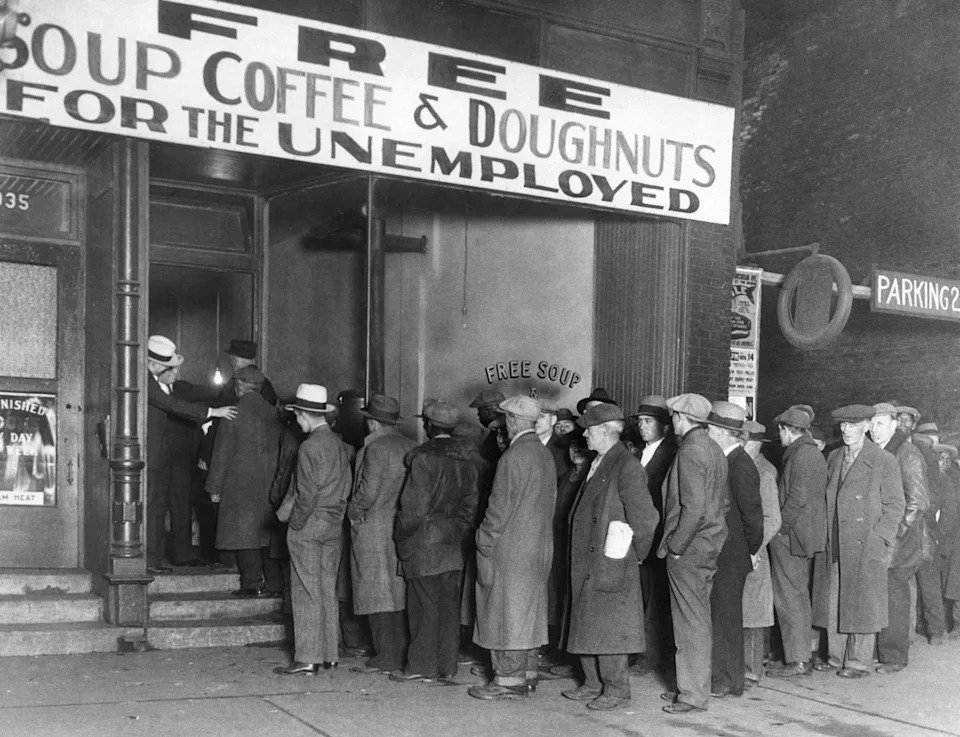
Breadlines and soup kitchens sprang up in cities, but they were regularly overwhelmed.
“Ten men in our Country could buy the World, and ten million can’t buy enough to eat,” humorist Will Rogers wrote in his Aug. 16, 1931, newspaper column.
‘Hoover Stew’ and ‘Slumgullion’
But people had to find some way to eat, and they resorted to desperate measures to put food on the table.
Standard fare in working-class neighborhoods included “Slumgullion,” a cheap stew of meat, macaroni, and tomatoes, and “Hoover Stew,” sliced hot dogs cooked with macaroni and canned tomatoes, which was sarcastically named after President Herbert Hoover.
In 1930, James Dewar, a baker at Continental Baking Co., found himself with idle baking equipment when strawberries, a key ingredient in the company’s Little Shortcake Fingers, went out of season.
Dewar filled the shortcakes with banana cream, which was more accessible and had a longer shelf life, creating what would become the Twinkie.
Kraft introduced its macaroni and cheese in 1937, and it became an instant hit since one box could feed a family of four for just 19 cents.
That same year, Hormel introduced Spam, combining pork shoulder with ham to create a cheap product that didn’t need to be refrigerated.
And then there was ice cream.
When Prohibition took effect in 1920, many saloons, bars, and breweries had to change their businesses to survive.
Some turned to soda fountains, while major breweries including Yuengling and Anheuser-Busch (BUD) moved into ice cream production to keep their workers employed.
The Depression slowed ice cream production and consumption compared with the 1920s, but the frozen treat endured.