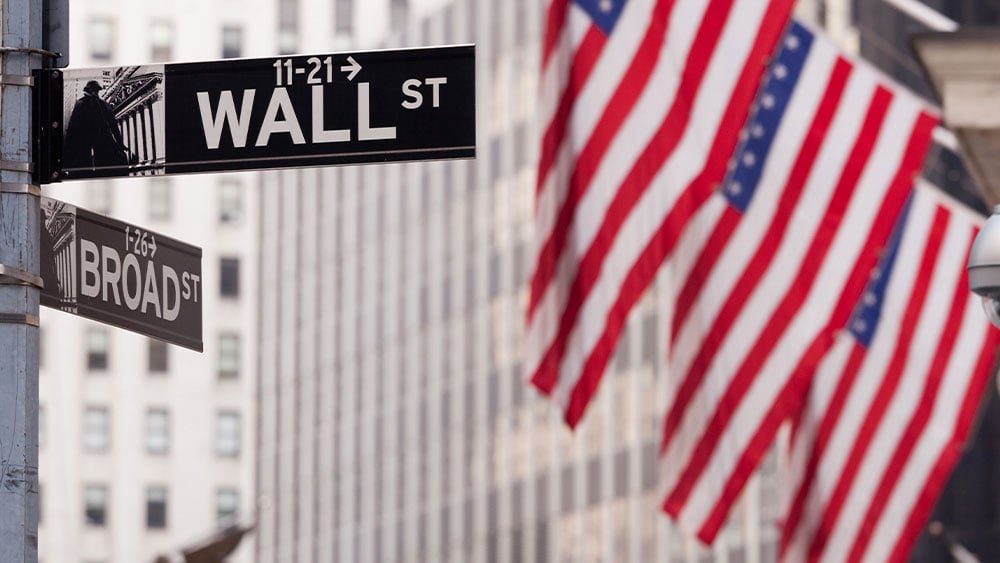
What is the stock market? It’s one of the most-discussed topics in the news media. It’s responsible for the life savings and future retirements of millions of Americans. It’s a big reason why many of us go to work every day. But what is it, really?
The stock market is a public worldwide trading network where investors can buy and sell stocks in publicly traded companies. Every day, millions of investors around the world use the stock market to make decisions about how to put trillions of dollars to work.
As of September 2026, the total market cap of the world’s stock markets was about $164.5 trillion, with about 59,500 listed companies. Investing in the stock market can help build the economy by deploying capital to productive companies, innovative entrepreneurs, and growing industries.
When you buy stock in a company, you own a share of that company’s future earnings. Investing in the stock market is a way of making a long-term, win-win bet on a brighter future. It’s a way of participating in human creativity, collaboration, and prosperity. And most of the time, it’s one of the best ways to make money and grow your wealth.
Let’s take a closer look at what the stock market is, how it works, and one low-cost index fund that I think is the best buy for the long-term future.

Image source: Getty Images.
What is the stock market? Start with stock exchanges
Where do people go to buy and sell stocks? You don’t have to do it in person anymore, or by calling a stockbroker. Instead, stocks are often traded online through brokerage platforms. But the stock market consists of the stock exchanges in major financial centers like New York, home of the famous New York Stock Exchange (NYSE) on Wall Street.
The Nasdaq is an electronic stock exchange that is more tech-focused. Many of America’s most valuable tech companies are listed on Nasdaq rather than the NYSE. Other countries have their own stock exchanges in major cities like London, Tokyo, Toronto, Paris, Shanghai, and Frankfurt.
What are stock indexes?
When people talk about the stock market, they often mean stock market indexes that list and track the performance of stocks. Major stock indexes are in the news headlines and scrolling across financial news TV screens each day. These include:
- Dow Jones Industrial Average (DJIA), also known as “the Dow” for short. This is a list of 30 companies considered important and indicative enough of the overall U.S. economy to be worth following.
- S&P 500 index (^GSPC +0.66%): The S&P 500 index lists the top 500 largest publicly traded companies in America, making up about 75%of the total value of the U.S. stock market.
- Nasdaq-100 index: The Nasdaq-100 is a tech-heavy index that tracks the 100 largest non-financial companies on the Nasdaq stock exchange. In recent years, the Nasdaq-100 has outperformed the S&P 500, but tech stocks can also be risky and volatile.
When people say, “the stock market is up today” or “the stock market is going through a sell-off,” they’re often talking about the S&P 500. S&P 500 index funds are an easy, low-cost way for everyday people to invest in the stock market. Some investors buy only these 500 stocks as a large part of their portfolios.
How to beat the stock market
When people say they want to beat the stock market, they usually mean that they want to invest in a way that delivers a stronger return than the S&P 500. Many people try to do this by picking stocks — buying shares of individual companies they believe will make lots of money in the future.
Here’s the problem with trying to beat the stock market: It’s really hard. Over the past 98 years, the S&P 500 has delivered average annual returns of 10%. Many professional money managers can’t do better than that, at least not for long. They might pick a portfolio of winning stocks today, or they might try to chase trends, only to find out that in the next three to five years, their overhyped stocks go into a big downturn while the “boring” S&P 500 powers on ahead.
One index fund to “beat the stock market”: VTI
That said, if I had to pick one index fund to outperform the S&P 500, I would choose the Vanguard Morningstar Total Stock Market ETF (VTI +0.69%). This is a low-cost index fund that holds an impressively diversified portfolio of 3,507 U.S. stocks. When you buy VTI, you get the 500 largest companies of the S&P 500, along with thousands of other stocks.
The Vanguard Morningstar Total Stock Market ETF has delivered average annual returns of 14.7% over the past 10 years, and about 12.6% over the past five years. If you keep investing consistently and hold onto your stocks for the long run, these returns will be more than enough to build significant wealth.

Today’s Change
Current Price
I don’t know if VTI will beat the S&P 500 in 2027, or next year, or the year after that. But I’m a long-term investor, so I don’t want to limit myself “only” to the 500 largest stocks. I want small-cap stocks (the up-and-coming companies of the future). I want mid-cap stocks (mid-sized companies with a balance of risk and reward). I want growth stocks and value stocks.
VTI gives me all of that in one index fund. By owning the entire U.S. stock market, it might well beat the S&P 500 over the long run.