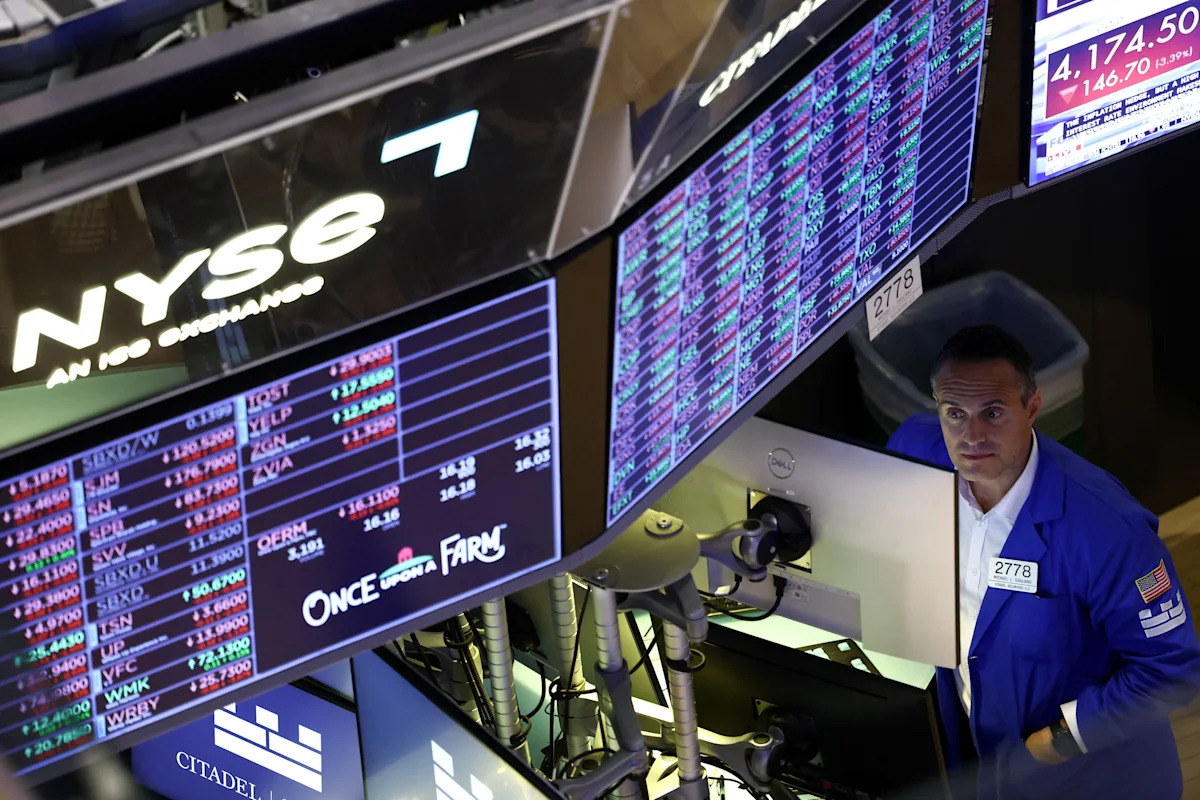
Before we get worried about recessions or market crashes, let’s put a 10% drop in context. Going back to 1980, the S&P 500 has fallen 10% or more in roughly half of all calendar years, and a correction of that size has historically shown up about once every 12 to 18 months.
What makes a 10% decline packed into a single month unusual isn’t the size of the drop, it’s the speed: that kind of compressed move tends to show up during sudden shocks rather than the slower grind most corrections take. Even so, it’s happened before, and the market has recovered every time.
My goal here isn’t to predict whether October brings one. It’s to point to three consumer businesses whose underlying demand doesn’t particularly care what the stock market does that month.

Image source: Getty Images.
1. Procter & Gamble sells things people restock without thinking
Procter & Gamble (PG +1.77%) makes Tide, Pampers, Crest, and Gillette. These products are the kind of household basics people buy again almost automatically, recession or not. That steadiness shows up in the numbers. P&G generated more than $87 billion in revenue in its 2026 fiscal year and returned over $15 billion to shareholders through dividends and buybacks.
The dividend itself is the real tell. P&G has paid one for 136 consecutive years and raised it for 70 years straight, including a 3% increase this past summer. This dividend streak makes P&G a Dividend King, which is a company that has delivered 50 or more years of annual dividend increases. A company doesn’t keep that streak alive by accident; it does so by generating cash through good years and bad ones. So, if the market drops 10% in October, P&G’s shelf space in millions of households doesn’t shrink as much with it.

Today’s Change
Current Price
2. Costco’s members keep paying even when they’re nervous
Costco Wholesale (COST +0.60%) just posted its fifth consecutive quarterly earnings beat, but the number that matters most for riding out a downturn is its membership renewal rate, which climbed to 92.3% in the U.S. and Canada. That means more than 9 in 10 members who could cancel their membership chose to keep paying for it, even as other parts of their budgets presumably got squeezed. Costco now counts 84.1 million paid members, and digital sales grew more than 20% for the year to top $33 billion.
Membership fees are nearly pure profit, collected whether or not the stock market cooperates, which gives Costco a cushion most retailers don’t have when consumers pull back on discretionary spending elsewhere. You don’t need a membership to walk into Walmart. You aren’t giving any guaranteed money to Walmart unless you buy something. With Costco, that’s different.

Today’s Change
Current Price
3. TJX thrives precisely when shoppers get cautious
TJX Companies (TJX +1.79%), the parent of T.J. Maxx, Marshalls, and HomeGoods, has grown its comparable sales for 34 consecutive years, according to Inc., a streak that spans multiple recessions. That’s not really a coincidence, as off-price retail tends to attract more shoppers, not fewer, when people start looking for ways to spend less on brand-name goods, which is exactly the behavior a market sell-off often triggers in nervous consumers.
TJX just raised its full-year profit forecast and laid out plans to grow toward 7,500 stores globally over the long term. A stock market drop doesn’t change why someone wants a discount; if anything, it adds to the reasons for why this ticker would be a great buy and hold if we see a dip this month.

Today’s Change
Current Price
None of this means these stocks would be immune to a 10% market decline; in a broad sell-off, nearly everything gets pulled down with it, at least for a while. The point is what happens after: businesses selling the basics of life, like laundry detergent, discounted clothes, and grocery memberships, keep collecting revenue the whole time, which is why their stock prices most likely will recover faster and more reliably than more speculative names.