Space Exploration Technologies (SPCX +1.25%) has been the most-talked-about stock of the year, and it’s finally starting to take flight. It’s only up 4% since its first-day closing price, but it’s trading up 55% since it bottomed out in August.
It has become the sixth most valuable company in the U.S., with a $2.2 trillion market cap, but Nvidia (NVDA -0.52%) is keeping its top spot, getting closer to a $6 trillion market cap. If I had a choice of investing $10,000 in either one, here’s what I would do.
The case for SpaceX: Massive opportunities
It hasn’t paid to bet against Elon Musk in the past. Tesla has revolutionized the auto industry, and Tesla stock has gained 23,440% since going public in 2010. He has also been involved in several other major tech companies, including PayPal Holdings and OpenAI.

Image source: Getty Images.
SpaceX is the culmination of many of Musk’s innovations, bringing together the SpaceX rocket-launching business, the Starlink satellite broadband business, and the SpaceXAI artificial intelligence (AI) model. These are exciting innovations that are already in motion and making money, and the company sees a massive addressable market. It’s planning to go to Mars, set up shop on the moon, and put data centers into space.
In the company’s first earnings report since going public, SpaceX demonstrated robust growth across its businesses. Total revenue increased 92% year over year, and net loss nearly halved to $541 million. The Starlink business reported $1.7 billion in operating income, a 79% increase over last year, and doubled subscribers to 12 million, while the rocket business remains the largest commercial rocket-launching business in the world. The two segments work together, since many of SpaceX’s launches bring Starlink satellites into space. Starlink has more than 11,000 satellites in low Earth orbit and has plans for 100,000 in total to provide coverage to every spot on Earth.

Today’s Change
Current Price
SpaceX also plans to have 1 million Starmind AI satellites, which are mini data centers in space. Management sees its biggest opportunities in AI, and it has signed some important deals recently, including one with Anthropic, which will rent Nvidia chips from SpaceXAI’s data centers, potentially worth $84.5 billion through 2029.
The risks for SpaceX fall into two main camps. One is that there are many expectations, and the company may not meet them. The second is that the stock appears very expensive, trading at 69 times trailing 12-month sales.
The case for Nvidia: It’s the power behind AI
Nvidia has skyrocketed as the power behind AI development. Its best-in-class graphics processing units (GPUs) have the necessary parallel processing power to drive generative AI, and it releases advanced platforms every year. This year, it has released the Vera Rubin series, which has “10x agent throughput at scale compared with the previous-generation Nvidia Grace Blackwell platform,” according to the company. The line includes a full computer system with several types of chips, including the central processing units (CPUs) that are critical components of agentic AI.

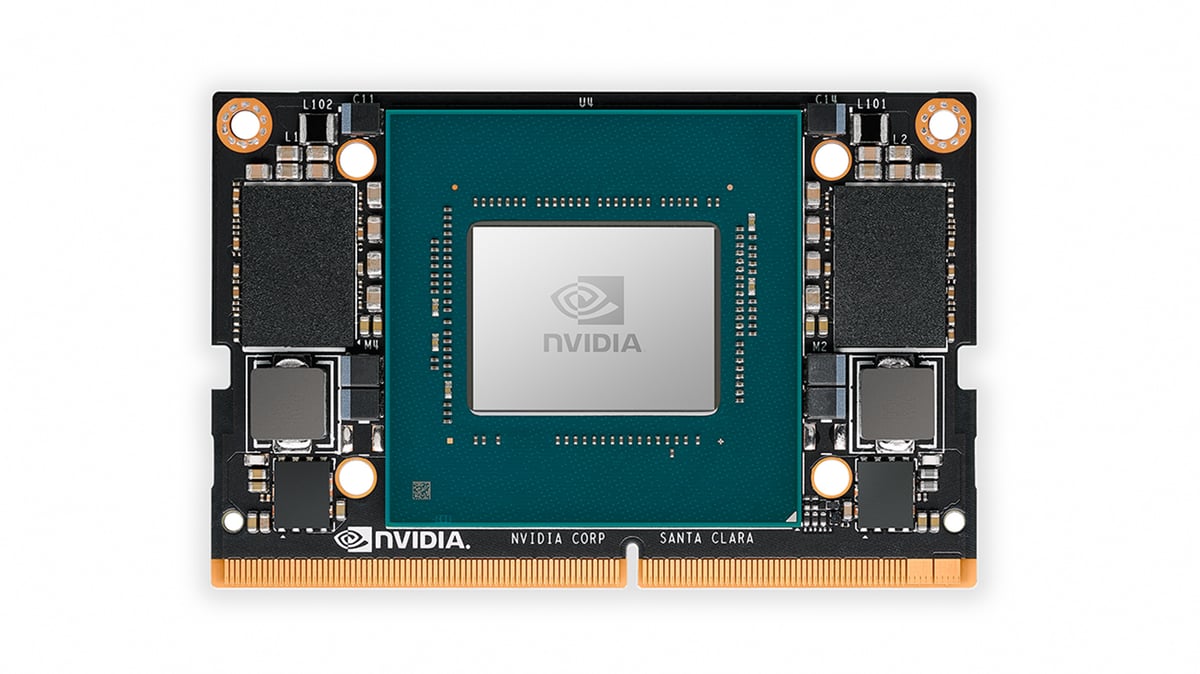
Image source: Nvidia.
Revenue has recently been accelerating as the major hyperscalers ramp up spending. In the 2027 fiscal second quarter (ended July 26), revenue more than doubled to $96.2 billion, and gross margin improved from 72.4% to 75%. CFO Colette Kress has already given an outlook of 70% sales growth in 2028, although she said that without its supply constraints, sales would double.
Nvidia has relationships with all kinds of companies in several mutually beneficial deals. For example, it has a $2 billion stake in cloud computing company CoreWeave, which in turn buys its chips, and SpaceX recently announced a deal to buy $40 billion worth of Nvidia chips for its data centers. Most well-known is probably its relationship with Amazon. Amazon offers Nvidia GPUs to its Amazon Web Services (AWS) cloud clients, and it just purchased another 2 million, while Nvidia uses AWS services.

Today’s Change
Current Price
Analysts are predicting higher AI spend, and a nice piece of that goes to Nvidia. Goldman Sachs forecasts $1 trillion in global spend this year and frames its predictions as a percentage of U.S. gross domestic product (GDP). It predicts 1.8% of U.S. GDP in 2026, rising to 2.5% in 2027 and 2.8% in 2028.
On top of all that, Nvidia stock looks cheap, trading at 30 times trailing-12-month earnings. The market is already pricing in next year’s slowdown.
The verdict: SpaceX vs. Nvidia
Don’t worry, I’m not going to tell you to split it in half. I’m actually going to go with Nvidia. SpaceX could have massive opportunities, but I’m not convinced it’s a buy at this price. It would also be good to see a few more quarters of growth data to better assess its risk.
That leaves Nvidia, which has a proven track record and a highly profitable business at an attractive price.