You don’t need to own shares of Nvidia (NVDA) or Tesla (TSLA) individually to have a sizable bet on Big Tech.
Anyone who owns an S&P 500 index fund already owns both, along with other stocks that comprise the Magnificent Seven. Collectively, those seven companies account for nearly 35% of the benchmark.
Truth be told, for the better part of the past three years, that concentration was a good thing. Big Tech powered the market higher, driving record gains in retirement and brokerage accounts.
For perspective, Fidelity Investments reported that average 401(k) balances reached a record $155,800 in Q2 2026, up 13% year over year, backed by market gains and continued savings.
Also read: 40-year market veteran shares S&P 500 outlook for 2027
But something has changed in 2026.
Wall Street veteran Ed Yardeni, who has spent years favoring major technology stocks, says the S&P 500’s other 493 companies are now outperforming the celebrated seven.
And he thinks the shift has a lot to do with who’s paying for the AI boom, and who’s positioned to profit from it.
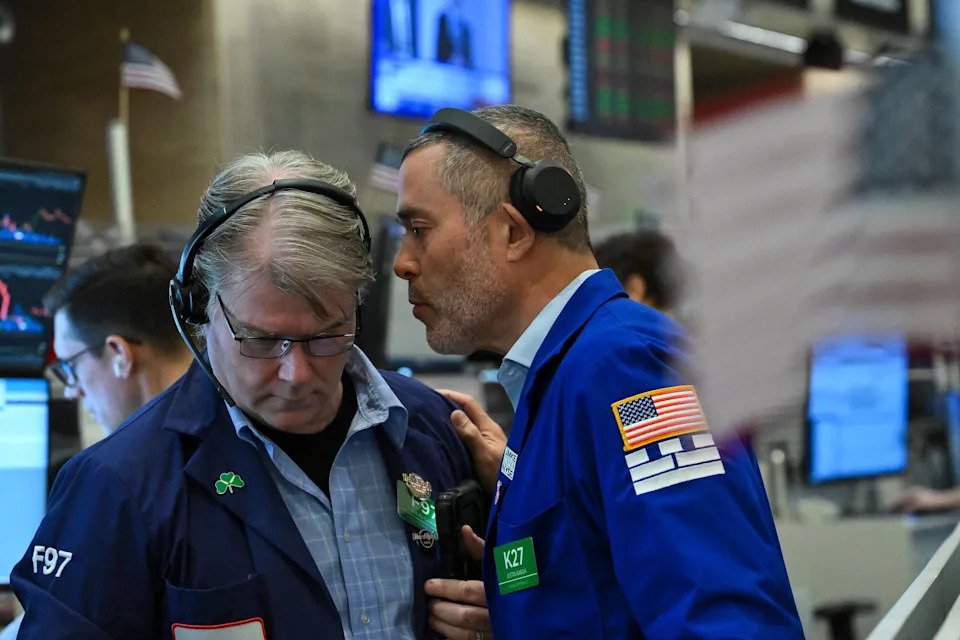
ANGELA WEISS / Getty Images
The Magnificent Seven are no longer running away from the S&P 493
For years, especially since the AI boom took off following the release of OpenAI’s ChatGPT, betting on America’s biggest tech companies has been one of the easiest ways to outperform the broader stock market.
The Magnificent Seven, which includes Apple (AAPL), Microsoft (MSFT), Nvidia (NVDA), Amazon (AMZN), Alphabet (GOOGL), Meta Platforms (META), and Tesla (TSLA), were almost unstoppable.
In 2023, the group surged 76%, compared with just 11% for the other 493 companies in the S&P 500, according to J.P. Morgan Asset Management.
The dominance persisted in 2024, when the seven gained 48% versus 14% for the rest. In 2025, they won again, returning 23% compared with 13%.
That’s a tremendous run, particularly given how much these stocks influence the retirement accounts and index funds owned by millions of Americans.
But 2026 is telling a different story.
In his October 19 market commentary, veteran Wall Street strategist Ed Yardeni reported that his “Impressive 493” had gained 14.1% year-to-date, outperforming the Magnificent Seven’s 10.2%, based on his ETF comparison.
Yardeni foresees a shakeup coming.
In December 2025, after roughly 15 years of favoring major technology stocks, he recommended underweighting the Magnificent Seven, anticipating stronger competition and better opportunities elsewhere in the market, as reported by Reuters.
Interestingly, the shift isn’t happening because Big Tech’s profits have fallen off a cliff.