Some companies don’t keep their ambitions secret. They swagger onto the stock market and draw plenty of attention with a splashy IPO and big promises (lookin’ at you, Tesla).
But some incredibly successful stocks are sleeper hits: They quietly sit on the market doing nothing until one day, bam! Their shares take off like a rocket, and everybody wonders how they didn’t see it coming.
Missed AI’s “Act 1”? Act 2 Could Be 14x Bigger. Most investors think they missed the AI boat because they didn’t buy Nvidia in 2005. But according to our analysts, we’re only at the end of “Act 1″—the R&D phase. “Act 2” is the global rollout. Continue »
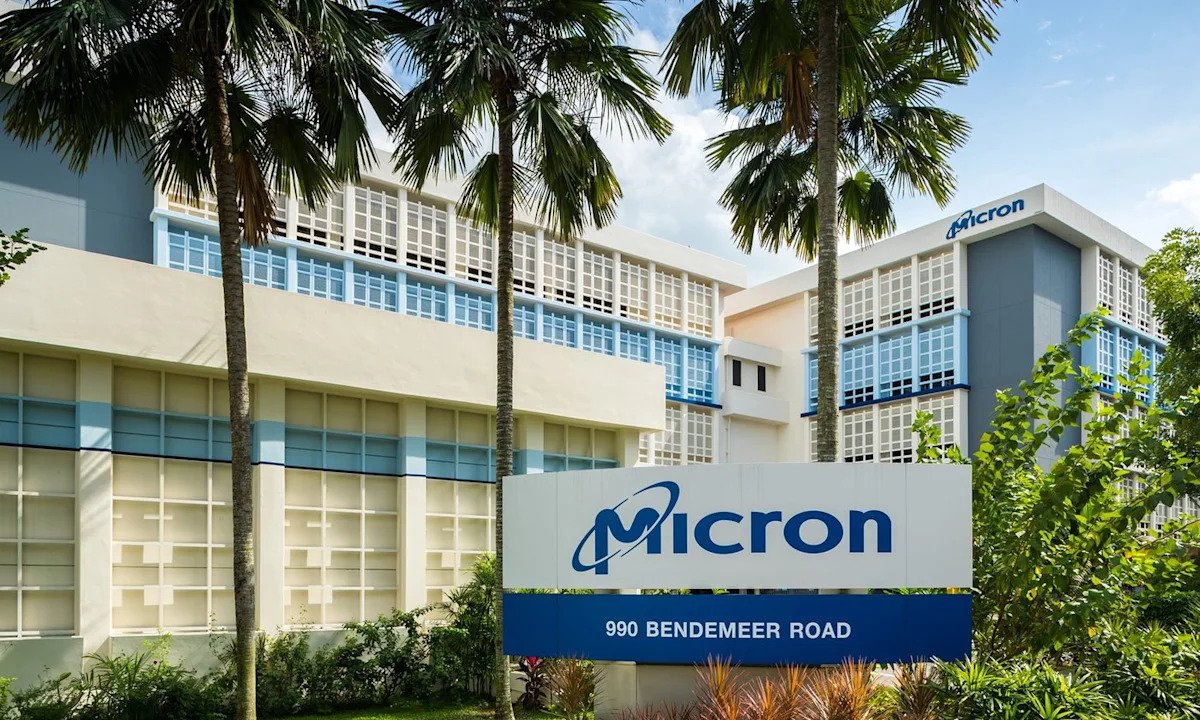
That’s what happened to memory chipmaker Micron Technology (NASDAQ: MU) in late 2025: Its shares had languished for years until a global memory shortage and AI data center boom took the stock stratospheric. Between June 25, 2025, and June 25, 2026, the chipmaker’s shares grew more than 850%.
If you were lucky enough to invest $10,000 in Micron on that day in 2025, you’d have had $95,370 a year later. Even today, after shares have dropped 25% from those highs, you’d still have $70,970. Not enough, perhaps, to fund a full retirement, but a nice chunk of change.
So, what about right now? Could buying $10,000 in Micron today set you up for life?
Strong earnings vs. market jitters
It’s ironic that even though Micron’s share price has grown astronomically since June 2025, its price-to-earnings ratio — how its share price compares to its profits — has actually gone down. In June 2025, shares were trading at about 22 times earnings. In June 2026, at its peak, it traded at about 27 times earnings. Today, it’s trading at about 12 times earnings.
Why would a wildly successful company that’s grown its revenue by 256% and its per-share earnings by 879% in 16 months have a cheaper valuation than it did before?
The simple answer is that the market doesn’t expect the good times to last, for two reasons.
Why the market looks down on Micron
The first reason is that this has happened before to memory chip stocks, and it didn’t end well. Prices for dynamic RAM (DRAM) memory spiked in 2020-2021 during the pandemic tech-buying surge. After expanding capacity to meet that demand, memory producers wound up with a supply glut, and prices crashed in 2023.
This time around, Micron has tried to protect itself against such a price crash by signing multiyear supply deals with its customers to lock in price floors, allowing it to safely expand its capacity. That’s a smart move, but the market is also concerned about competition.