Vardah Gill
10 min read
A high dividend yield is typically the result of either a high dividend or a low share price. The latter is quite common in a slowing economy where sales and profits are beginning to fall. As the share price drops, the yield will go up, though not necessarily for the right reasons.
Several companies have offered high yields only to cut or eliminate the dividend later. That’s been the case in the telecom space in the past. More recently, we’ve seen it with banks and oil companies. Shell’s dividend cut in 2020 was a real shock to dividend investors, as it had so long been regarded as one of the bedrock companies of the dividend universe. Conagra Brands also cut its dividend by 50% in July 2026 as its business was under pressure. The move was driven by shrinking margins and the need to free up cash for debt reduction and a turnaround. It wasn’t so much a case of being unable to pay the dividend at that point in time as it was a decision to strengthen he company’s balance sheet over the longer term. Even companies with long records of dividend growth have faced such setbacks. Explore 10 Dividend Aristocrats That Slashed Their Dividends to see examples of established dividend payers that have cut their payouts in the past.
Still, not every high yield is a trap. At times, markets can become excessively bearish on companies with solid fundamentals and sustainable cash flows. This can present opportunities to buy the shares at a discount to their intrinsic value. The issue is to work out which are the genuinely undervalued businesses and which are simply companies whose high yields are a reflection of underlying weakness.
Also read: Dividend Aristocrats Ranked By Yield: Top 10 Stocks
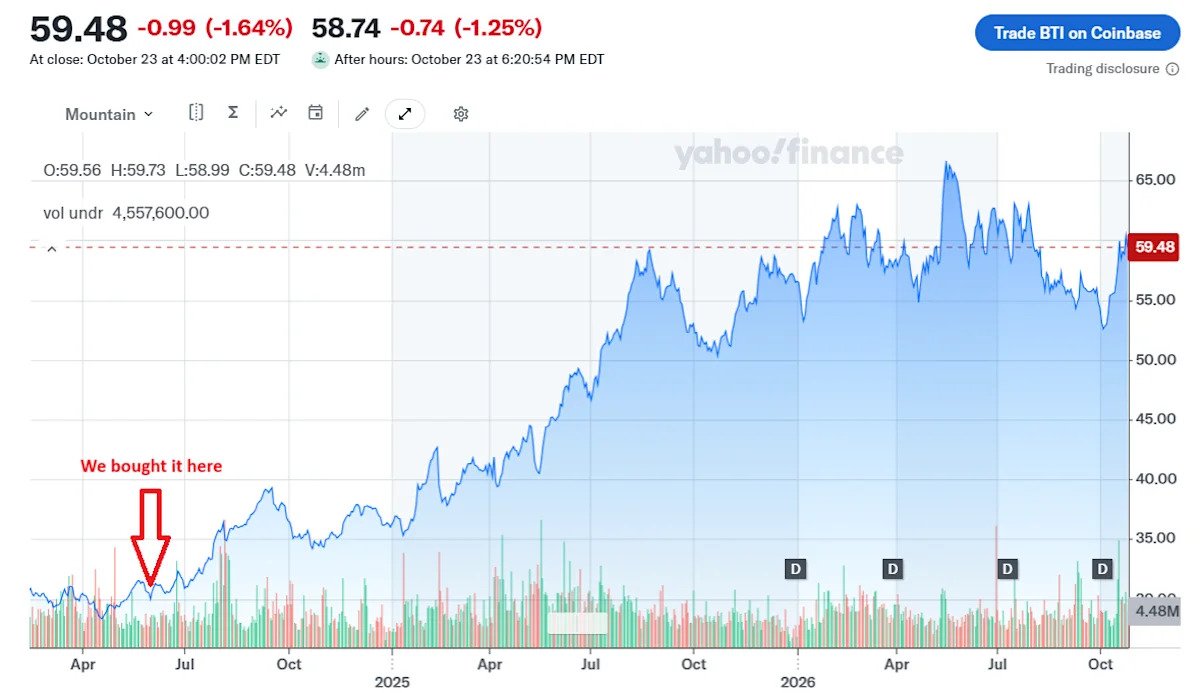
We saw this opportunity in British American Tobacco in June 2024. The stock had lost about 40% over the period as a result of the non-cash impairment charges. However, we thought that the underlying business was sound. The impairment charges that BTI had reported were charges against the acquired brands rather than equivalent cash outflows. The market treated the company as a melting ice cube and pushed its forward P/E multiple to 7.
So, we decided to add the stock to our Premium Readership Newsletter’s portfolio. At the time BTI had a dividend yield of around 10%. Over the next 16 months, the share price nearly doubled, and our subscribers also received a 10% dividend income. Read BTI’s full analysis here: British American Tobacco Pays a 6% Dividend. Can its Business Sustain it?
Our own experience is that high-yield dividend stocks are worth looking at. An investor who can pick out the genuinely undervalued business from the ones with unsustainable payouts can achieve both good dividend income and good capital gains. Of course, that’s not assured in any way, and careful analysis of cash flow, debt, and dividend sustainability remains essential.