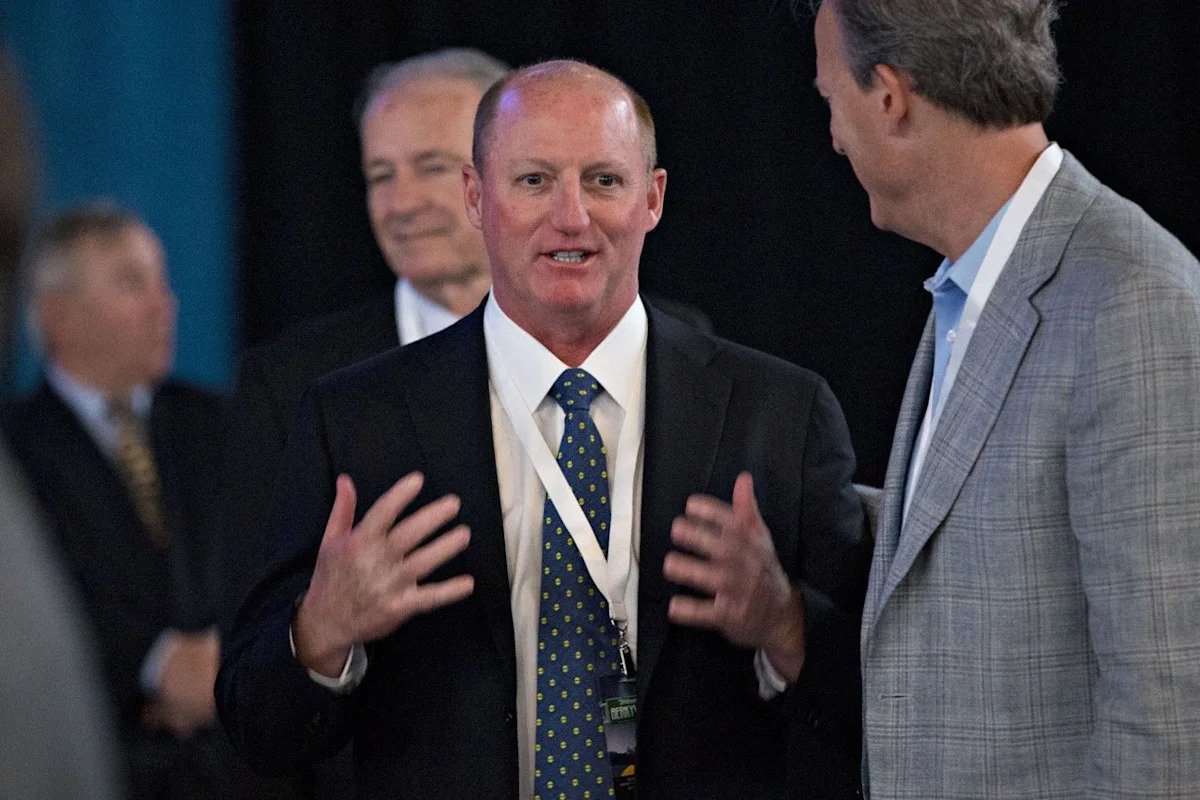
In Greg Abel’s 10 months as CEO of Berkshire Hathaway, arguably his most notable move has been loading up on Alphabet (NASDAQ: GOOG)(NASDAQ: GOOGL) stock.
While former Berkshire CEO Warren Buffett acknowledged that he initiated the position last year, Abel has purchased tens of billions worth of stock this year and built it into a top five position, with Alphabet consuming 8.2% of Berkshire’s massive roughly $364 billion portfolio.
Missed Nvidia in 2009? This Rare Signal Is Flashing Again. In 2009, a “Double Down” signal flashed for a little-known chipmaker called Nvidia. For the first time in years, that same “Total Conviction” signal is flashing for a company 1/100th the size of Nvidia. Continue »
While it has generated strong gains for shareholders in recent years, Alphabet stock just experienced its worst single-day decline in history.
What set the market ablaze with fear?
Following the release of its third-quarter results, Alphabet’s shares fell roughly 12.3% on Oct. 29, marking the stock’s worst single-day performance ever.
It was a double miss for Alphabet, as the company reported adjusted earnings per share of $2.67, well below the $3.02 expected by Wall Street analysts. Revenue of nearly $127.6 billion missed consensus estimates of $128.2 billion.
Revenue was still up 25% year over year, while cloud revenue more than doubled, showing that artificial intelligence adoption is benefiting certain parts of the business.
However, free cash flow deteriorated worse than the Street expected. Negative free cash flow came in at over $9 billion, while analysts had modeled negative $2.7 billion.
But the real concerns stemmed from how AI may be cutting into one of Alphabet’s largest businesses that has made the company what it is today. Google services revenue, which includes Search, YouTube advertising, subscriptions, and more, came in at $96.3 billion, more than $2 billion below analysts’ forecasts.
Search revenue also appears to be slowing, with year-over-year growth of 12% in the quarter, down from 19% in the first quarter and 17% in the second quarter.
While several factors impacted search revenue, such as foreign exchange fluctuations, Alphabet’s chief business officer, Philipp Schindler, also noted that “that the strong growth in AI Mode queries had an impact because of the lower monetization we were seeing in AI Mode.”
This has investors spooked about the overall ramifications for search from AI, as search is the company’s largest revenue line item and Google previously controlled a 90% market share in the traditional search market.