(TNND) — A wild week on Wall Street might just be the beginning of a volatile couple of months ahead, but one expert said the bottom isn’t likely to fall out of a market that’s skittish over what the midterm election outcome means for artificial intelligence investment.
“The bad feelings people have about AI are probably going to continue to push the market around and in a downward sense, but I don’t think we’re going to suddenly drop off by 10% in the next month,” said Stephen Kates, a certified financial planner and the principal at Charlotte-based Clocktower Financial Consulting.
Stocks surged Wednesday, buoyed by the certainty of an election outcome, Kates said.
A day later, “reality may have set in a bit more,” he said. Thursday was one of the worst days on Wall Street in months.
Existing concerns over AI infrastructure spending, investment returns, debt levels and more were amplified by fears that newly empowered Democrats at both the state and federal levels could slow data-center buildout and place more regulations on AI development.
AI is the growth engine of our economy at the moment, Kates said.
And technology companies led the losses on Thursday, though Kates said no sectors were spared.
“Out of the 100 largest companies in the S&P 500, eight were positive on the day,” Kates said.
“There was no escape” from Thursday’s “washout,” he said.
SEE ALSO: Trump says he’s open to working with Democrats, but blames them for market turmoil
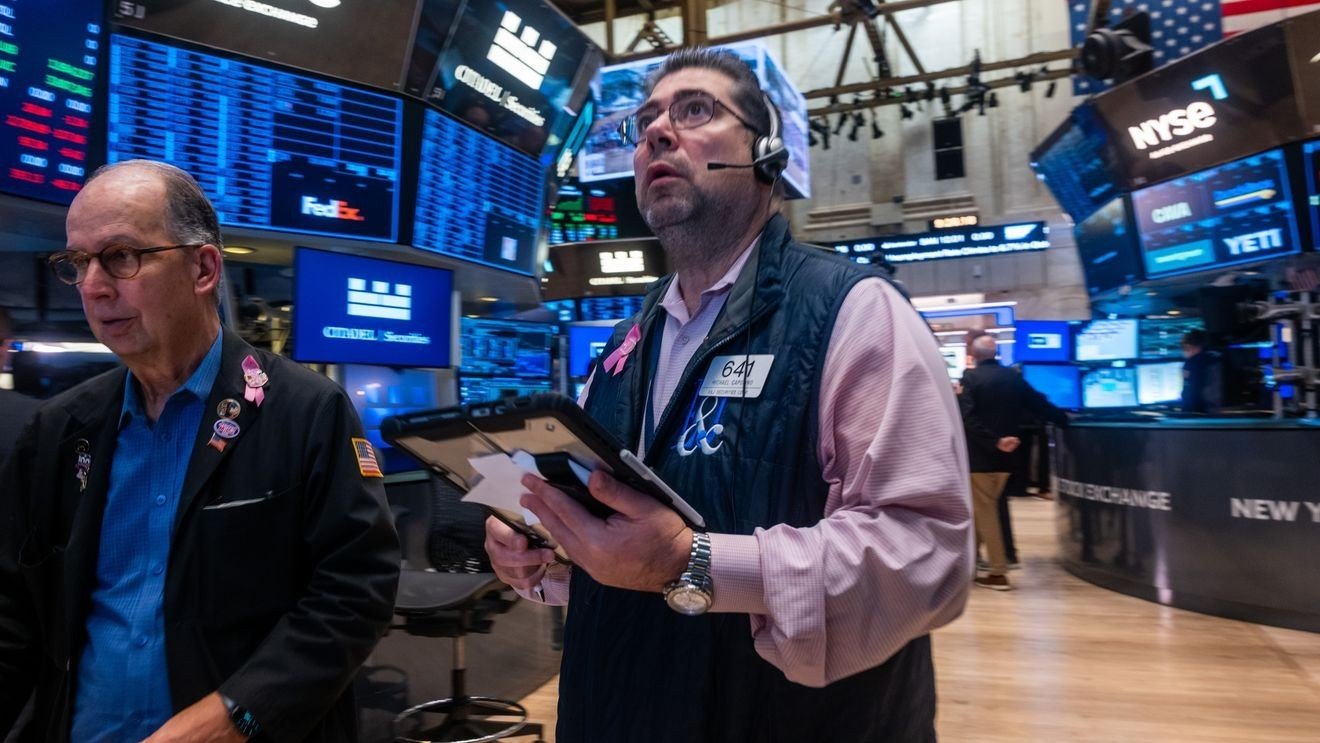
As of Friday afternoon, the stock market was seeing some mixed recovery from the day before.
But Thursday saw the S&P 500 and Nasdaq plummet to their worst days in more than a year and a half – since the markets were rattled by President Donald Trump’s sweeping tariff announcement in April 2025.
The S&P 500, coming off its best day in three months, fell 4.4% by closing Thursday.
The Nasdaq composite tumbled 5.5%.
The Dow Jones Industrial Average dropped 3.4%.
Kates said a separate semiconductor index administered by Nasdaq shed over 12% on Thursday for its worst day since early 2020.
Chip giant Nvidia fell 9.3%, a big drag on the market that saw plenty of other large tech companies take a hit.
RELATED STORY: Democrats vow AI guardrails as they prepare to take control of Congress
“The Thursday plunge was far more impactful, I think, both from a sentiment perspective and from just an overall wealth perspective,” Kates said of this week’s roller-coaster ride on Wall Street. “I mean, the drop was far bigger, and I think far more damaging to people’s psyches than the gain.”
Nasdaq fell to a level last seen more than six months ago. The S&P 500 fell to a level not seen since late July.
Kates said what happens with the S&P 500 is more applicable to the average American than what happens with the Dow and Nasdaq.
“The Dow has the nice eye-popping numbers of 1,500, 1,800 points, but that is just not very relatable to most people’s stock exposure,” he said. “And the percentage basis is also just much, much smaller in terms of its gains or losses. So, I think that the S&P better captures Americans’ exposure to the market.”
He said most Americans were probably happy with their investments in the summer, so they shouldn’t view Thursday as a huge hit to their progress.
And many whose stock market exposure comes through 401(k) retirement plans aren’t likely to cash out anytime soon. Kates said those funds also tend to swing less than the S&P 500 and Nasdaq because they are often actively managed diversified funds of stocks and bonds.
Kates said Thursday’s drop might be “a bit demoralizing” for the average American, but it won’t impact their day-to-day life or their ability to put gas in their car or food on their table.
“Could it become worse? Could a greater stock market drop cause people and companies to start to behave differently? Yes. But I think we’re far away from that,” Kates said.
Kates said the market could be in for a bumpy stretch, and it could grind lower over the next month or so.
“But not to a disastrous effect,” he said.
And Kates said he expects the stock market to do what it does over the long run: go up.
Company earnings should be “stable enough and high enough that the market will be higher” a year from now, he said.