The Bureau of Labor Statistics released the latest inflation reading this morning, showing the Producer Price Index (PPI) jumped 6.5% in October from a year earlier. That’s the biggest annual jump since 2022.
And it comes just three days after a hotter-than-expected Consumer Price Index (CPI) report. The market is now treating a rate hike at the Fed’s Dec. 9 meeting as a done deal. The question is no longer whether the Fed hikes, but by how much.

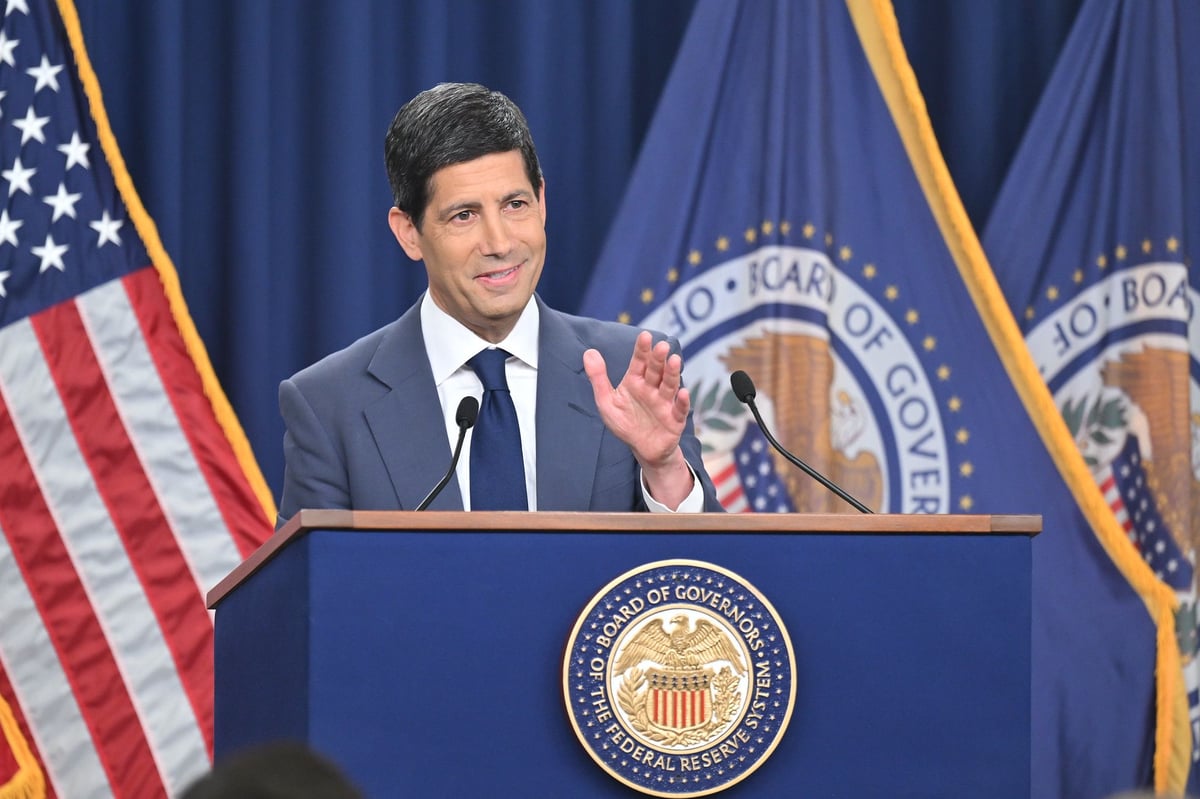
Image source: Official Federal Reserve Photo.
The answer may well rest on the last inflation numbers the committee gets before it makes a decision, and that report lands on Nov. 25, the day before Thanksgiving.
October CPI and PPI inflation reports: what they showed
The CPI report was released on Tuesday of this week, showing consumer prices rising 0.4% in October, above the 0.3% Wall Street was looking for. Core CPI — which strips out food and energy — also came in hot at 0.3%.
Then came today’s wholesale numbers — what businesses get paid before goods reach consumers. It was a mixed bag, with the overall monthly increase of 0.3% actually a touch below the expected 0.4%. But the core measure rose 0.3% and was in line with expectations. The overall annual rate climbed to 6.5%.
Fed rate hike odds: why a half-point December hike is possible
The Fed raised rates a quarter point in September, the first hike since 2023, and then held them steady in October’s 10-2 vote. A week ago, the odds of a half point hike in December were 0%, according to FedWatch, now they are sitting above 12%. On the flip side, a week ago the market saw a more than 23% chance that rates wouldn’t move at all. That’s now 0%.
Before the CPI report, Fed Governor Christopher Waller said that a half point “should be considered” if core CPI ran around 0.3% or higher. It came in at exactly 0.3%. For context, the last time the Fed raised rates by a half point was in December 2022.
PCE inflation report: the last read before the Fed meets
That’s the setup for the final release of inflation numbers ahead of the Fed’s December meeting. On Nov. 25, the Personal Consumption Expenditures (PCE) price index report will be released, which just so happens to be the Fed’s “preferred” gauge — current Chair Kevin Warsh has explicitly said the Fed’s target is 2% as measured by PCE.
If the PCE comes in hotter than expected, expect some turbulence.
Now, short-term movements in the market aren’t really the focus for long-term investors. Day-to-day movements are more noise than anything. However, with the S&P 500 (^GSPC -0.40%) heavily concentrated in an AI trade that is more and more reliant on debt, the Fed’s path matters more than it usually would.
Building data centers and filling them with chips is expensive, and companies are increasingly borrowing to pay for it — even cash-rich big tech players like Meta Platforms (META +2.90%) and Alphabet (GOOG -0.96%) (GOOGL -0.98%). If the Fed ends up going further than expected, the math on some of these data center projects will get harder to justify.
Where to invest $1,000 right now
When our analyst team has a stock tip, it can pay to listen. After all, Stock Advisor’s total average return is 831%* — a market-crushing outperformance compared to 209% for the S&P 500.
They just revealed what they believe are the 10 best stocks for investors to buy right now, available when you join Stock Advisor.
*Stock Advisor returns as of November 13, 2026.