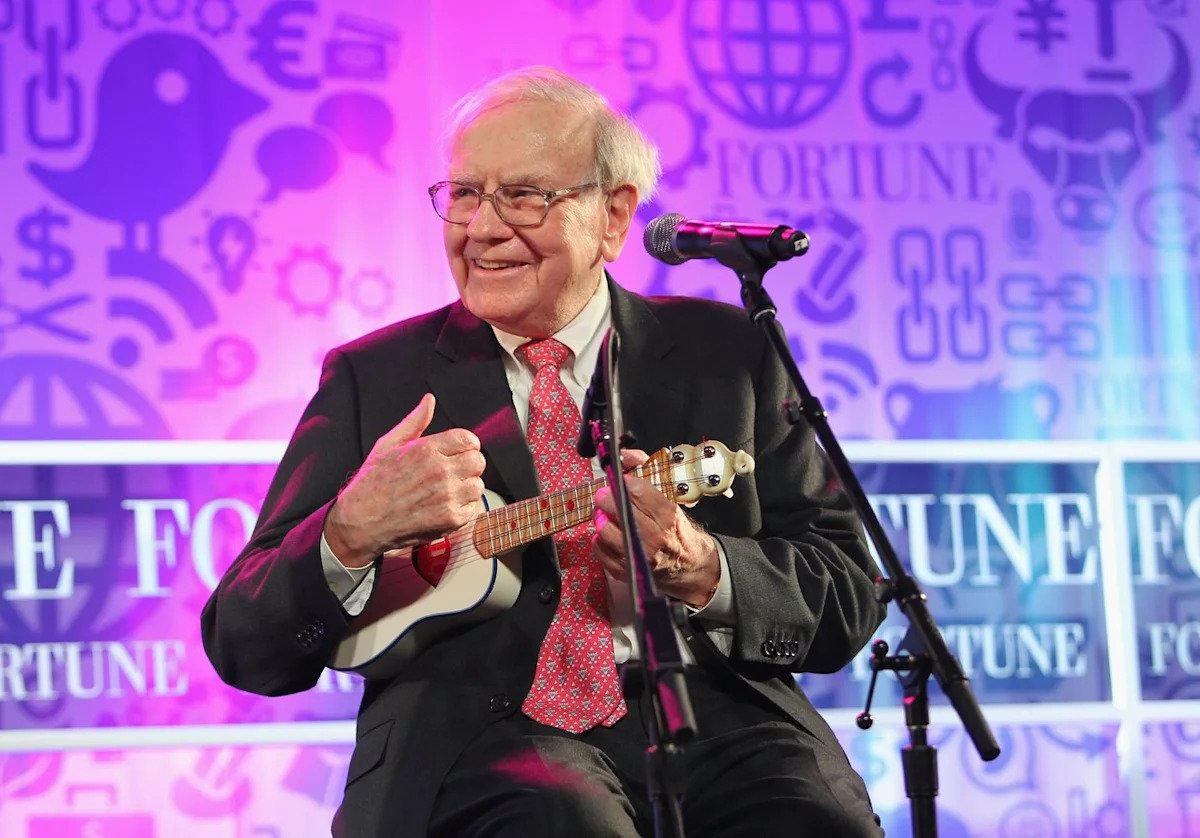
Warren Buffett is widely considered to be the greatest investor of all time. That’s not an official title, but there is tangible data supporting the Oracle of Omaha’s stellar reputation. As the head of Berkshire Hathaway (NYSE:BRKA) (NYSE:BRKB), Buffett delivered average annual returns of more than 19% over six decades. It’s hard enough to beat the market over a single 10-year period. Doing it for 60 years is extraordinary. But can investors still apply Buffett’s principles in today’s market? Let’s find out.
Image source: Getty Images.
Missed AI’s “Act 1”? Act 2 Could Be 16x Bigger. Most investors think they missed the AI boat because they didn’t buy Nvidia in 2005. But according to our analysts, we’re only at the end of “Act 1″—the R&D phase. “Act 2” is the global rollout. Continue »
The Warren Buffett way
Buffett’s investing strategy sounds simple on the surface. It boils down to buying shares in companies with strong moats at attractive prices and holding onto them for a long time. However, there is a lot more hiding under the hood. And we can glean important lessons from certain details.
For instance, Warren Buffett has historically avoided certain sectors, including technology. That doesn’t mean Berkshire Hathaway has never invested in any tech company. But Buffett himself focuses primarily on relatively simple businesses he understands well, that generate steady cash flows, and have business models that remain more or less unchanged over the long run.
This is an important aspect of the Oracle of Omaha’s investing philosophy. The easier it is to forecast a company’s future cash flows, the easier it tends to be to determine when it is trading at an attractive price, since, according to one school of investing, a business’ intrinsic value is just the value of all of its future cash flows discounted at an appropriate rate.
Buffett’s long-term mindset is another important aspect of his strategy. It’s always difficult to predict a stock’s short-term movement, but as Benjamin Graham, Buffett’s mentor, once said: “In the short run, the stock market is a voting machine. But in the long run, it is a weighing machine.” Since value drives long-term performance, short-term volatility is no reason to panic-sell.
Staying put over the long run also grants investors tax advantages while putting the magic of compounding to good use, especially with dividend stocks. This isn’t quite all there is to Buffett’s strategy. But it’s a good start.
Here’s how to do it
Emulating Buffett isn’t easy. Investors certainly shouldn’t expect returns similar to those of the Oracle of Omaha. If it were easy to pull that off, any number of Wall Street hedge fund managers would, but in fact, many of them fail to do so. Warren Buffett once bet $1 million that a low-cost index fund would outperform a group of hedge funds over a decade.