This year has witnessed one of the most paradoxical market environments in memory. Although the major indexes, led by the S&P 500, have remained buoyant through much of 2026, below the surface there has been what can only be described as a “stealth” bear market. But through the mixed performance and periodic volatility spikes, the market has also provided value-oriented investors with opportunities, which we’ll discuss here.
A Stealth Bear Market Is Hiding in the S&P 500
But first, consider that while the S&P has spent much of the last couple of months around 2-3% below its all-time high, more than 40% of S&P 500 stocks were at least 20% below their 52-week highs as of earlier this month. Even more tellingly, the average individual stock listed on the NYSE has entered bear market territory, trading roughly 21% below its 2026 peak, even though the headline indexes have masked much of this damage.
What this suggests is that we’re witnessing a classic internal correction in the broad market, with a relatively small group of mega-cap leaders keeping the SPX elevated even as most of its component stocks are underperforming. And the reason for the broader weakness isn’t hard to discover: It’s primarily related to surging longer-dated Treasury yields.
Indeed, the so-called “risk-free” discount rate for the 10-year Treasury isn’t far below the recent highs of 5.3%, its highest level since 2002. And since higher discount rates reduce the present value of future earnings and cash flows, it makes stocks appear less attractive at existing prices.
It’s no surprise, then, that the last several weeks have witnessed a soaring number of NYSE stocks making new 52-week lows, with many days showing new lows in the triple digits while new highs are sometimes merely low-double digits. Many of those new lows are bond funds or interest rate-sensitive equities.
Why AI Stocks Are Under Pressure
But while some rate-sensitive industries are still experiencing selling pressure, formerly strong AI-related names have lately been victims of the stealth bear, and for obvious reasons: Recent fears that the AI trade is “overdone” continue to percolate as of mid-November.
[text_ad]
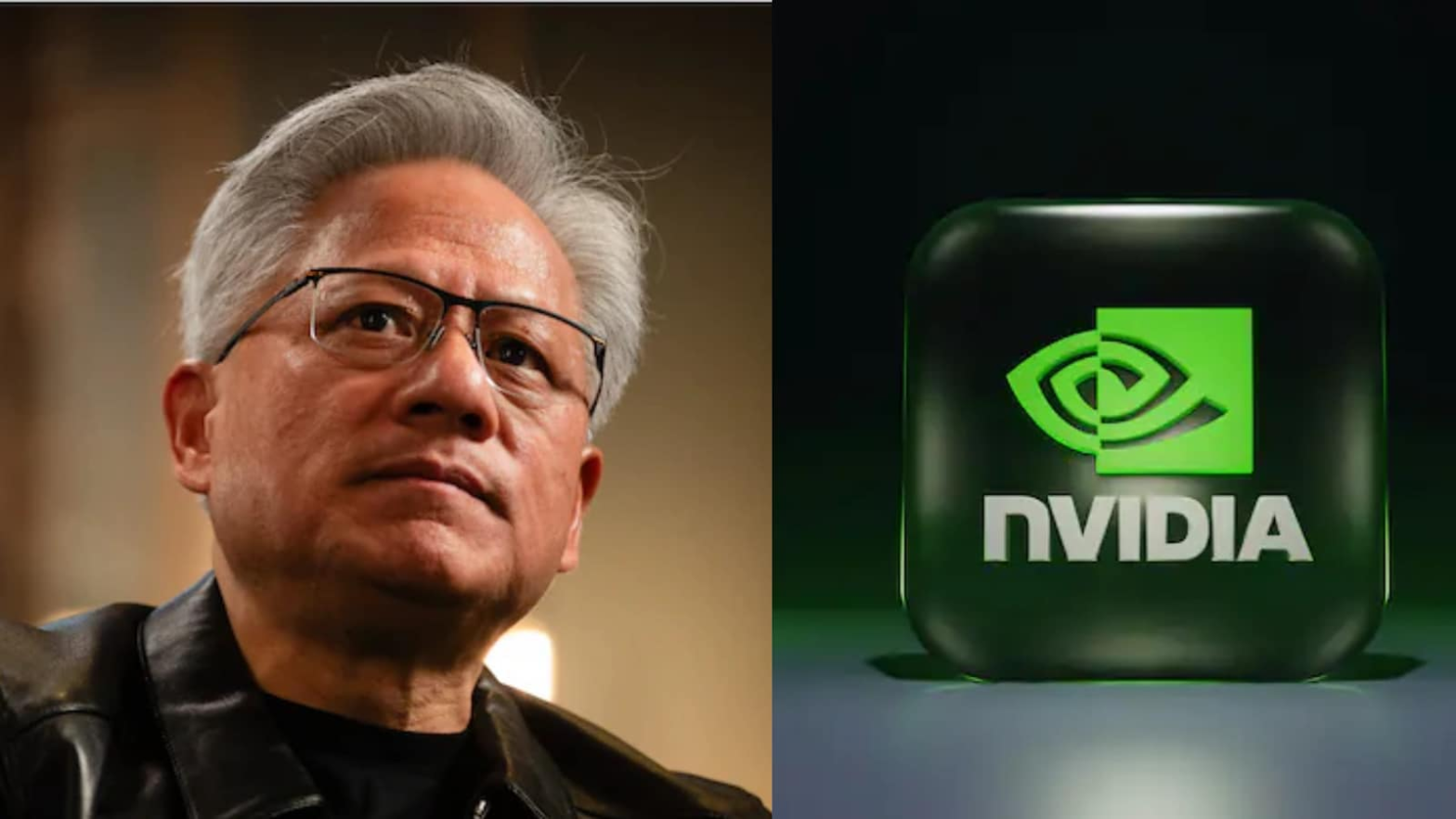
On that score, remaining under selling pressure as of this writing is one of the market’s core proxies for the AI buildout, Nvidia (NVDA), which fell to a 16-month low on November 12 after the sudden resignation of its CEO. The stock’s recent plunge reminded everyone that the all-things-AI trade remains tenuous after what looked like a possible “wash-out” bottom of the leading AI infrastructure and support stocks earlier this month.
As for why specifically investors are in panic mode over AI stocks, conventional thinking suggests that the market is moving from rewarding AI spending and growth potential to demanding evidence that the enormous investments in AI infrastructure—to the tune of hundreds of billions of dollars—will lead to worthwhile returns. Additional reasons include fears over the data center builders’ increasing reliance on debt financing—with the aforementioned rising interest rate environment contributing to these fears—as well as uncertainties over how quickly AI adoption will be monetized.
But here’s another possible reason: physical AI data center overbuilding. According to statistics from Cleanview, 68% to 75% of all tracked (mainly hyperscale) data centers in the U.S. aren’t yet operational and are either actively under construction or in the planning or announced phases. That’s a substantial development pipeline, and there’s no guarantee that all of this planned capacity will ultimately be needed or prove economically viable.
And while I may be stretching the analogy, I think it’s somewhat comparable to China’s infrastructure and property overbuilding trend of recent years that led to a prolonged property slump in that country.
Thus, it can be argued the market is worried that today’s oversized investments based on projections of future AI demand may not see the predicted returns materialize as quickly—or as strongly—as developers and investors anticipate.
To that end, a July study by McKinsey found that portions of the AI infrastructure ecosystem exhibit “bubble-like characteristics,” particularly among highly leveraged AI infrastructure intermediaries and companies with negative cash flow. And if the aforementioned debt financing and related interest rate concerns persist, this could make future financing more expensive and difficult to attain, thus amplifying the damage from increased worries over the overbuilding aspects of the data center boom.
As a result of these salient factors, I think avoiding the temptation to jump in and buy the beaten-down AI names is ideal right now. Instead, I suggest that tech sector participants wait for the semiconductor indexes and ETFs to confirm a bottom instead of assuming the worst is over for the AI sector.
Where Value Investing Opportunities Are Emerging
That said, even within the current “stealth bearish” environment, the market has provided some attractive opportunities for value-oriented investors. Indeed, many of the turnaround stocks in our Cabot Turnaround Letter portfolio have benefited in recent weeks from the recent rotation towards value stocks in the wake of the AI crash. And that’s because beaten-down value stocks are often among the biggest beneficiaries of broad market weakness, as investors gravitate toward deeply discounted, previously overlooked equities—particularly those with strengthening financial profiles—in anticipation of an eventual market rebound.
And it’s worth noting that most beneficiaries of a confirmed market bottom are typically those stocks and industry groups that did the best job of resisting the selling pressure during the correction period. And right now, many of the stocks fitting that description are in the defensive healthcare and consumer staples sectors.
To that end, these two areas are where I see the most opportunity for turnaround-focused investors going forward and where I suggest participants looking to hedge their tech sector exposure look closely.
[author_ad]

For over 20 years, he has worked as a writer, analyst and editor of several market-oriented advisory services and has written several books on technical trading in the stock market, including “Channel Buster: How to Trade the Most Profitable Chart Pattern” and “The Stock Market Cycles.”