Micron Technology (NASDAQ:MU) investors have endured a rough time in recent months, as shares have pulled back nearly 36% from their June 25 peak, when the stock reached a 52-week high.
Though Micron stock regained some momentum in August and September, the past one and a half months have again been quite brutal. The semiconductor specialist has lost 29% of its value during this period. Each share of Micron now trades at just under $800, as of this writing.
Missed AI’s “Act 1”? Act 2 Could Be 16x Bigger. Most investors think they missed the AI boat because they didn’t buy Nvidia in 2005. But according to our analysts, we’re only at the end of “Act 1″—the R&D phase. “Act 2” is the global rollout. Continue »
However, looking at the share price in isolation isn’t the right way to value a stock. We will have to take a closer look at Micron’s valuation and growth to decide if it is worth buying following its recent slide.
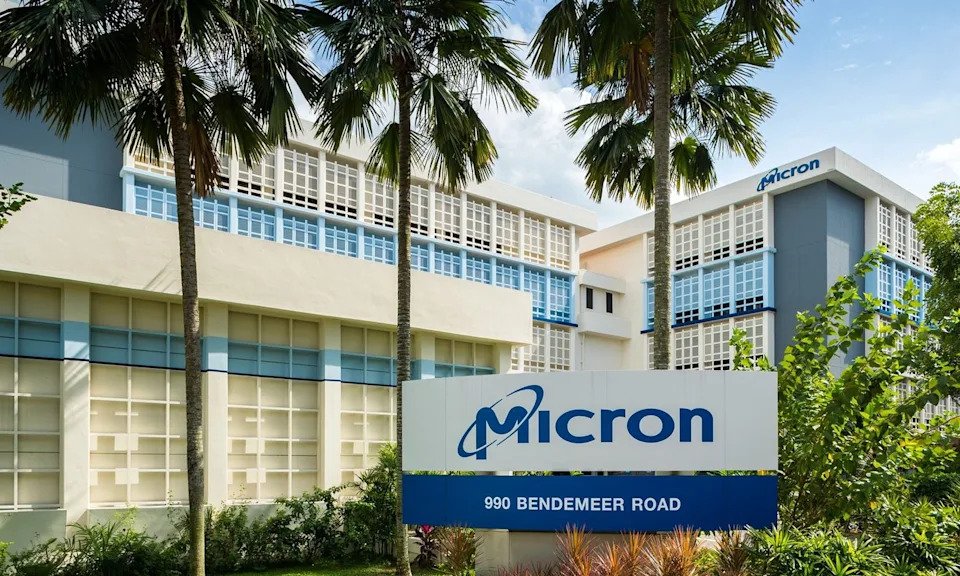
Image source: Micron.
The valuation clearly tells investors to buy Micron hand over fist
Micron has a price-to-earnings ratio of 11, and its forward earnings multiple of 4.4 is even more attractive. The stock’s price-to-sales ratio is just under 7. For comparison, the tech-focused Nasdaq Composite index trades at 39 times earnings and 5 times sales.
The pace of Micron’s growth makes it clear that it is too cheap to ignore right now. The artificial intelligence (AI)-driven memory demand has supercharged Micron’s growth, leading to exponential growth in revenue and earnings in recent years.

MU Revenue (Quarterly) data by YCharts
Importantly, the company can keep growing at a solid pace in the future amid tightening memory supply. Dell Technologies CEO Michael Dell recently noted that memory constraints could last until 2030, driven by strong AI demand outpacing supply. In fact, Dell isn’t the only one who thinks so. Micron’s rival SK Hynix also expects the memory shortage to last until the end of the decade, while Taiwanese memory manufacturer TeamGroup also sees memory supply tightening next year.
Semiconductor manufacturing equipment provider ASML Holding, which is witnessing terrific growth in the memory segment, noted recently that it won’t be able to meet demand for its chipmaking equipment for the next couple of years. As such, I won’t be surprised to see Micron sustain its healthy earnings-per-share growth beyond 2027.
Analysts are predicting a 134% increase in Micron’s earnings in fiscal 2027 (which will begin later this month). However, they expect significantly slower growth of 17% in fiscal 2028, which is unlikely. That’s because the memory shortage could continue pushing up prices and drive a stronger-than-expected increase in Micron’s revenue, which will eventually result in a healthier bottom-line performance compared to analysts’ expectations.