Micron Technology (NASDAQ:MU) just finished the best year in its history. Fiscal 2026 revenue reached $133 billion, and adjusted earnings hit $75.52 per share. Yet the stock closed at $778.31 on Friday, Nov. 13, about 38% below its June 25 high of $1,255, and trades at just 4.4 times next year’s expected earnings.
That looks cheap, and management’s own comments about demand and supply for memory chips suggest it is. But valuation multiples that low usually signal that investors expect a slump, and memory has burned shareholders before. Here’s why the market is so skeptical and why Micron could still be worth more than double today’s price.
Missed Nvidia in 2009? This Rare Signal Is Flashing Again. In 2009, a “Double Down” signal flashed for a little-known chipmaker called Nvidia. For the first time in years, that same “Total Conviction” signal is flashing for a company 1/100th the size of Nvidia. Continue »
Micron says memory will stay scarce for two years
At an Oct. 21 technology webinar, Micron President Scott DeBoer argued that memory is now the main bottleneck holding back the performance of artificial intelligence (AI) systems. He said the company doesn’t “see a period of time where memory is not going to be in short supply in the next two years.”
Part of the reason is high-bandwidth memory (HBM), the stacked chips that sit beside AI processors. HBM uses far more factory wafers than standard memory to deliver the same amount of storage, and that gap will continue to widen.
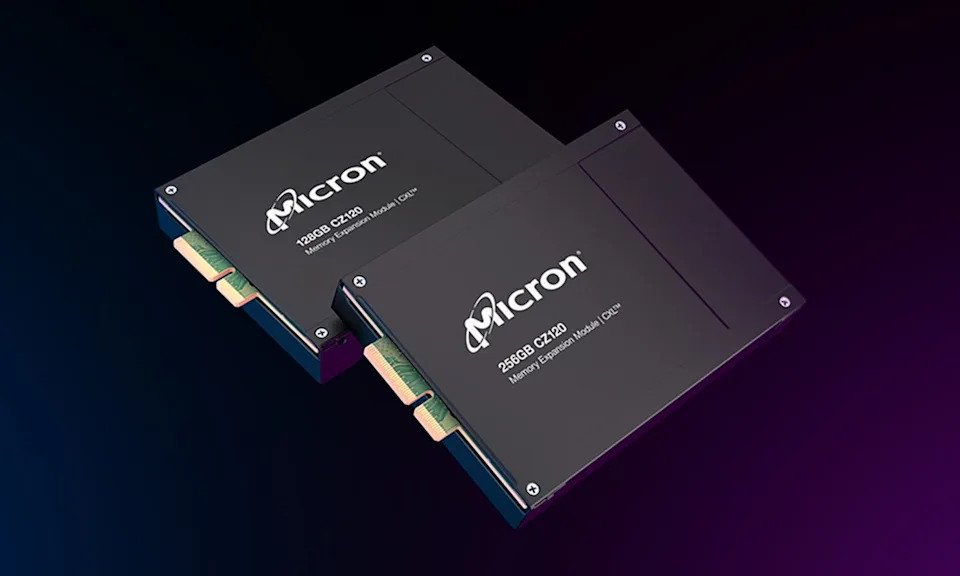
Image source: Micron.
Micron is designing custom HBM with customers, and its next manufacturing generation, called 1-delta, should ramp in the second half of 2027. It plans to spend about $10 billion over the next decade on a long-term research lab to discover new growth opportunities.
The stock could more than double
Analysts expect Micron to earn $176.50 per share in fiscal 2027 and $203.48 in fiscal 2029. The stock is trading at just 3.8 times the 2029 estimate. Based on last year’s earnings, the stock trades at about 10 times.
If the memory market continues to expand, those valuation multiples are too low. Bank of America sees global sales of DRAM, Micron’s main memory product, at $573 billion this year and $917 billion in 2027, then still growing to nearly $1.4 trillion by 2030.
If Micron keeps its trailing price-to-earnings (P/E) multiple of 10 and earns $176.50 per share in fiscal 2027, the stock would be worth about $1,760, or 2.3 times Friday’s close.