Erin Kennedy, The Motley Fool
5 min read
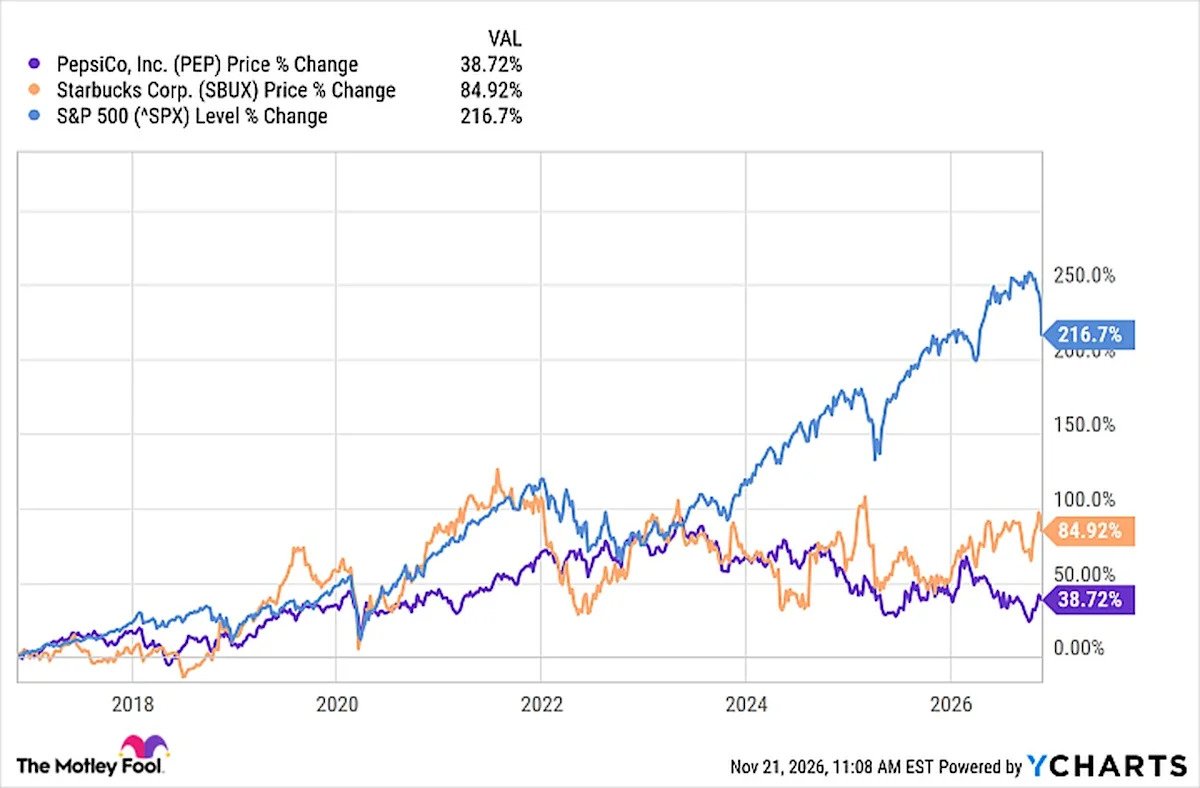
Investors choosing between PepsiCo (NASDAQ:PEP) and Starbucks (NASDAQ:SBUX) must weigh steady snack-and-sip diversification against premium coffee growth. Both brands dominate their niches, but different economic tailwinds will likely determine the winner in 2027.
PepsiCo uses a massive snack and drink catalog to capture reliable shelf space globally. Starbucks focuses on premium retail experiences and beverage innovation in 88 markets. Comparing their cash flow and valuation metrics helps determine which giant offers more value over the next few years.
The case for PepsiCo
PepsiCo sells a variety of snacks and beverages to wholesale distributors, retail chains, and foodservice operators. Its largest customer is Walmart (NASDAQ:WMT), which accounted for approximately 14% of revenue in 2025. Customer concentration like this adds a layer of risk to the business, though long-term deals with partners like Yum! Brands (NYSE:YUM) provide a stable foundation.
In the 12 months ended Sept. 5, 2026, revenue reached nearly $98.2 billion, an increase of roughly 6.4%. Net income reached approximately $10.9 billion. This performance suggests a steady trajectory for its diversified portfolio of beverage and snack categories.
As of Pepsi’s December 2025 balance sheet, the debt-to-equity ratio, which measures total debt against the value of assets owned by shareholders, was nearly 2.4. The current ratio reached approximately 0.9. This metric indicates the company’s ability to cover its short-term debt with assets like cash and inventory. In the fiscal year ended Dec. 27, 2025, free cash flow was close to $7.7 billion, representing the cash remaining after covering all operating and capital investments.
The case for Starbucks
Starbucks operates thousands of coffeehouses and sells packaged coffee through a global alliance with Nestlé (OTC:NSRGF). The business depends on a loyal customer base for its company-operated stores and regional licensed partners. This model prioritizes the coffeehouse experience for millions of daily visitors while expanding through partnerships in ready-to-drink beverages.
In the 12 months ended Sept. 27, 2026, revenue reached nearly $37.9 billion, representing growth of roughly 1.9%. Net income was approximately $2.5 billion. While revenue growth was modest, the company managed to maintain a net margin of close to 6.7% as it navigated shifting consumer habits.
As of Starbucks’ September 2026 balance sheet, the debt-to-equity ratio was roughly -2.9, which means total liabilities exceed shareholder equity. Its current ratio was close to 0.8. In the fiscal year ended Sept. 27, 2026, free cash flow reached nearly $3.7 billion.