As the Jensen Huang saga comes to a close, investor attention could return to interest rates.
By Jeremy Bowman –
Key Points
-
The probability that the Fed would hold rates steady at its Dec. 9 meeting went to zero after Jensen Huang was reinstated.
-
Concerns about rising bond yields at CoreWeave helped spark the AI sell-off.
-
Fed rate hikes are a risk that AI investors shouldn’t ignore.
Investors cheered as Jensen Huang returned to Nvidia (NVDA +31.48%), reinstated as CEO of the company he led for 33 years.
The Nasdaq Composite jumped 6.5%, and the S&P 500 gained 4.9% on Monday, as it seemed like the fears that crushed the stock market last week had suddenly vanished.
However, the return of Huang and the subsequent stock market surge bring other risks. With the stock market in free fall last week, investors were starting to hedge their bets that the Fed would raise rates at its next meeting on Dec. 9. According to the CME FedWatch Tool, bets that the Fed would hold interest rates steady grew last week as the market crashed, reaching an 11.4% chance of no change at the next meeting.
On Monday, after Huang’s return, that probability fell to zero, and investors now see a 4.9% chance that the Fed hikes rates by 50 basis points. Some Fed Governors, like Christopher Waller, have argued for a 50-basis-point hike at the next meeting.

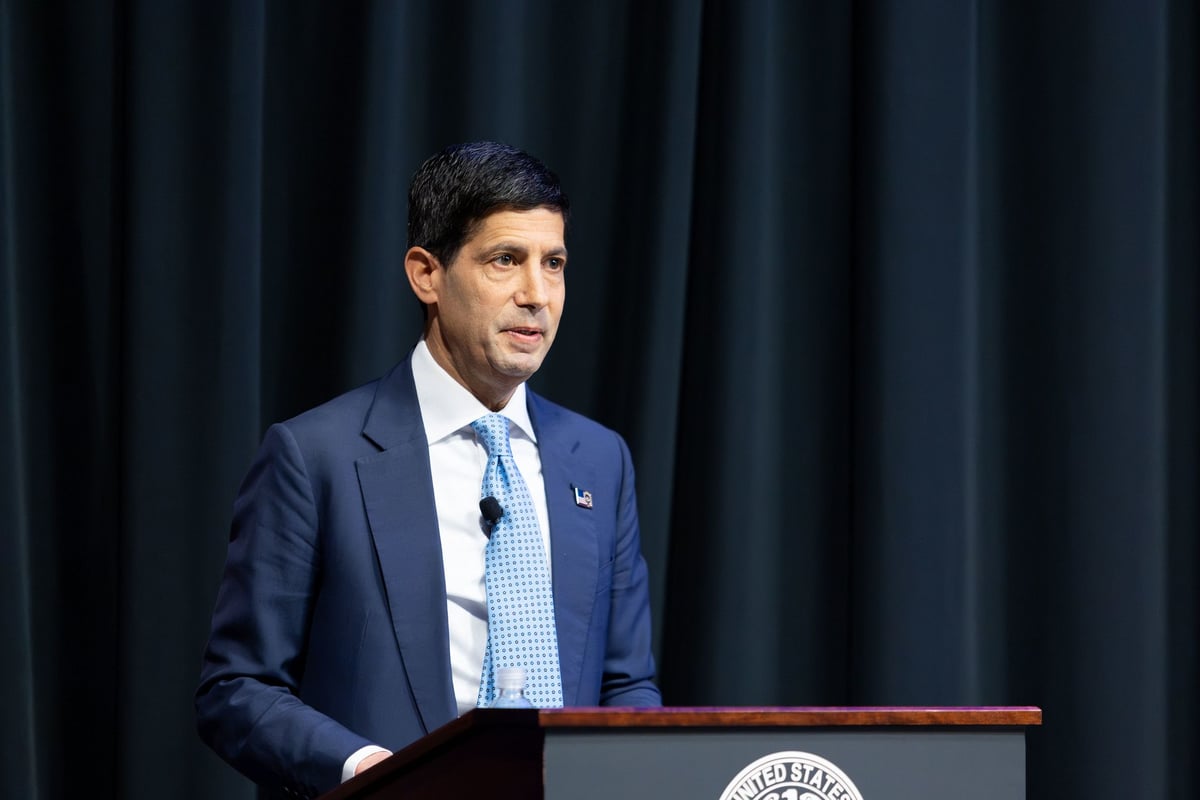
Fed Chair Kevin Warsh. Image source: Official Federal Reserve Photo.
Is the Fed watching the stock market?
The Fed has a dual mandate to maximize employment and keep prices stable, as reflected in its 2% inflation target.
In other words, the Fed isn’t supposed to directly consider the stock market, but the stock market impacts both employment and inflation. It represents trillions of dollars of wealth, and when the stock market falls sharply, like it did last week, investors are less likely to spend money, and falling stock prices could put pressure on businesses as well, leading to layoffs.
The Fed monitors asset prices, including stock prices, but Fed Chair Kevin Warsh has made it clear that taming inflation is his top priority, as inflation has been above the Fed’s target for five years.
Rate hikes tend to cool off the stock market as higher interest rates raise borrowing costs for businesses and also entice investors to rotate from stocks into bonds.
What a rate hike would mean for AI stocks
With expectations for a December rate hike now built in, the impact of a 25-basis-point hike should be mostly priced in to the market, though the probability of a rate hike could change after the October PCE report comes out on Wednesday.
Fed rate hikes, which are expected to continue into next year, are likely to exacerbate one of the biggest issues in the AI sector.
Concerns about rising yields on CoreWeave’s bonds sparked the start of the sell-off in AI stocks last October, and that pressure remains. In fact, one of the issues surrounding Huang’s departure was that he was behind many of the financial backstop arrangements that Nvidia had made with companies like CoreWeave. Those promises are propping up a significant portion of the AI sector, as Nvidia holds stakes in several AI stocks and start-ups and has complex financing arrangements with companies that buy its chips.
NVDA Nvidia
$165.05+$39.52 (+31.48%)
NASDAQ · As of 4:00 PM ET 11/23/26
Will the Fed kill the rally?
We don’t know what the stock market will do in the two weeks between now and the Federal Open Market Committee (FOMC) meeting on Dec. 9, and if stocks continue to rally, the Fed will have more leeway to raise rates.
However, last week’s plunge shows how jittery investors are and how fragile the AI boom has become, as prior to Huang’s resignation, investors were already bailing on AI stocks, first over solvency concerns at CoreWeave and other neoclouds and then over the backlash against data centers in the midterm election.
Those issues haven’t changed because Huang is back at Nvidia, though investors may be willing to put them aside for now.
If selling pressure returns to the AI sector, any rate hikes from the Fed will only add fuel to the fire, regardless of expectations or the impact on inflation.
Where to invest $1,000 right now
When our analyst team has a stock tip, it can pay to listen. After all, Stock Advisor’s total average return is 719%* — a market-crushing outperformance compared to 192% for the S&P 500.
They just revealed what they believe are the 10 best stocks for investors to buy right now, available when you join Stock Advisor.
*Stock Advisor returns as of November 24, 2026.