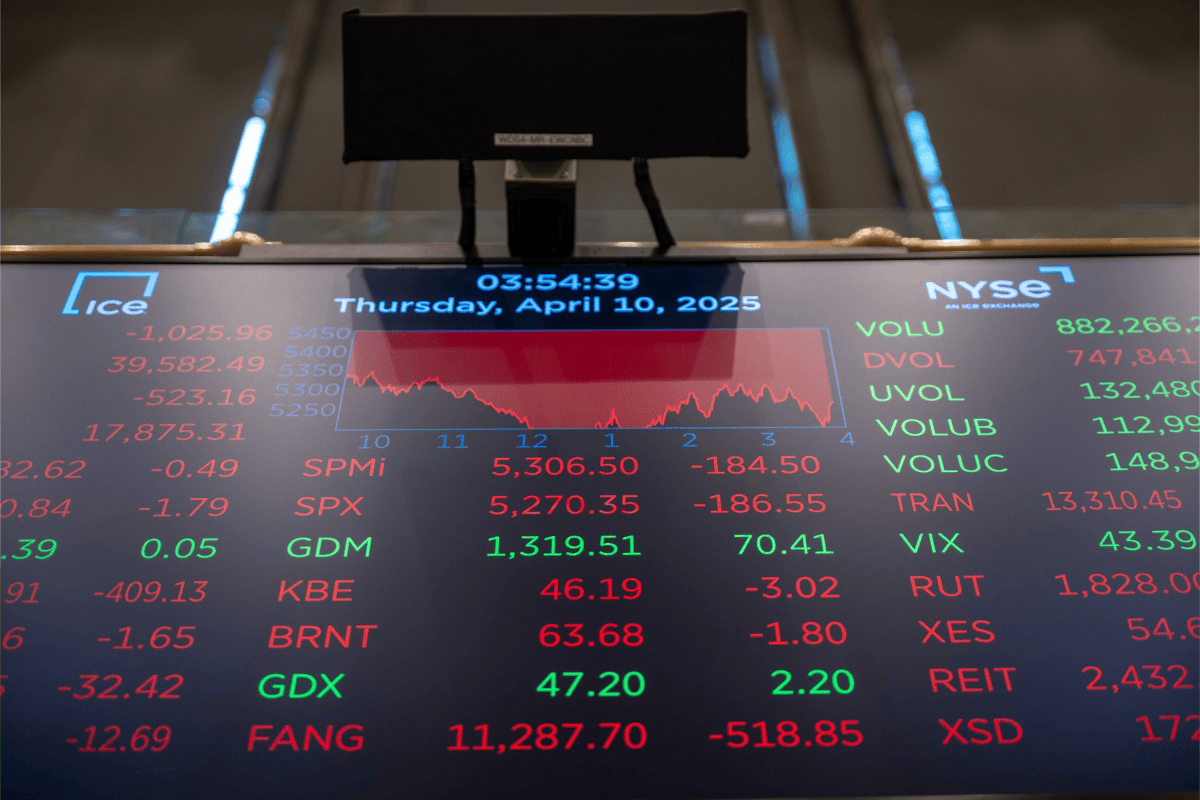
Wall Street’s brief recovery is unraveling as persistent inflation, renewed tariff concerns, and mounting skepticism over AI valuations drive another wave of selling across major indexes.
By RJ Fulton –
As of 11:31 a.m. ET, the Nasdaq Composite (^IXIC -1.82%) had plunged 3.98% to 22,789, while the S&P 500 (^GSPC -0.94%) fell 2.69% to 7,008, approaching the psychologically important 7,000 level. The Dow Jones Industrial Average (^DJI +0.06%) declined 1.36% to 49,336, reflecting widespread selling pressure across major indexes.
Selling extended beyond equities, with gold tumbling 3.01% to $3,454.60, while the 10-year Treasury yield edged lower to 4.91%. Energy stocks outperformed the broader market, while consumer discretionary shares suffered the steepest losses. The simultaneous weakness in stocks and gold suggests investors are increasingly prioritizing liquidity as uncertainty surrounding inflation, interest rates, and corporate earnings continues to weigh on sentiment.
Today’s biggest moves
HP Inc. (HPQ +8.93%) bucked the broader market downturn, surging 11.04% after reporting better-than-expected earnings and issuing an optimistic outlook for fiscal 2027. Meanwhile, Ambarella (AMBA -20.95%) plunged 19.90% after its revenue forecast disappointed investors, raising concerns about the company’s near-term growth prospects.
Semiconductor stocks continued to face intense selling pressure, with Advanced Micro Devices (AMD -5.62%) falling 9.56% and Nvidia (NVDA -6.06%) declining 8.69%.
What this means for investors
Wall Street’s sell-off intensified on Wednesday as persistent inflation and renewed concerns surrounding artificial intelligence (AI) valuations sent technology stocks sharply lower. The latest decline follows a turbulent stretch for equities, with investors increasingly questioning whether the substantial investments driving the AI boom can generate sufficient returns to justify elevated valuations.
Adding to these concerns, October’s core personal consumption expenditures (PCE) price index rose 0.3% for the third consecutive month. Although consumer spending remains relatively resilient, persistently elevated inflation presents a challenge for the Federal Reserve, potentially limiting its ability to ease monetary policy without risking further price pressures.
Perhaps most concerning is the Nasdaq Composite’s continued decline, bringing the technology-heavy index within approximately 3% of entering bear-market territory, traditionally defined as a 20% decline from its previous high. With borrowing costs remaining elevated and concerns over corporate earnings mounting, investors should pay particular attention to whether selling pressure spreads beyond the technology sector.
Looking ahead, a sustained recovery will likely require signs of moderating inflation, improving financial conditions, and greater confidence in corporate earnings expectations for 2027. Until then, investors should remain cautious about interpreting short-lived market rallies as evidence that the broader correction has ended.
Where to invest $1,000 right now
When our analyst team has a stock tip, it can pay to listen. After all, Stock Advisor’s total average return is 796%* — a market-crushing outperformance compared to 200% for the S&P 500.
They just revealed what they believe are the 10 best stocks for investors to buy right now, available when you join Stock Advisor.
*Stock Advisor returns as of November 25, 2026.