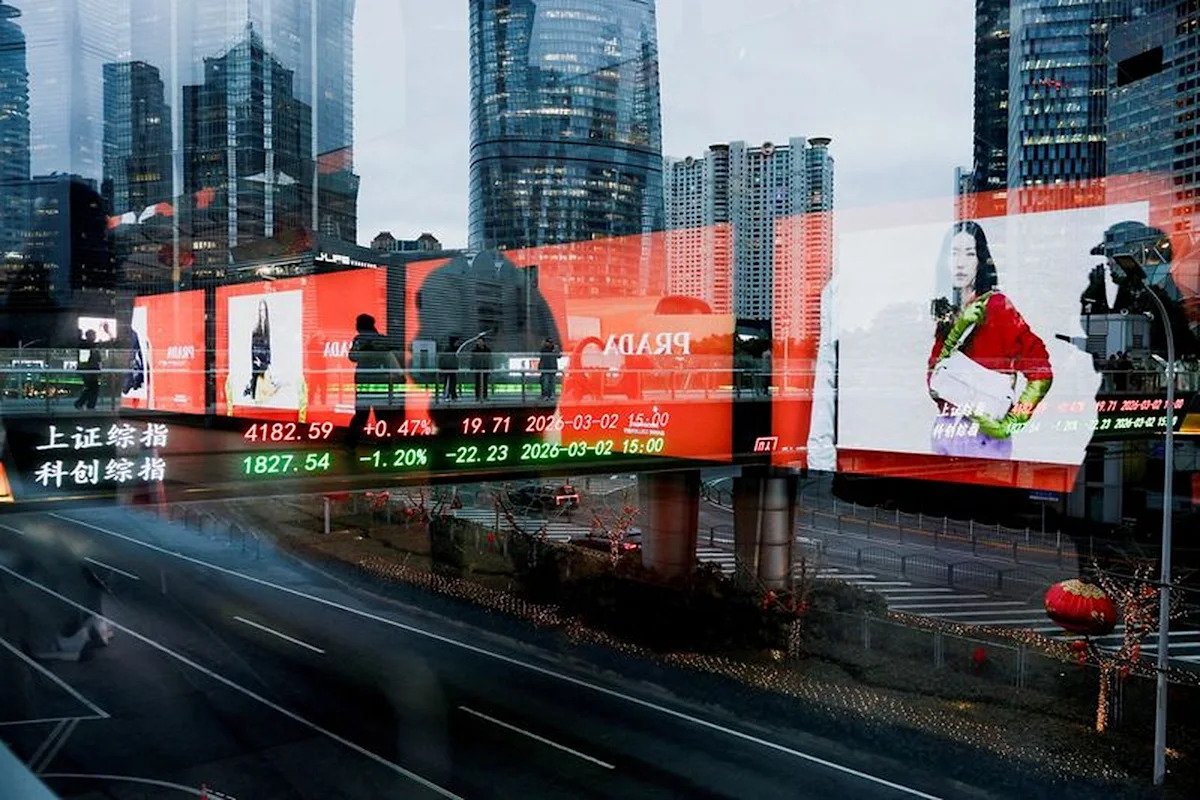
SHANGHAI/HONG KONG, Nov 27 (Reuters) – China’s share benchmarks jumped 4% and the yuan rose on Friday, after Premier Li Qiang chaired a State Council meeting that called for a bigger role by “national team” investors to stabilise a falling stock market.
Chinese stocks have struggled this year despite policy easing, reflecting investor concerns over weak domestic demand, a prolonged property downturn and uncertainty over the economic outlook hurt by trade wars and geopolitics.
The benchmark Shanghai Composite Index ended 4.2% up and the blue-chip CSI300 index was 3.7% higher at the close, both notching their biggest daily gains since October 2024 when China rolled out massive stimulus measures to revive the market.
China’s tech-focused STAR 50 Index surged 15%, the biggest one-day jump in two years.
The rally also spread to Hong Kong, where the Hang Seng Index gained 1.9% while the Hang Seng Tech Index <.HSTECH> jumped 6%.
In Beijing’s strongest gesture yet to support a stock market that had fallen to 16-month lows, the cabinet said “capital markets were crucial to the broader economy,” state media Xinhua reported. The cabinet added that Central Huijin – the domestic unit of sovereign wealth fund China Investment Corp – would enhance its role as a quasi-stabilisation fund to ensure ample liquidity.
The meeting also called for better policies to encourage long-term funds to invest in the stock market, and for measures to strengthen defences against risks spilling over from overseas markets.
“It’s a shot in the arm for markets,” said Kenny Ng, a strategist at Everbright Securities International in Hong Kong.
“Sentiment has been downbeat for so long. There hasn’t been much good news to trade on. At least now there’s something to count on: the national team will come to the rescue if things really turn south.”
The Chinese yuan gained 0.1% against the dollar in offshore trading, reversing earlier weakness to hit its strongest in three weeks. The currency is nearing its firmest level in four years.
“It’s very rare that Executive meeting of the State Council would make such direct comments. Last time it happened was 2024 when they rolled out a liquidity support package,” said Jason Chan, a Hong Kong-based strategest at Bank of East Asia.
Given the current low investor expectations, any incremental supportive policies would help boost confidence, said Meng Lei, China equity strategist at UBS Securities.
The latest statement follows the margin lending relaxation and trading fee reductions announced over the weekend, underscoring the government’s growing determination to stabilise markets.