The S&P 500 is down 10% in the past month. How to invest now depends on how tolerant you are of risk — and taxes.
By Ben Gran –
Key Points
-
A correction doesn’t have to make you change your investing strategy if you’re in it for the long run.
-
Eisman says long-term investors will likely do fine if they continue buying the S&P 500 with dollar-cost averaging.
-
For sector-specific trades, Eisman recommends consumer staples, healthcare, and short-term Treasuries.
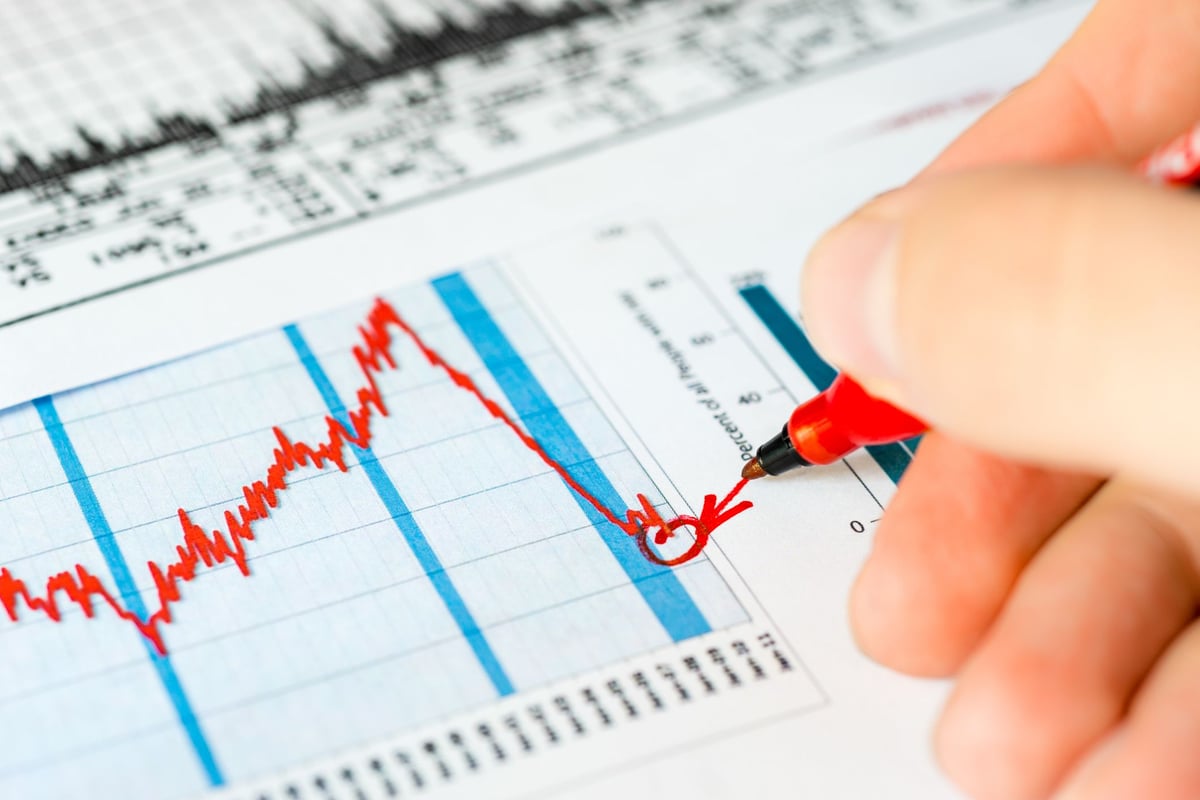
After what had been a strong year of stock market returns in 2026, the wheels seem to be coming off. The S&P 500 index has entered a correction in the past month, declining 11.6% since its Oct. 6 record high.
During a stock market decline that’s this fast and widespread, it might seem as if all the stocks are tanking at once. But there are still opportunities for investors. On the Nov. 21 episode of his podcast, The Real Eisman Playbook, famous investor Steve Eisman outlined a few paths forward for investing in this tumultuous market, depending on your preferred investing style.
Eisman gained fame as one of the investors who predicted the 2008 housing market crash, as featured in the movie The Big Short. But his investment advice for today is not fancy or technically complex. You don’t have to short the market or buy options. Eisman’s latest advice is surprisingly simple.
Let’s look at Steve Eisman’s two-pronged advice for how to invest during an S&P 500 correction.

Image source: Getty Images.
Long-term investors: “I would not do much of anything.”
For long-term investors, Eisman’s advice was simple: keep buying the S&P 500. He said:
For those of you who are long-term investors, I would not do much of anything. I would continue to gradually buy the S&P 500 index with dollar-cost averaging and just not watch the market. The U.S. will recover.
This is an easy, tried-and-true investing strategy that anyone can do. Just buy an S&P 500 exchange-traded fund (ETF), like the Vanguard S&P 500 ETF (VOO +1.66%) , and keep putting in (if you can) the same amount of money each time you invest, such as every month or every payday.
VOO Vanguard S&P 500 ETF
$669.79+$10.92 (+1.66%)
NYSEMKT · As of 1:00 PM ET 11/27/26
This is called dollar-cost averaging. For example, if you keep buying $500 of Vanguard S&P 500 ETF shares each month, you’ll buy more shares when prices are lower, and fewer shares when prices are higher. There’s no magical secret or savvy investor trick to dollar-cost averaging. But over time, this is a good way to invest consistently and keep accumulating more shares of stock.
Stock traders: Consider healthcare, staples, and short-term Treasuries
Not everyone is totally invested in index funds, and that’s OK. If you like to invest in individual stocks and sectors, Eisman had advice for you, too. He said:
For those of you who are more trading-oriented and can stomach paying capital gains taxes, I would sell some stocks and buy some combination of a healthcare index, a staples index, and some short-term Treasuries.
When the stock market enters a correction, volatile growth stocks (like tech stocks) often experience larger declines, while more value-oriented or defensive stocks (like healthcare and consumer staples) sometimes outperform. Investors often rotate into these relatively “recession-proof” industries when appetite for riskier stocks declines.
Eisman did not recommend any specific exchange-traded funds. But a few ETFs that might fit this strategy are as follows.
Vanguard Health Care ETF (VHT): 410 stocks, 22 years of 10.3% annualized returns
The Vanguard Health Care ETF (VHT +0.39%) offers a low-cost way to invest in a mix of companies that provide medical or healthcare products, services, technology, or equipment. This fund holds 410 stocks, and the top holdings include Eli Lilly (about 14.7% of the fund), Johnson & Johnson (8.4%), and AbbVie (6.7%).
The Vanguard Health Care ETF has delivered a total return of 14.7% year-to-date (as of Nov. 20), and an annualized return of 10.3% over nearly 23 years since the fund’s inception in January 2004.
VHT Vanguard World Fund – Vanguard Health Care ETF
$341.69+$1.32 (+0.39%)
NYSEMKT · As of 1:00 PM ET 11/27/26
Vanguard Consumer Staples ETF (VDC): 104 stocks, 22 years of 9.6% annualized returns
The Vanguard Consumer Staples ETF (VDC +0.45%) lets you make a targeted investment in a sector of the economy where people tend to keep spending no matter what happens to the stock market. This ETF holds 104 stocks, and its largest holdings include retail heavyweights like Walmart (about 14.5% of the fund) and Costco Wholesale (11.85%), as well as household-name consumer brands like Procter & Gamble (9.75%) and Coca-Cola (9.4%).
The Vanguard Consumer Staples ETF has delivered a total return of about 18.9% year-to-date (as of Nov. 20) and a 9.6% annualized return over nearly 23 years since the fund was established in January 2004.
VDC Vanguard World Fund – Vanguard Consumer Staples ETF
$253.08+$1.12 (+0.45%)
NYSEMKT · As of 1:00 PM ET 11/27/26
Vanguard Short-Term Treasury ETF (VGSH): 91 bonds, 1.42% annualized returns for 17 years
If you want a low-risk investment during times of turmoil in the S&P 500, choosing short-term Treasury bonds can be a good move. The Vanguard Short-Term Treasury ETF (VGSH -0.05%) holds 91 Treasury securities with an average effective maturity of two years, making this bond ETF a relatively safe choice in case interest rates go higher in the future.
VGSH Vanguard Scottsdale Funds – Vanguard Short-Term Treasury ETF
$57.84-$0.03 (-0.05%)
NASDAQ · As of 1:00 PM ET 11/27/26
The Vanguard Short-Term Treasury ETF has delivered an annualized return of 1.42% over the past 17 years since the fund’s inception in November 2009.
Where to invest $1,000 right now
When our analyst team has a stock tip, it can pay to listen. After all, Stock Advisor’s total average return is 792%* — a market-crushing outperformance compared to 202% for the S&P 500.
They just revealed what they believe are the 10 best stocks for investors to buy right now, available when you join Stock Advisor.
*Stock Advisor returns as of November 29, 2026.