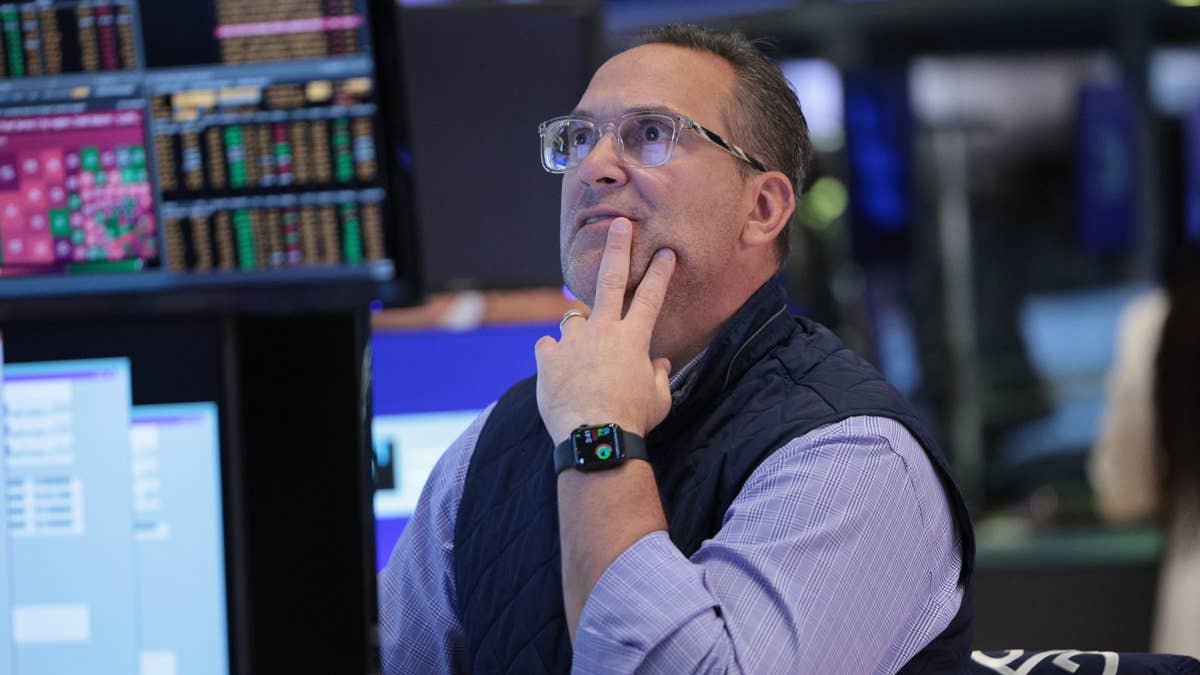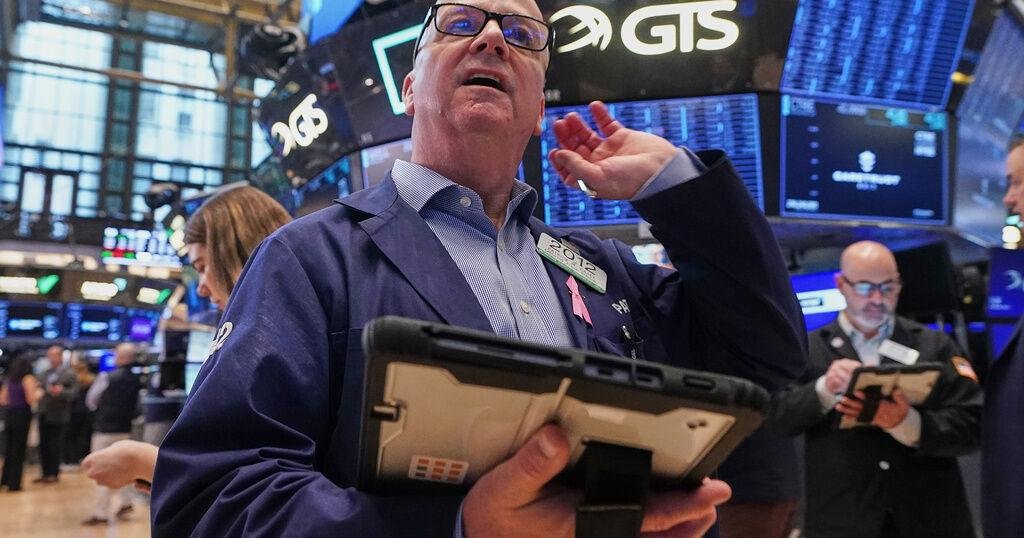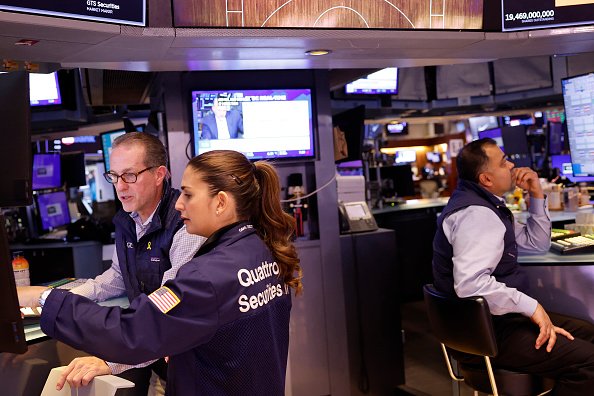
U.S. stocks on Friday ended largely higher ahead of a long three-day weekend on account of the Memorial Day holiday. Wall Street’s benchmark S&P 500 (SP500) just about managed to post a five-week win streak, after having stalled over the past two days following a string of record highs.
The S&P (SP500) added 0.70% to close at 5,304.70 points, while the tech-heavy Nasdaq Composite (COMP:IND) advanced 1.10% to settle at 16,920.79 points. The blue-chip Dow (DJI) concluded just above the flatline, climbing 0.01% to 39,069.59 points.
All 11 S&P sectors ended in the green, except Health Care.
For the week, the S&P (SP500) was marginally up 0.03%, while the Nasdaq (COMP:IND) added 1.41%. The Dow (DJI), on the other hand, shed 2.34%.
“When you can still buy the World’s Hottest Stock, NVDA, for just 52x TTM unlevered pretax free cashflow, good luck convincing anyone grownup that markets are overvalued. Fundamentals and technicals continue to point higher in our view. After a mini flash-crash yesterday – translated, free money for anyone quick enough to hedge and then release their hedges – markets continued their upward march today,” Alex King, investing group leader of Cestrian Capital Research, told Seeking Alpha.
“We continue to expect markets to trend up into year end. We can all make it more difficult than that if we like, or we can just own the S&P 500 (SP500), the Nasdaq 100 (NDX), kick back and be happy. (Oh, and remember to learn to hedge!),” King added.
Earlier on Friday, shortly after the opening bell, the University of Michigan published final results from its monthly survey of consumers. Overall sentiment fell to 69.1 in May, but improved from a preliminary reading of 67.4 two weeks ago. Meanwhile, year-ahead inflation expectations ticked up to 3.3% this month, but also improved from an earlier figure of 3.5%.
The University of Michigan data came as a bit of a relief to traders following monetary policy, especially after two straight days of negative signals.
On Wednesday, the minutes of the Fed’s latest rate meeting showed that many participants were unsure about whether policy was tight enough and were willing to further hike rates if necessary. Then, on Thursday, a S&P Global report pointed to sticky inflation and strong U.S. business activity growth despite high interest rates – indicators that the Fed doesn’t want to see.
With these developments coupled with continued cautious commentary from Fed speakers, investors have recalibrated their expectations for interest rate hikes. According to the CME FedWatch tool, markets now see the first 25 basis point cut coming in November. Earlier today, Goldman Sachs pushed out its first expected rate cut to September from July.
U.S. Treasury yields were little changed in Friday’s session, which ended early at 1400 ET ahead of the Memorial Day weekend. The longer-end 30-year yield (US30Y) slipped 2 basis points to 4.58%, while the 10-year yield (US10Y) was little changed at 4.47%. The shorter-end more rate-sensitive 2-year yield (US2Y) gained nearly 1 basis point to 4.96%.
See how Treasury yields have done across the curve at the Seeking Alpha bond page.
Turning to Friday’s active movers, Deckers Outdoor (DECK) topped the S&P 500 (SP500) percentage gainers. The footwear and apparel maker delivered a solid jump in quarterly sales on the back of its brands UGG and HOKA.