Stock futures were little changed Tuesday night after the Nasdaq Composite rose to a fresh record.
Futures tied to the Dow Jones Industrial Average inched lower by 54 points, or 0.1%. S&P 500 futures ticked down 0.07%, while Nasdaq 100 futures hovered near the flatline.
American Airlines slid more than 6% in after-hours trading after slashing its sales outlook for the second quarter. JetBlue and Southwest Airlines slid about 2% each in sympathy. Retail brokerage Robinhood added about 3% after announcing a $1 billion share repurchase program.
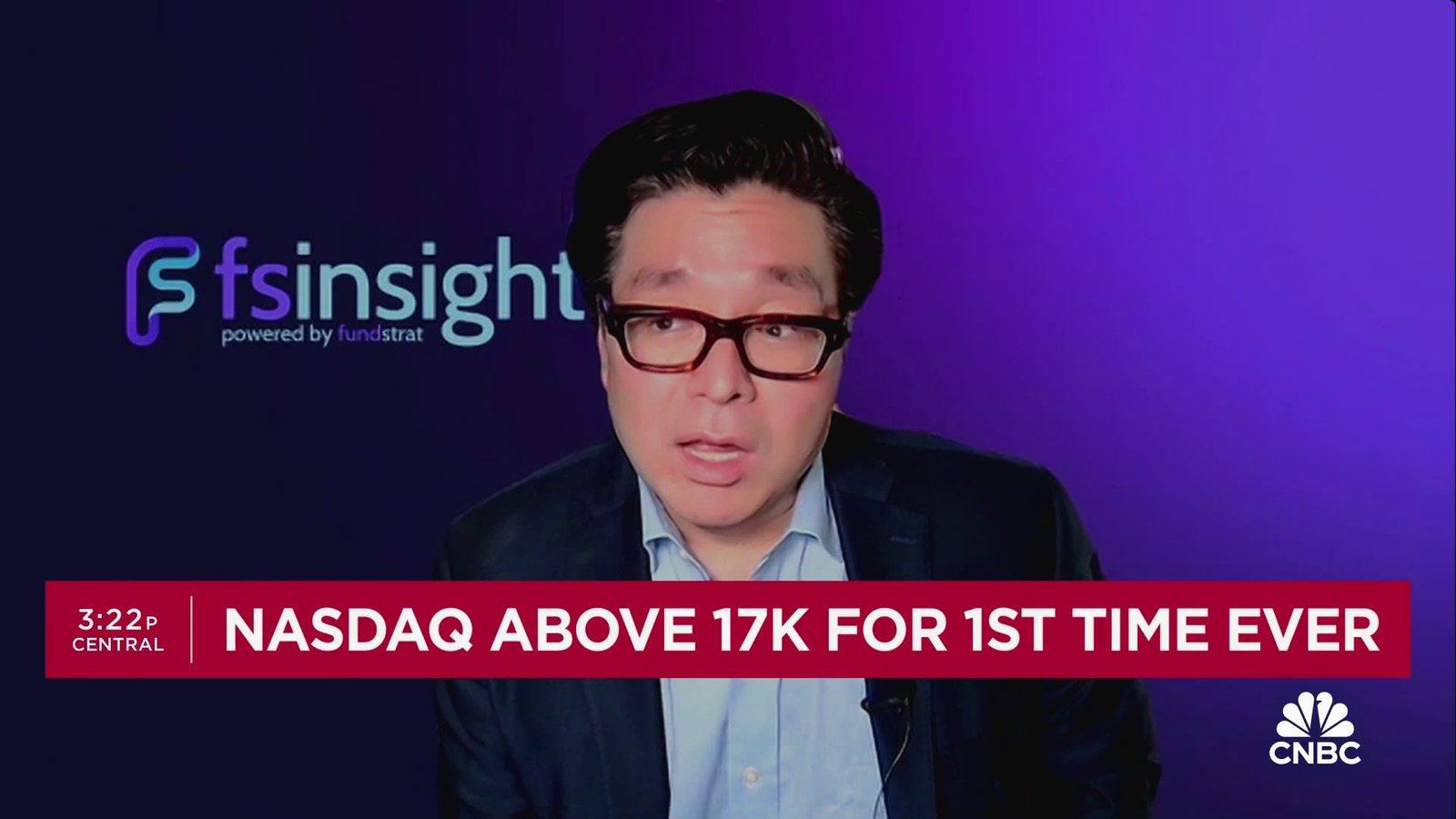
On Tuesday, the Nasdaq Composite popped 0.6% to a record high and closed above the 17,000 threshold for the first time, fueled by a nearly 7% jump in Nvidia. The tech-heavy index was an outlier, however, as the S&P 500 edged higher by just 0.02%, and the 30-stock Dow slid nearly 0.6%, dragged lower by a decline in Merck shares.
Still, the major averages are on track to close the month with impressive gains, partly propped up by enthusiasm about a better-than-expected quarterly earnings season. The S&P 500 is up 5.4% this month, while the Dow has advanced 2.7%. The Nasdaq is outperforming by a wide margin, up 8.7% in May.
The gains arrive even as traders have lowered their expectations for Federal Reserve rate cuts. Indeed, fed funds futures trading data suggests a nearly 54% chance that rates will hold steady in September, according to the CME FedWatch Tool.
“The number of expected cuts has shrunk, but it’s really shrunk for the right reasons. The economy’s been good. Inflation is progressing,” Tom Lee, head of research at Fundstrat Global Advisors, said Tuesday evening on CNBC’s “Closing Bell: Overtime.” “The reality is that 3%, or even 2.7% inflation is really good for corporate profits. I think the earnings outlook actually is far better than most expected … you can see why there’s upside for stocks.”
Investors are looking to the personal income and expenditures report for April, which includes the PCE inflation reading, out Friday.
CNBC Pro: ‘Hindenburg Omen’ triggered last week
The major benchmarks hitting all-time highs without broad participation have investors concerned about the health of the rally. However, one technician says that poor breadth does not necessarily equate to a weak market.
“If you’re looking at the market, I still think the market appears healthy because the largest names still appear very healthy,” said JC O’Hara, chief technical strategist at Roth MKM. He cited Nvidia’s jump Tuesday, a 6% increase, as an example.
“When that has a big influence on the index, I think the index is fine. It’s just that when you’re a stock picker, your pool of potential candidates for great buying opportunities is shrinking,” he said.
CNBC Pro subscribers can read the full story here.
— Sarah Min
Markets are priced for perfection, Morgan Stanley Wealth Management says
The problem is markets are “priced for perfection.”
That’s the view expressed by Morgan Stanley Wealth Management on Tuesday in a 15-page report by chief investment officer Lisa Shalett.
Even when inflation and interest rates come down, their bottom “will remain well above recent business-cycle lows, but this scenario is barely reflected in current market pricing,” according to the report. “With above-average uncertainties, markets priced for perfection, historically rich valuations and apparent investor complacency, we are focused on risk-adjusted returns and have little interest in taking on duration in either stocks or bonds right now,” the arm of Morgan Stanley that services high net worth clients wrote.
Stocks have powered to all-time highs “despite rising uncertainty about economic outcomes, potential policy responses and the upcoming presidential election,” largely driven by rising price-to-earnings multiples investors are willing to pay.
The market’s expensive, Shalett wrote. “The forward price/earnings multiple is in the 90th percentile for the last 100 years.” An implied p/e of 21 times future earnings on the S&P 500 “is one of the highest forward multiples in the last 35 years, rivals the 2021 high, [and] approaches the all-time high hit in the dotcom bubble,” she wrote.
— Scott Schnipper
Nvidia is $1 trillion larger than all of S&P energy
Want to get a sense of how big Nvidia has become? Let’s put it this way: The chipmaker’s $2.802 trillion market cap is more than $1 trillion larger than that of the entire S&P 500 energy sector. The added market cap of each stock in the sector comes out to about $1.767 trillion.
Nvidia popped 6.98% on Tuesday, hitting a fresh record and building on its surge from last week. Year to date, the stock has jumped 130%. It is up more than 31% just this month.

NVDA year to date
— Fred Imbert
Stocks open little changed Tuesday evening
Stock futures were mixed Tuesday evening.
Futures tied to the 30-stock Dow slipped 34 points, or nearly 0.1%. S&P 500 futures shed 0.03%, while Nasdaq 100 futures added 0.03%.
— Pia Singh