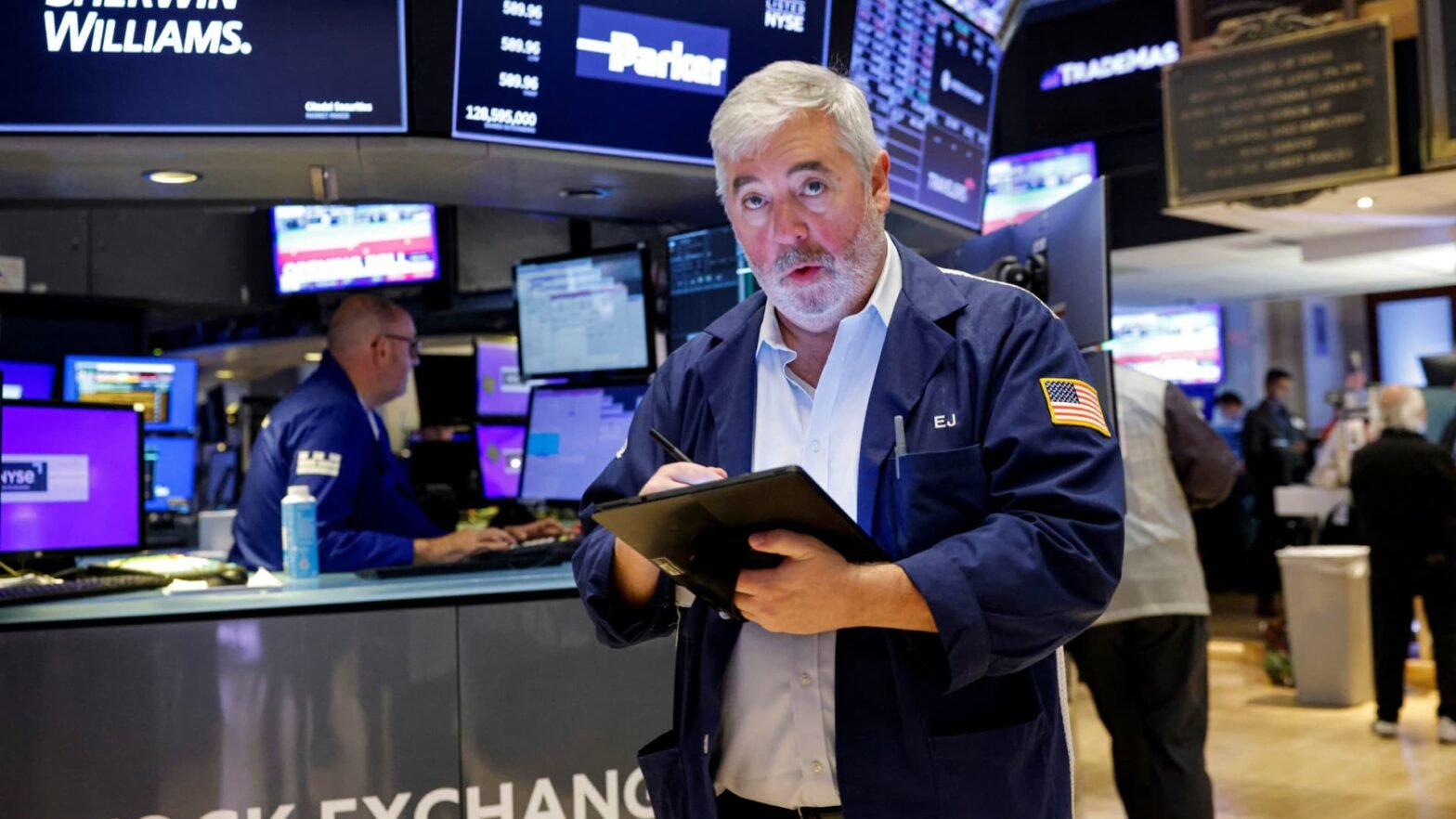
Traders work on the floor at the New York Stock Exchange (NYSE) in New York City, U.S., August 28, 2024.
Brendan McDermid | Reuters
The bad news is that September is the worst month of the year, but there’s plenty of good news to balance out the bad.
The bad news: seasonality and the elections
September is the worst month of the year for the Dow Industrials, S&P 500, NASDAQ and Russell 2000, according to the Stock Trader’s Almanac.
“While momentum usually overrides seasonal concerns, September is hard to ignore – it is the only month down on average,” Frank Gretz from Wellington Shields said in a Friday note to clients.
The last four Septembers have been particularly ugly. September is the only month that has been lower in each of the past 4 years, our Robert Hum tells me.
S&P 500 in September: It’s been ugly recently (rounded)
- 2023: down 5%
- 2022: down 9%
- 2021: down 5%
- 2020: down 4%
The elections are another wildcard. Many traders believe the outcome will not be known for some time after the November 5th election, adding a layer of risk to what is normally the start of a seasonally strong period.
The good news outweighs the bad
Seasonality aside, the market is riding a wave of momentum, and with good reason:
1) The market “broadening” trend is very real. Two-thirds of the S&P 500 was up in August. The NYSE advance/decline line hit an all-time high. More than 70% of the stocks on the NYSE are above their 200-day moving average. Most importantly, the Equal-Weight S&P 500 (RSP) modestly outperformed the S&P 500 in August and closed Friday at an historic high. Megacap Tech did not have a bad month, but aside from Meta it was not a leadership group:
Megacap tech: lackluster August
- Meta up 9.8%
- Apple up 3.1%
- Nvidia up 2.0%
- Microsoft down 0.3%
- Alphabet down 4.5%
- Amazon down 4.6%
Other sectors were leaders:
Sectors in August
- Consumer Staples up 5.8%
- Real Estate up 5.6%
- Health Care up 5.0%
- Utilities up 4.4%
- Technology up 1.1%
2) Earnings remain strong. Earnings topped 13% growth in the second quarter and are expected to remain strong for the rest of the year.
2024 S&P earnings: still strong
- Q2: up 13.0%
- Q3est. : up 5.7%
- Q4 est.: up 13.5%
- 2025 est.: up 15%
Source: LSEG
These numbers have not changed appreciably in several months.
3) Sentiment is bullish but not wildly so. The weekly poll of members of the American Association of Individual Investors indicates bullishness at 51.2%, above the long term average of 37.5%, but that’s mostly because a chunk of people who were neutral have become more optimistic. Bearish sentiment is not far off from its historic average.
Bulls vs. Bears
- Bullish: 51.2% (avg. 37.5%)
- Neutral: 21.9% (avg. 31.5%)
- Bearish: 27.0% (avg. 31.0%)
Source: AAII
4) Inflation is waning. The July Core PCE, the Fed’s preferred gauge of inflation, dropped to 2.5%, within reach of the Fed’s 2% inflation target.
Is the “Fed put” back?
Another important support for markets: Fed rate cuts are expected. At Jackson Hole, chairman Jerome Powell made it clear that the Fed had shifted its attention from fighting inflation to the job market.
According to the CME FedWatch, the vast majority of traders (69.5%) believe the Fed will cut 25 basis points in September, 32% believe a 50 basis point cut is possible.
It makes sense most traders don’t think the Fed needs to be very aggressive yet: with the job market still relatively strong, most traders don’t expect the Fed to get aggressive unless it has to.
“I’m a little concerned if they did something more aggressive, as much as 50 basis points, because I’m concerned that market participants may view that as the Fed seeing something scary in their economic data and are moving aggressively to get in front of that,” David Smith, chief investment officer at Rockland Trust, said in an interview on CNBC on Friday.
Still, most market observers believe that any sign of significant job deterioration will likely be met with more rate cuts from the Fed.
This belief in a Fed “put” is helping support the bull position that any sell-off around job deterioration will be short lived as the Fed is helping put a floor under the market.