Updated 1 min read
In This Article:
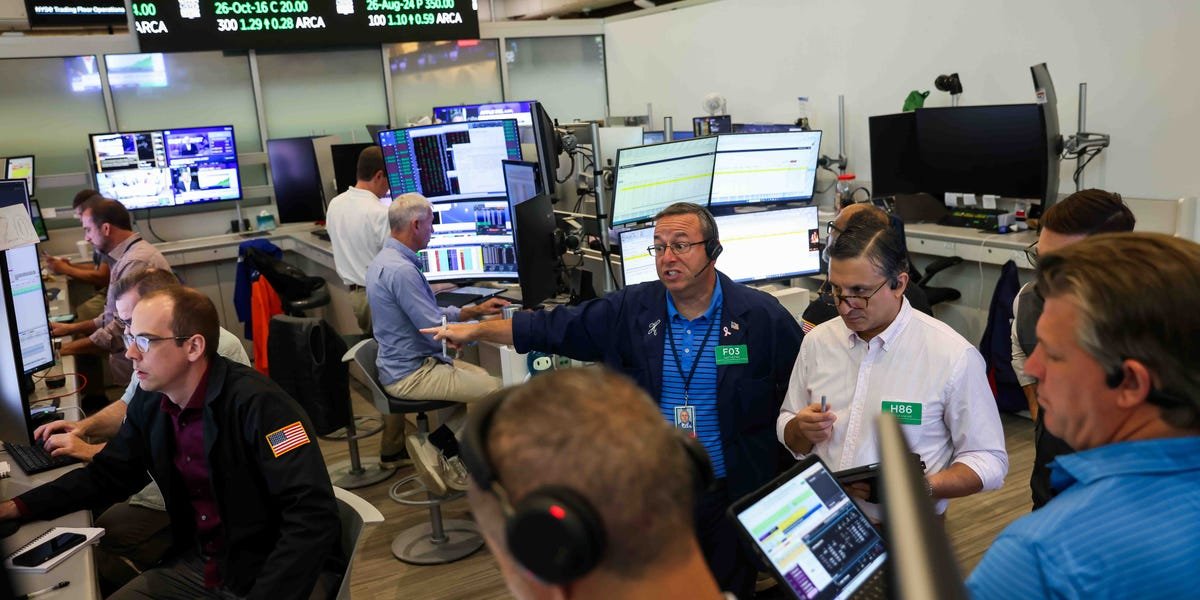
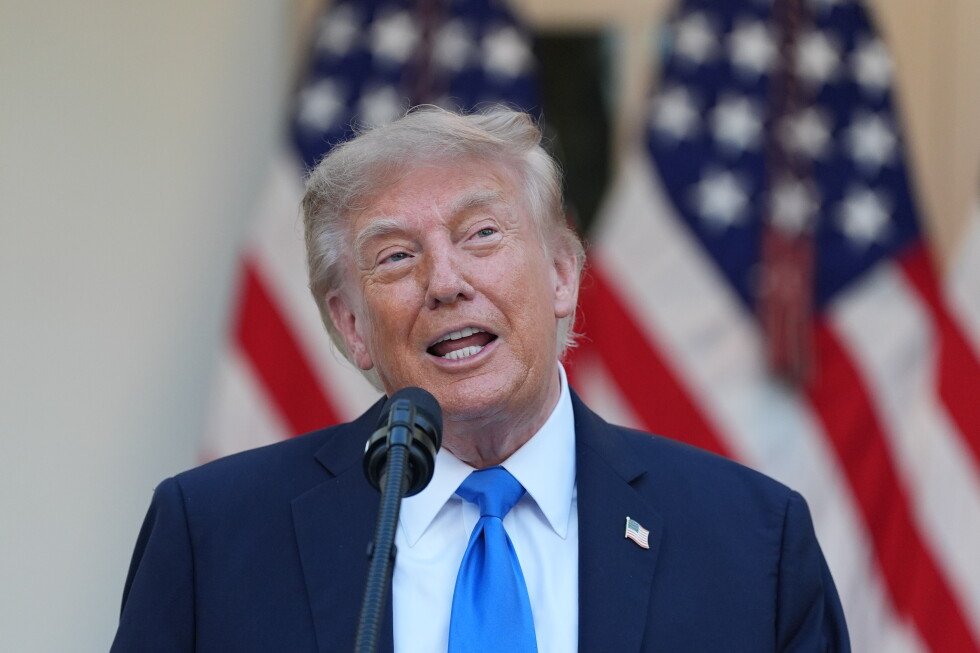
US stocks moved higher on Thursday after President Donald Trump said he plans to introduce reciprocal tariffs later in the day. Meanwhile, investors digested another report that suggested inflation is once again heating up.
The Dow Jones Industrial Average (^DJI) added 0.3%, while the S&P 500 (^GSPC) put on 0.6% after closing lower on Wednesday. The tech-heavy Nasdaq Composite (^IXIC) rose more than 1% as Nvidia (NVDA) and Tesla (TSLA) gained.
Markets are on alert for the announcement of Trump’s promised like-for-like tariffs, expected to be rolled out at 1 p.m. ET. “Today is the big one: reciprocal tariffs,” Trump wrote earlier in a social media post.
The duties — which may not go into effect until April 1, per a CNBC report — could target any country that imposes tariffs on US imports, and could upend US relationships around the globe.
Meanwhile, January’s Producer Price Index (PPI) showed wholesale inflation remain sticky, after a similarly hot consumer inflation print for the month dented optimism for an interest rate cut.
Earnings season rolls on, looking solid after a majority of beats from the almost 70% of S&P 500 companies to have reported so far. Robinhood (HOOD) shares soared on the heels of a fourth quarter profit beat after the bell on Wednesday. But Reddit’s (RDDT) stock tumbled amid a miss in user growth at the social media company.
LIVE 8 updates
-
The ‘good’ news underneath 2 hot inflation readings
Two fresh inflation readings for the month of January showed prices increased more than Wall Street had expected but economists found positive news for markets and the Federal Reserve within the details.
When evaluating categories from both the Consumer Price Index (CPI) and Producer Price Index (PPI) that feed into the Fed’s preferred inflation gauge, the Personal Consumptions Expenditures (PCE) index, economists argue price increases likely decreased in the month of January.
Inflation Insights president Omair Sharif told Yahoo Finance that Thursday morning’s PPI release brought some “good news” for the Fed’s fight against inflation after CPI data shook up markets on Wednesday. Sharif estimates that “core” PCE, which excludes the volatile categories of food and energy, will likely show prices increased 2.6% in January, down from the 2.8% seen in December.
“We’re just, you know, continuing to kind of creep our way towards the Fed’s 2% target,” Sharif said.
Following the PPI release, the 10-year Treasury yield slid nearly 10 basis points, eliminating its move higher from the day prior that had weighed on stocks in Wednesday’s trading session. All three major indexes were higher as yields moved lower, with the Nasdaq Composite (^IXIC) adding more than 1%.
The odds the Federal Reserve holds interest rates steady through the end of its July meeting decreased following the release. Investors now place a 50% chance the Fed doesn’t cut interest rates at its July meeting, down from a 58% chance seen the day prior, per the CME FedWatch Tool.
-
Nvidia, Tesla lead tech sector higher
Shares of AI chip heavyweight Nvidia (NVDA) gained more than 3% on Thursday, helping lift the tech-heavy Nasdaq. Nvidia shares are now positive year to date, after hitting a low of $113 in early February.
On Thursday, EV giant Tesla (TSLA) also extended gains from the prior session, rising more than 4%.
Apple (AAPL) gained more than 1%.
Meanwhile, social media platform Meta (META) pared modest gains to dip just below the flat line.
If Meta manages to climb back into green territory, it would be on track to hit its 11th high of 2025 as it eyes a 19-day win streak.
-
Oil dips as market discounts Ukraine peace efforts
Oil prices pared losses on Thursday as the market discounted efforts to initiate a peace solution in Ukraine.
Traders also assessed how retaliatory US tariffs against countries with levies on US goods could impact economic growth and demand for oil. President Trump is expected to formally announce those tariffs this afternoon.
West Texas Intermediate crude (CL=F) and Brent futures (BZ=F) were less than 1% lower, paring earlier losses.
On Wednesday, Trump posted on social media that he spoke with President Vladimir Putin and said the Russian president “wants to make PEACE.”
-
Musk will stop $97.4 billion OpenAI bid if board stops for-profit conversion
Yahoo Finance’s Alexis Keenan reports:
Elon Musk is willing to pull his $97.4 billion bid for the nonprofit that oversees OpenAI if its directors agree to stop the transformation of the ChatGPT maker to a for-profit enterprise, escalating his long-running feud with OpenAI CEO Sam Altman.
“If [the] OpenAI board is prepared to preserve the charity’s mission and stipulate to take the ‘for sale’ sign off its assets by halting its conversion, Musk will withdraw the bid,” lawyers for Musk said in a court document Wednesday.
Musk’s lawyers said in their filing that Altman breached his responsibility to OpenAI’s charitable nonprofit by single-handedly turning down the takeover bid from a Musk-led investor group before OpenAI’s board had reviewed it.
Read more here.
-
Stocks shake off more expected tariffs, sticky inflation data
US stocks gained on Thursday, shaking off an expected announcement on reciprocal tariffs from President Trump later in the day, while investors digested a hotter-than-expected read on wholesale prices.
The Dow Jones Industrial Average (^DJI) rose 0.3%, while the S&P 500 (^GSPC) also gained 0.2%. The tech-heavy Nasdaq Composite (^IXIC) increased 0.3%.
President Trump indicated he would announce reciprocal tariffs today that would potentially target countries that impose levies on US goods.
The new tariffs would come on the heels of levies on steel and aluminum imports announced earlier this week and duties on some Chinese goods that went into effect last week.
Meanwhile, the Producer Price Index in January rose 0.4%, more than the expected increase of 0.3%. The reading highlighted that the Fed still has work to do in order to bring inflation down to a 2% target.
-
Wholesale prices rise more than expected in January as inflation remains sticky
Wholesale prices ticked higher than expected last month, highlighting that the Federal Reserve’s fight against sticky inflation isn’t over.
The Producer Price Index in January rose 0.4%, more than the expected increase of 0.3%, according to data from the Bureau of Labor Statistics released on Thursday morning.
Meanwhile, January’s PPI rose 3.5% from a year ago.
The reading for the month of December was revised up to 0.5%, from 0.2%.
The major averages shook off the hotter-than-expected reading, with futures on the Dow Jones Industrial Average (YM=F) and S&P 500 (ES=F) both rising slightly. The tech-heavy Nasdaq 100 (NQ=F) rose 0.4% in pre-market.
-
Good morning. Here’s what’s happening today.
Economic data: Producer Price Index (January); Initial jobless claims (week ending Feb. 8)
Earnings: Airbnb (ABNB), Applied Materials (AMAT), Coinbase (COIN), Crocs (CROX), Datadog (DDOG), Duke Energy (DUK), DraftKings (DKNG), John Deere (DE), Palo Alto Networks (PANW), Roku (ROKU), Sony (SONY), Twilio (TWLO), Wynn Resorts (WYNN), Cisco Systems (CSCO)
Here are some of the biggest stories you may have missed over the weekend and early this morning:
Inflation uncertainty keeps looming over markets
Trump and Putin agree to negotiate end to Ukraine war
Meta is winning over Wall Street while the rest of Big Tech struggles
Elon Musk calls for US government to ‘delete entire agencies’
Goldman’s Rubner sees US stock risk as ‘everybody is in the pool’
Musk will pull OpenAI bid if ChatGPT maker remains a nonprofit, lawyers say
Apple’s iPhone Will Use Alibaba AI in China, Joe Tsai Says
Oil falls further as Trump flags Russia talks to end Ukraine war
-
Asian shares rise, optimism driven by US-Russian peace talks and AI hype
Asian shares rose Thursday, driven by optimism surrounding US President Donald Trump’s agreement with Russian leader Vladimir Putin to discuss ending the Ukraine war. This, along with the possibility of Trump pausing some tariffs, boosted market sentiment, despite Wall Street’s decline the day before.
Japan’s Nikkei 225 (^N225) gained 1.3%, while South Korea’s Kospi (^KS11) rose 0.9%. However, the Shanghai Composite (000888.SS) dipped 0.2%.
In energy markets, oil prices declined, with Brent crude (BZ=F) falling 2.7% to below $72 a barrel, partly due to optimism over US-Russia peace talks. These declines and a 3% drop in Exxon Mobil’s (XOM) stock added to market pressures. Despite this, Asian investors were more focused on the potential resolution of the Ukraine conflict and the growing strength of China’s tech sector, which continues to see gains on the back of DeepSeek AI hype.