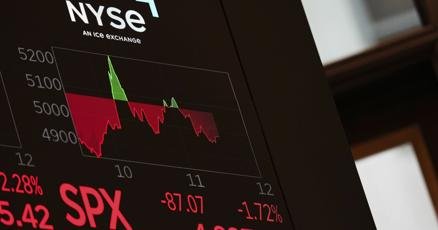
After reopening Monday at 9:30 a.m., the stock market is still experiencing lows after President Donald Trump imposed tariffs last week on foreign trade.
“The market is reacting to uncertainty,” said Andrew Zumwalt, MU chair of personal financial planning in the College of Agriculture, Food and Natural Resources. “I think there is a lot of parallels with the pandemic… I don’t think we are in a 2008 type of scenario, where the economy looks a little shaky and the housing market was unsteady. Instead, I think we are just bounded by all of this uncertainty.”

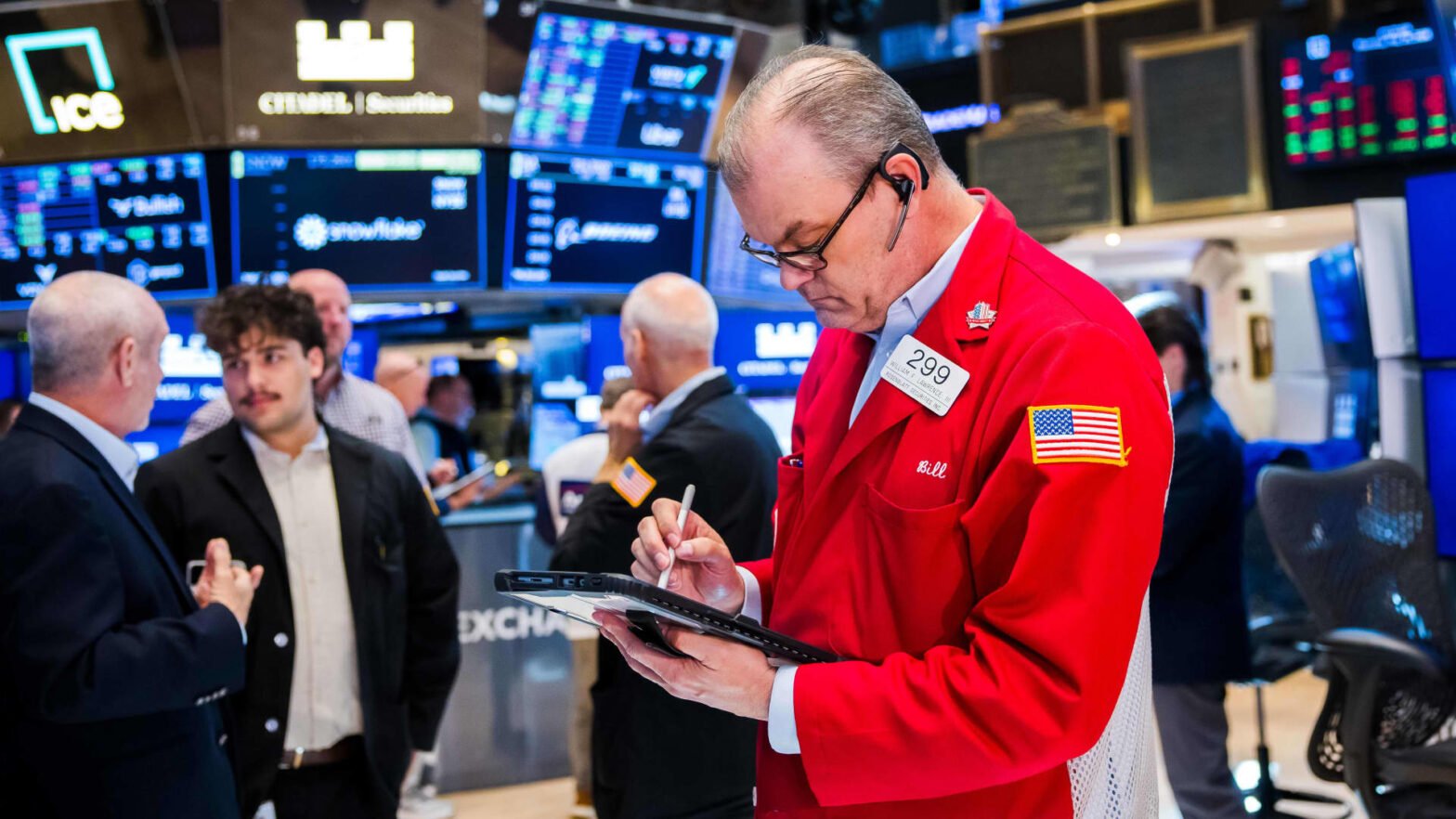
An electronic display shows financial information on the floor at the New York Stock Exchange in New York, Monday, April 7, 2025. (AP Photo/Seth Wenig)
Seth Wenig
Trump’s tariffs revealed last Wednesday were higher than experts and markets were anticipating, with China’s as high as 54%.
This raises concerns for mid-Missourians and others country-wide, wondering what they should know, do or be prepared for.
“It is natural to be concerned or worried about what is going on right now,” said Bret Rodabaugh, a financial planner for LaBrunerie Financial. “My advice would be understand what your goals and time horizons are.”
Rodabaugh said age can also play a key portion into where someone should go forward with the state of the stock market.
“If you’re younger you might have time to ride through this, but if you’re a little bit older and closer to retirement, then you really need to pay more attention to where your allocations are,” Rodabaugh said.
For someone being affected by the decline, their course of action should depend on their goals.
“It’s not a one-size-fits-all,” Rodabaugh said. “It really depends on what your goals are… I really suggest finding an adviser that can help walk you through that and show you all of your options.”
According to Rodabaugh, since Trump announced the tariffs on April 2, the markets are trying to add in the long-term effects of the tariffs on the companies’ earnings.
Trump declared a national trade emergency Wednesday, touting tariffs as a path to lower taxes against Americans.
Another key factor is panic selling, which is the act of quickly trying to remove oneself from assets to not have to deal with the inconsistencies of the stock market. Rodabaugh said this is an emotional response.
“Once the panic selling sets in, it can have a domino effect from there,” Rodabaugh said.
But, Zumwalt said it is best to not panic sell, and instead stay calm.
“My No. 1 advice would be to not panic,” Zumwalt said. “Sit down, and talk with your financial professional or someone else well versed in your situation about your next steps. The worst thing to do is to be like ‘sell it all’, because that usually is never the right answer.”
Monday marks the third straight day of stock market sliding, and professionals are only able to give an educated prediction on what is ahead for the stock market and economy.
“I don’t think we are going to have all tariffs removed, I think some will stay in effect,” Rodebaugh said. “But, what that final outcome could be is still up for interpretation, and we don’t know where that is going to go right now.”
“We are [getting] more information about the tariffs, more information about the repercussions, changes in them as well,” Zumwalt said. “We are starting to see some of that uncertainty, kind of, dissipate as we kind of figure out what the situation is… [but] I think it is going to take a lot of experts to sit down and see through that crystal ball.”