Moneywise and Yahoo Finance LLC may earn commission or revenue through links in the content below.
The U.S. stock market had a wild ride in 2025, with a rocky start followed by momentum that just kept building — culminating in the S&P 500 hitting record highs (1).
In fact, 2025 was so good for the market — in spite of the turbulence of tariffs in April and the pessimism of the Federal Reserve — that nearly every Wall Street firm predicted markets would keep it up in 2026 (2).
-
Thanks to Jeff Bezos, you can now become a landlord for as little as $100 — and no, you don’t have to deal with tenants or fix freezers. Here’s how
-
Dave Ramsey warns nearly 50% of Americans are making 1 big Social Security mistake — here’s what it is and the simple steps to fix it ASAP
-
Vanguard reveals what could be coming for U.S. stocks, and it’s raising alarm bells for retirees. Here’s why and how to protect yourself
However, they weren’t counting on the White House starting a war in the Middle East, and volatility had flared as a result.
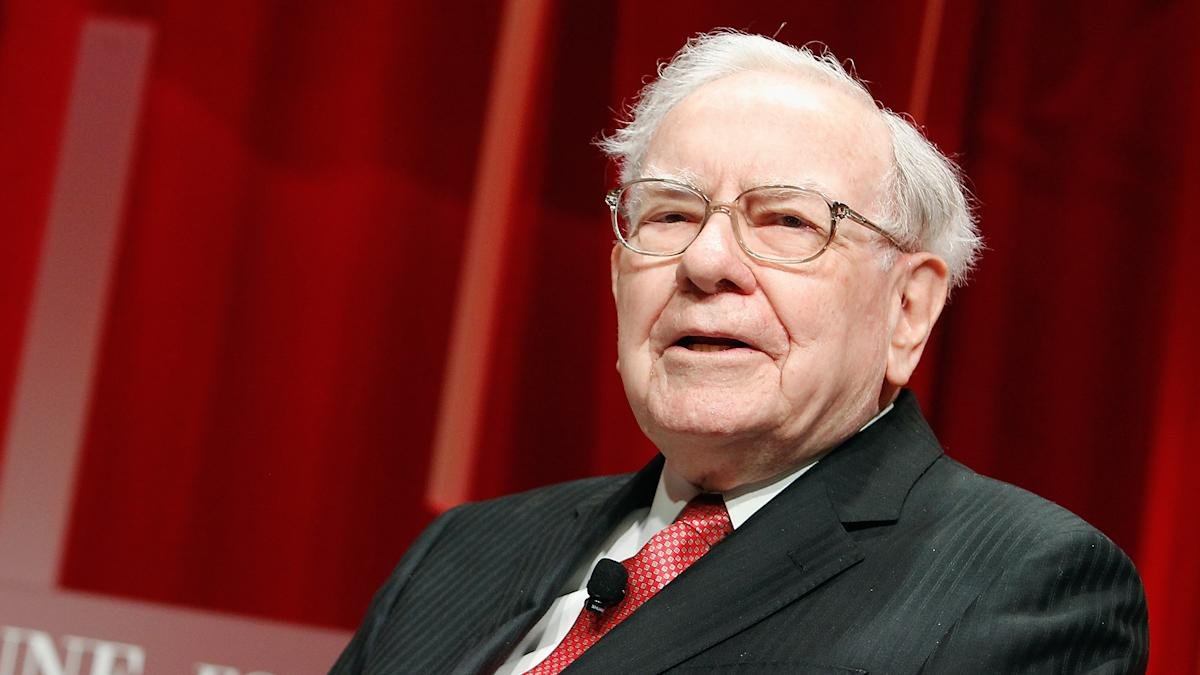
Meanwhile, on the home front, one gauge — popularized by none other than Warren Buffett — is flashing red, and it has been for some time.
The Buffett Indicator measures the total U.S. stock market capitalization against the country’s GDP — essentially gauging if there’s a potential bubble, akin to the 1999 dot-com burst (3). Buffett has so much faith in the indicator that he once told Fortune it was “probably the best single measure of where valuations stand at any given moment (4).”
Today, the Buffett Indicator stands at a whopping 230%, topping dot-com levels (5). According to the indicator, this suggests that the U.S. stock market is “Strongly Overvalued” compared to GDP.
Part of the indicator’s charm is that it’s easy to use and understand — especially for investors keen to time their buys.
In a 2001 reflection on the dot-com bust, Buffett offered a simple guide: “If the percentage relationship falls to the 70% or 80% area, buying stocks is likely to work very well for you. If the ratio approaches 200% — as it did in 1999 and a part of 2000 — you are playing with fire (6).”
So, if you’re concerned about what to do about it, here’s a look at how Buffett and others are reacting to the news — as well as three potential ports in the storm.
In response to heightened stock market valuation, Berkshire Hathaway, of which Buffett was the long-time CEO, has cooled in its attitude toward U.S. equities.
While Buffett said in a 2024 shareholder letter that, “Berkshire shareholders can rest assured that we will forever deploy a substantial majority of their money in equities (7),” Berkshire was a net seller of equities between 2024 and 2025, holding a massive $381.7 billion in cash as of September 2025 (8).


![i’m-nervous,-too!-[part-2]](https://10xwealthreport.com/wp-content/uploads/2026/03/177042-im-nervous-too-part-2-1568x784.jpg)