Stocks pared early losses on Tuesday as investors assessed the potential economic fallout from the Iran war, including the impact on global oil supplies.
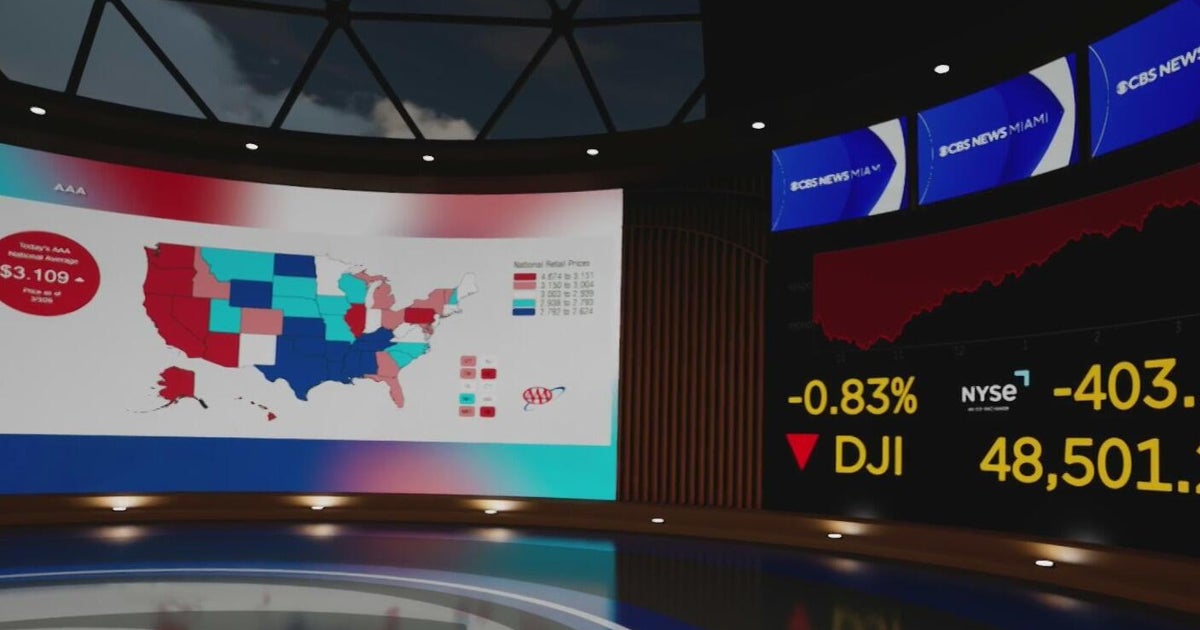
The Dow Jones Industrial Average slid 351 points, or 0.7%, to 48,554 as of 3:20 p.m. EDT, while the S&P 500 and the tech-heavy Nasdaq Composite dropped 0.9% and 1%, respectively. Earlier in the day, the blue-chip Dow shed more than 1,200 points, the biggest such decline since April 2025, when President Trump announced his sweeping “liberation day” tariffs.
Navy escort
Financial markets were lifted after Mr. Trump on Tuesday afternoon said on Truth Social that the U.S. would provide “political risk insurance” at a “very reasonable price” to ships traveling through the Gulf. Mr. Trump also promised that the U.S. Navy would start escorting tankers through the Strait of Hormuz.
“Oil prices retreated after news the U.S. will ensure safe passage through the Strait of Hormuz, easing fears of a major global supply shock,” Adam Turnquist, chief technical Strategist for brokerage firm LPL Financial, said in an email.
Questions about how the war in Iran will impact energy markets and how long the conflict will last have weighed on investor sentiment, according to Bret Kenwell, an investment analyst at eToro. Investors are also dealing with uncertainty over who will fill the leadership vacuum in Iran after a U.S.-Israeli operation last week killed the country’s leader, Ayatollah Ali Khamenei, and other senior Iranian officials.
“Markets hate uncertainty, and as uncertainty deepens in the Middle East, investors are getting jittery,” Kenwell told CBS News.
Mounting economic risks
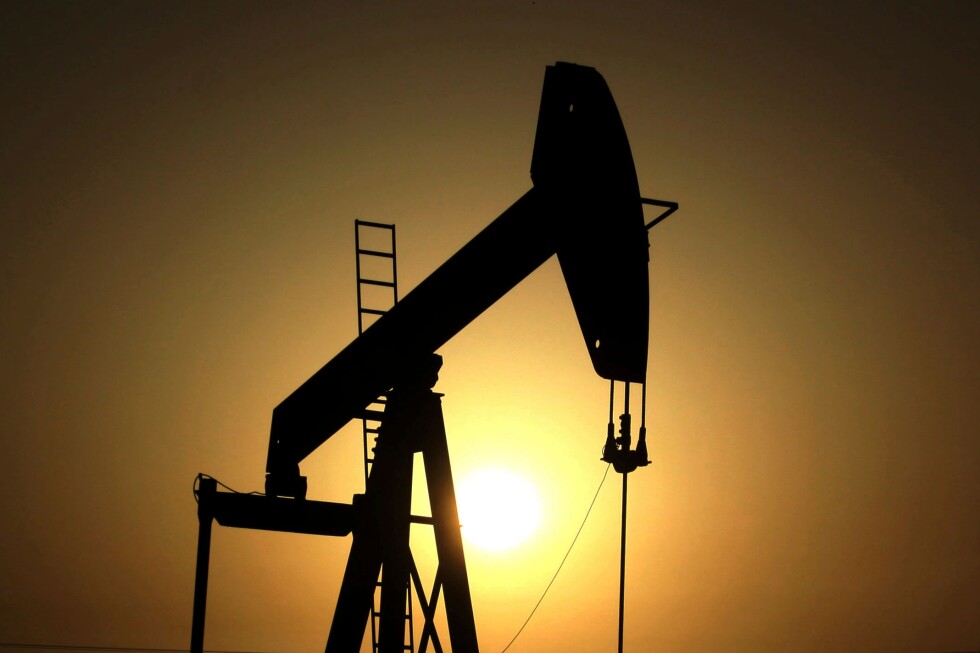
Wall Street is grappling with questions over the world’s oil supply as tanker traffic in the Strait of Hormuz stalls. Roughly 20% of the world’s oil supply flows through the waterway, which connects the Persian Gulf to the Gulf of Oman and the Arabian Sea.
The price of Brent crude, the international standard, climbed $2.45, or 3.2%, to $80.23 per barrel on Tuesday. Benchmark U.S. crude rose $2.12 or 3%, to $73.25 a barrel, according to FactSet.
The 10-year Treasury yield climbed to 4.06%, up slightly from Monday and a sign that investors are bracing for inflation amid potential oil supply constraints. A long-term rise in oil prices to between $90 and $100 per barrel could further ramp up U.S. inflationary pressures, according to investment advisory firm Capital Economics.
Rising Treasury yields also could influence fixed-mortgage rates, which tend to move in the same direction as the bond market. That would be an unwelcome development for the housing market, which just saw 30-year fixed mortgage rates dip below 6% for the first time since 2022.
Faced with a reduction in Iranian oil exports, eight countries that are part of the OPEC+ oil cartel announced Sunday they would boost production of crude. Those countries include Saudi Arabia, Russia, Iraq, the United Arab Emirates, Kuwait, Kazakhstan, Algeria and Oman.
But EY-Parthenon chief economist Gregory Daco noted that the additional oil supply, which amounts to 206,000 barrels per day, will be modest relative to the volume of crude that passes through the Strait of Hormuz.
“It would be insufficient to neutralize the effects of a meaningful or sustained disruption,” he said in an email.
Edited by Alain Sherter
In:
Stocks tumble as Iran war fears grow
Stocks tumble as Iran war fears grow
(04:56)