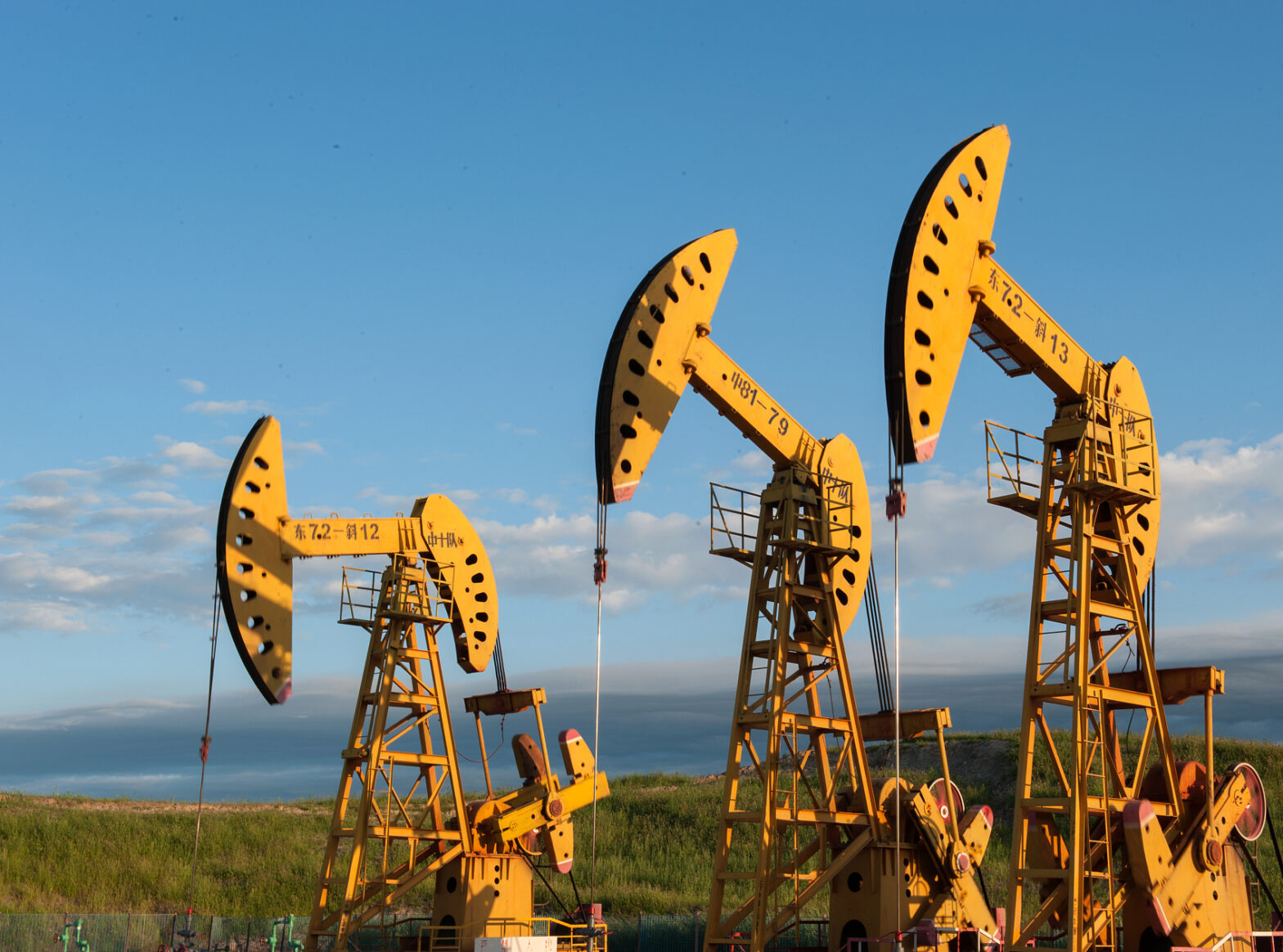
①The outbreak of the U.S.-Iran conflict led to a surge in oil prices, with international crude oil futures settlement prices closing more than 6% higher. Stock markets experienced significant volatility; ②Analysts believe that the impact on the energy market is the primary shock, with the duration of the conflict and the scale of disruptions to the oil supply chain determining the long-term effects on stock markets.
Cailian Press, March 3 (Edited by Huang Junzhi) Following the outbreak of the U.S.-Iran conflict, oil prices surged. Analysts and strategists generally believe that if energy prices continue to rise, it will have a negative impact on markets and the economy.
On Monday, international crude oil futures settlement prices closed more than 6% higher, having surged over 12% at one point during trading. Meanwhile, stock markets also experienced significant volatility: The S&P 500 Index and Nasdaq Composite, which had sharply opened lower due to geopolitical tensions, ultimately closed nearly flat. Goldman Sachs analysts believe that the impact on the energy market is the “main” effect of this conflict on the global economy and markets.
 Daniel Yergin, Vice Chairman of S&P Global, stated in a recent interview that the long-term severity of the disruption in the oil market will entirely depend on the duration of the conflict.
“If the conflict lasts only one week, the market can adjust, and alternative pipelines to the Red Sea can transport some oil to the west. If the conflict persists for a longer period, then we could face the kind of nightmare scenario that people have feared for the past 50 years,” he warned.
Below are four ways in which the U.S.-Iran conflict may affect the economy and markets:
1. Pressure on stock markets, with increased volatility expected
The escalation of tensions in the Middle East has caused significant fluctuations in U.S. stock markets. However, analysts note that the long-term impact on stock markets depends on the duration of the conflict and the scale of disruptions to the oil supply chain.
Goldman Sachs stated, “The initial reaction of the market is usually an increase in risk premiums due to heightened uncertainty and expanded distribution ranges. This situation is unfavorable for both equity and credit markets overall. Rising energy prices negatively affect stock markets as they increase costs for related companies, potentially impacting their profitability.”
Goldman Sachs highlighted cyclical industries, particularly consumer-facing sectors such as airlines and oil-dependent industries, as being at risk.
Morgan Stanley stated that a significant rise in crude oil prices to over $100 per barrel would have a major impact on the bank’s optimistic outlook for the stock market this year.
On the other hand, when oil prices are high, energy producers are expected to perform well. Analysts at Jefferies pointed out that mining and metals companies could emerge as potential stock market winners.
2. The inflation outlook may complicate the Federal Reserve’s next steps.
A sharp rise in oil prices could trigger a new round of inflation, which might place pressure on the overall economy and affect the Federal Reserve’s rate-cutting trajectory.
“Wars often lead to inflation,” analysts at investment bank William Blair noted, adding that central banks tend to increase money supply and lower short-term interest rates to support government wartime spending. JPMorgan expressed a similar view.
Mark Malek, Chief Investment Officer at Siebert Financial, stated, “Short-term sell-offs in the stock market are not the core risk; inflation shocks are. Energy shocks influence monetary policy direction far more quickly than what headlines suggest.”
Meanwhile, consumers may face rising gasoline prices.
Malek added that consumers are most concerned about affordability and economic conditions, stating, “Gasoline prices carry strong psychological influence — they are the daily visible numbers of inflation that consumers see.”
Jay Woods, Chief Market Strategist at Freedom Capital Markets, also noted that a prolonged increase in oil prices would raise inflation concerns because it would amount to ‘a large and unexpected tax on consumers, which the Federal Reserve does not need to address under pressure from the President to cut rates.’
3. A surge in oil prices could weaken global economic growth.
Renowned economist and Allianz Chief Economic Advisor Mohamed El-Erian stated that the conflict in Iran poses a ‘negative shock’ to the global economy. Disruptions to global supply chains, particularly in the Strait of Hormuz, could slow economic growth.
JPMorgan noted that a sustained decline in oil supply would severely weigh on global economic growth, as rising oil prices threaten demand. Supply chain disruptions further exacerbate the risk of stagflationary shocks to the global economy. Goldman Sachs added that compared to other oil-importing countries, the United States is in a relatively better position overall, while major markets such as South Korea, Japan, Turkey, and India are more vulnerable to oil supply disruptions.
4. Flight to safe-haven assets.
Market highlights may lie in safe-haven assets such as precious metals and the US dollar. Jefferies stated that an Iran war would push up commodity prices and boost the US dollar.
The bank’s analysts wrote, ‘We believe that geopolitical and inflationary factors currently outweigh the rise of the US dollar, so commodity prices should increase.’
‘Despite the rebound in the US dollar, precious metals, oil, and commodity prices continue to rise, even though they are denominated in US dollars,’ said Hong Hao, Chief Investment Officer of Lotus Asset Management Ltd. ‘This indicates that during this unique period, these hard assets are truly the hardest currencies.’
Independent analyst Ross Norman also remarked, ‘Gold may be the best barometer of global uncertainty, and to use a metaphor, the mercury column is rising. As we enter a new era of geopolitical uncertainty, we should expect gold prices to be repriced to new highs.’