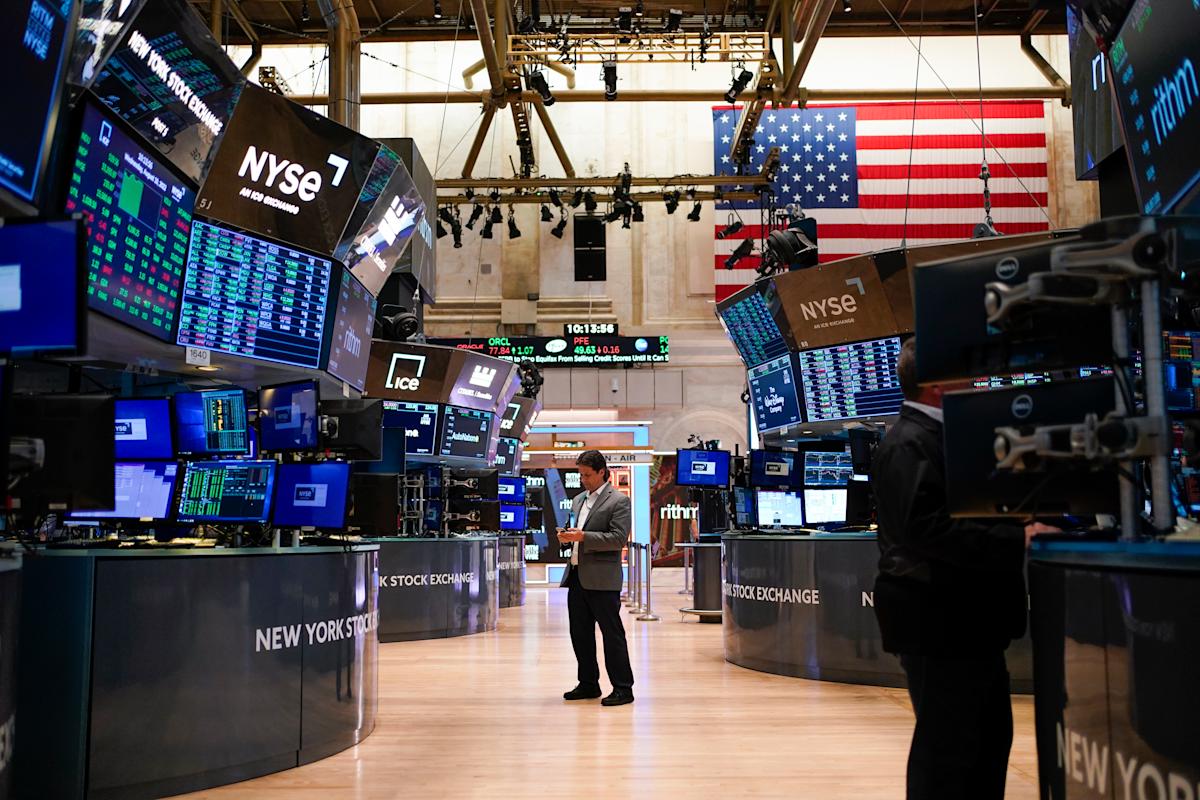
Over the long term, the S&P 500 index has generated an average annualized return of 10%. In recent times, the closely watched benchmark is crushing it, though. It produced total returns of 26% in 2023, 25% in 2024, and 18% in 2025. Investors have no complaints.
The latest surge can be attributed to the ongoing artificial intelligence (AI) craze. This is shown empirically by the fact that the “Magnificent Seven” stocks represent about a third of the entire S&P 500’s market cap, according to the latest research from The Motley Fool.
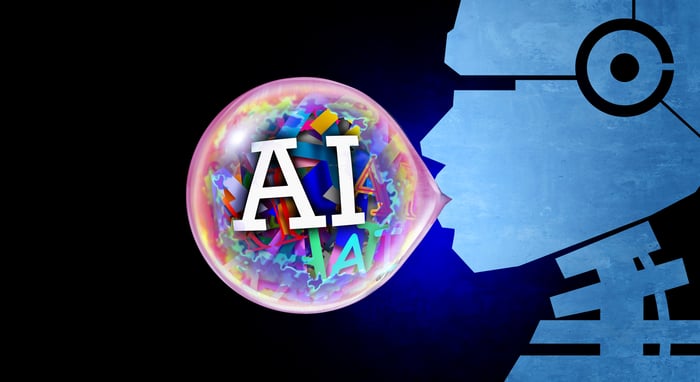
Investors are wise to consider any potential risks that the current environment might present. Is the stock market in an AI bubble today? Here are three possible warning signs.

Image source: Getty Images.
1. The amount of spending on AI infrastructure is unprecedented
Some of the companies at the forefront of AI, those that are building and operating large data centers, are called hyperscalers. This group includes Amazon, Microsoft, and Alphabet, which are the leading cloud computing providers. Combined, they spent hundreds of billions of dollars on AI-related capital expenditures last year, boosting their outlays compared to prior years.
What’s at least somewhat encouraging is that these three hyperscalers are some of the most financially sound businesses in the world. They have the cash flows and strong balance sheets to play this game.
This isn’t necessarily the case with OpenAI, which set off this AI race when it introduced ChatGPT to the world in November 2022. OpenAI has plans to spend a mind-boggling $600 billion on computing infrastructure by 2030, down from prior guidance of $1.4 trillion. Besides the fact that this is a gargantuan figure, consider that OpenAI reported just $13 billion in revenue in 2025. That’s a massive funding gap that needs to be filled.
2. Complex financial arrangements are normal, creating a house of cards
One of the most notable trends that’s happening as AI infrastructure penetrates the economy deals with the financing aspect. Investors must be critical about where the money will come from. There are some concerns.
Circular arrangements have become a common theme. A business takes an equity position in a company that uses this fresh capital to buy the products and services sold by the investor. Nvidia (NVDA +1.13%) recently announced a $30 billion investment in OpenAI, which will use the proceeds to buy the latest Vera Rubin GPUs from Nvidia.
Meta Platforms is conducting its own financial engineering feats. Despite posting fantastic profits and free cash flow, the social media powerhouse is entering into unique deals to keep its balance sheet clean. It has a joint venture in place for $27 billion with Blue Owl Capital to build the Hyperion data center. What’s more, Meta announced a $60 billion, five-year deal to buy chips from Advanced Micro Devices, with an option later to buy 10% of the business.
There is clearly an increasing level of financial interconnectedness between different companies that introduces a potential house of cards. Let’s just assume that one of these businesses hits an unexpected roadblock for whatever reason. It could lead to a ripple effect with negative consequences.

Today’s Change
Current Price
3. Payouts are uncertain, with no sustainable business models apparent
All of this spending is happening without any clear line of sight as to what the ultimate returns will look like. OpenAI provides support for this argument. The company has 900 million weekly active users. That’s certainly impressive.
Menlo Ventures put out a research piece that suggests only 3% of AI users actually pay for higher-tier options. Consequently, the monetization of the most popular AI tool is called into question. I’d argue most people are completely fine using the free versions. Viewed in this light, AI might simply be a shiny new toy to be leveraged only in enterprise settings.
There’s another, more sober way to view the future of AI. There’s a meaningful, nonzero probability that this technology provides marginal benefits to the economy, instead of game-changing progress that the biggest bulls are hoping for.
The smartest investors won’t ignore these three warning signs, which support a thorough understanding of market conditions.
Neil Patel has no position in any of the stocks mentioned. The Motley Fool has positions in and recommends Advanced Micro Devices, Alphabet, Amazon, Meta Platforms, Microsoft, and Nvidia. The Motley Fool has a disclosure policy.