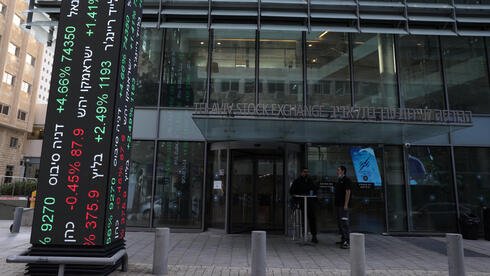
What should people do with their savings at a time like this? “I believe the crises we have gone through in recent years, from coronavirus to October 7 and the latest operations, underscore the importance of maintaining savings for times of crisis. As we saw in previous crises, those who tried to time the market and thought they knew when to get out and when to get back in ended up only locking in losses. In any case, the recommendation is to consult experts before making dramatic changes to savings. At investment houses, we see that the Israeli public has matured in recent years in terms of financial conduct during crises, and we are not seeing significant shifts across the various savings products.”
Is there a chance that interest rates will fall soon? “I believe that Israel’s economic conditions before the operation, inflation below the midpoint of the Bank of Israel’s target range, a strengthening shekel and the 2025 deficit coming in lower than forecasts, all supported an interest rate cut. But because of the current geopolitical uncertainty, and in light of the stance presented by the Bank of Israel in its most recent rate decision, I estimate that unless there is a rapid deterioration in the economy, the central bank will choose to wait for now before cutting rates. That said, I believe the Bank of Israel’s recent rate decisions do not take sufficient account of the impact of high interest rates on households and on small and medium-sized businesses.”
Is it better to take loans at a fixed or variable interest rate? “I estimate that in the medium term, the Bank of Israel will be forced to cut interest rates for the reasons I mentioned above, including a strong shekel and inflation under control. In addition, as I noted, if the military campaign ends successfully, it is certainly possible to estimate a further decline in long-term government bond yields, which could also affect interest rates, since they serve as a benchmark.”