By The Associated Press
World shares are slumping again on Wednesday after U.S. President Donald Trump’s latest tariff hikes took effect and he threatened to add still more. China announced countermeasures, saying it will raise its retaliatory tariff on the U.S. to 84%, up from 34%, effective April 10.
Where the markets stand:
- Asia: Japan’s Nikkei 225 closed 3.9% lower, at 31,714.03. Hong Kong’s Hang Seng rose 0.7%, while the Shanghai Composite index closed 1.3% higher. Thailand’s benchmark also rose, apparently due to speculation that Beijing might be preparing to hold talks with the Trump administration.
- U.S. futures: The unconfirmed rumors about possible U.S.-China negotiations helped push the future for the S&P 500 up 0.3%, while that for the Dow was unchanged.
- Europe: In early trading, Germany’s DAX slipped 2.5% to 19,762.13; the CAC in Paris 40 declined 2.6% to 6,917.13; and Britain’s FTSE 100 gave up 2.6% to 7,704.82.
China’s tariff moves are the latest countermeasure in an escalating trade war
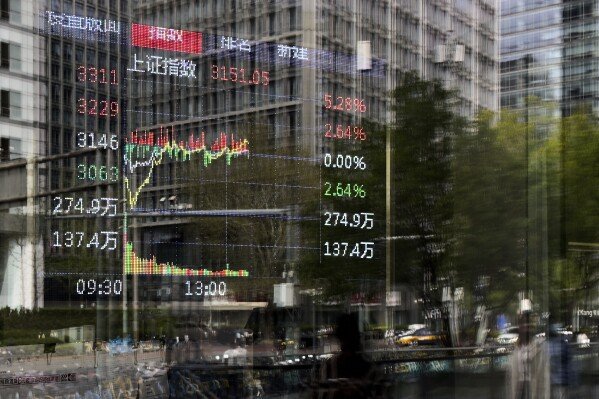
Pedestrian and office buildings are reflected on a brokerage house’s window as an electronic board displays Shanghai shares trading index in the Central Business District, in Beijing, Wednesday, April 9, 2025. (AP Photo/Andy Wong)
Pedestrian and office buildings are reflected on a brokerage house’s window as an electronic board displays Shanghai shares trading index in the Central Business District, in Beijing, Wednesday, April 9, 2025. (AP Photo/Andy Wong)
China has raised tariffs on American goods to 84% to match Trump’s addition of a 50% tariff, while adding an array of additional countermeasures Wednesday.
The 84% tariff will go into effect Thursday, and comes as a 104% tax on the country’s exports to the U.S. came into effect.
“If the U.S. insists on further escalating its economic and trade restrictions, China has the firm will and abundant means to take necessary countermeasures and fight to the end” the Ministry of Commerce wrote in a statement introducing the white paper.
The government declined to say whether it would negotiate with the White House, as many other countries have started doing.
JUST IN: China raising its retaliatory tariff on the US to 84%, up from 34%, effective April 10
Pakistan to send a high-level delegation to the US over 29% tariffs
Pakistan’s Prime Minister Shehbaz Sharif on Wednesday said he is sending a delegation to the United States for talks with the Trump administration over 29% tariffs on Pakistani imports.
According to a government statement, the delegation will include prominent business leaders and key exporters.
It said the decision was made during a high-level meeting chaired by Sharif in Islamabad to discuss how to enhance exports and review the impact of U.S. tariffs on Pakistan.
Pakistan heavily relies on foreign loans, and any decline in its exports will harm its already fragile economy.
France says ‘nothing has been ruled out’ in Europe’s response to tariffs
French businesses should suspend their investments in the United States “at least during the first weeks and months of negotiations” about trade tariffs, government spokesperson Sophie Primas said, echoing a similar call last week by President Emmanuel Macron.
“We need to stand united,” Primas said, while she acknowledged Paris and Brussels can’t prevent European companies “from moving elsewhere.”
“But I think a pause (in investments) is welcome,” she said.
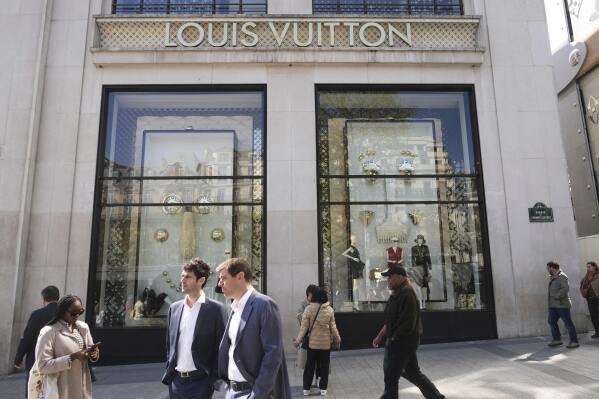
Europe’s response to the tariffs will be “united, proportionate and determined,” Primas said.
“Nothing is set in stone at this stage as we obviously need to negotiate with all our European partners. But nothing has been ruled out,” she added.
Primas said it’s only through maintaining a power struggle with the U.S. that “we’ll be able to protect our interests,” even though she stressed the EU would prefer a “negotiated solution.”
Japanese officials aim for stability as tariffs rock markets
Japanese Finance Ministry official Atsushi Mimura told reporters Wednesday his ministry had agreed with Bank of Japan and the Financial Services Agency “to do their utmost to keep stability in the global financial markets.”
Mimura made the comment to Kyodo and other reporters after he met with Koji Nakamura and Seiichi Shimizu, directors at the Bank of Japan, and other financial officials at the ministry’s offices.
Although the name of U.S. President Donald Trump was not mentioned, the hastily called meeting appeared to be a response to recent volatility in global stock markets, including the Tokyo Exchange, that has followed Trump’s tariffs, as well as worries about possible damage to the Japanese economy.
China vows to fight to the end, saying trade with US is already balanced
People walk by an electronic board displaying Shanghai shares trading index at a brokerage house, in Beijing, Monday, April 7, 2025. (AP Photo/Andy Wong)
People walk by an electronic board displaying Shanghai shares trading index at a brokerage house, in Beijing, Monday, April 7, 2025. (AP Photo/Andy Wong)
China again vowed to “fight to the end” against Donald Trump’s tariffs in a lengthy policy statement published Wednesday, arguing that trade between the two countries is in balance as a 104% tax on the country’s exports to the U.S. came into effect.
The government declined to say whether it would negotiate with the White House, as many other countries have started doing.
“If the U.S. insists on further escalating its economic and trade restrictions, China has the firm will and abundant means to take necessary countermeasures and fight to the end” the Ministry of Commerce wrote in a statement introducing the white paper.
The paper says that the U.S. has not honored the promises it made in the phase 1 trade deal concluded during Trump’s first term, and argues that taking into account trade in services and U.S. companies’ domestic Chinese branches, economic exchange between the two countries is “roughly in balance.”
Spain PM says on Vietnam visit that all lose from trade war
Spain’s Prime Minister Pedro Sanchez attends a press conference after the “Support Ukraine” summit, marking the third anniversary of the Russian invasion, in Kyiv, Ukraine, Feb. 24, 2025. (Gleb Garanich/Pool Photo via AP)
Spain’s Prime Minister Pedro Sanchez attends a press conference after the “Support Ukraine” summit, marking the third anniversary of the Russian invasion, in Kyiv, Ukraine, Feb. 24, 2025. (Gleb Garanich/Pool Photo via AP)
On a visit to Hanoi, Spanish Prime Minister Pedro Sánchez is strengthening commercial ties with Vietnam amid the global economic turmoil caused by the United States’ sweeping tariffs.
Sánchez said that both countries were committed to the multilateral trade status quo that is being shaken by Donald Trump’s tariffs.
“We are firm believers in free trade to achieve development and prosperity,” Sánchez said after meeting with Vietnamese Prime Minister Pham Minh Chinh. “A trade war favors no one. We all will lose.”
WATCH: Asian shares sink again as latest set of US tariffs take effect
Asian shares sank again on Wednesday as the latest set of U.S. tariffs, including a 104% levy on Chinese imports, went into effect.
European shares slide
Germany’s DAX lost 2.1% to 19,857.36. In Paris, the CAC 40 declined 2.1% to 6,949.92. Britain’s FTSE 100 gave up 2% to 7,753.42.
The future for the S&P 500 lost 0.7% while that for the Dow Jones Industrial Average was down 0.5%.
Republicans are going public with their growing worries about Trump’s tariffs
Sen. Thom Tillis, R-N.C., left, talks with U.S. Trade Representative Jamieson Greer ahead of a hearing at the Senate Finance Committee on Capitol Hill in Washington, Tuesday, April 8, 2025. (AP Photo/Mark Schiefelbein)
Sen. Thom Tillis, R-N.C., left, talks with U.S. Trade Representative Jamieson Greer ahead of a hearing at the Senate Finance Committee on Capitol Hill in Washington, Tuesday, April 8, 2025. (AP Photo/Mark Schiefelbein)
WASHINGTON (AP) — Manufacturers struggling to make long-term plans. Farmers facing retaliation from Chinese buyers. U.S. households burdened with higher prices.
Republican senators are confronting the Trump administration with those worries and many more as they fret about the economic impact of the president’s sweeping tariff strategy that went into effect Wednesday.
In a Senate hearing and interviews with reporters this week, Republican skepticism of President Donald Trump’s policies ran unusually high. While GOP lawmakers made sure to direct their concern at Trump’s aides and advisers — particularly U.S. Trade Representative Jamieson Greer, who appeared before the Senate Finance Committee Tuesday — it still amounted to a rare Republican break from a president they have otherwise championed.
Lawmakers had reason to worry: the stock market has been in a volatile tumble for days and economists are warning that the plans could lead to a recession.
▶ Read more about Republican leaders’ reactions to Trump’s tariffs.
China says it will take ‘resolute measures’ to defend its trading rights
Watch live as China’s Ministry of Foreign Affairs holds its daily press conference in Beijing.
China says it will take “resolute measures” to defend its trading rights, but gave no details on how it will respond to U.S. moves that have pushed tariffs on Chinese goods to an unprecedented 104%.
India’s Central Bank cuts key repo rate
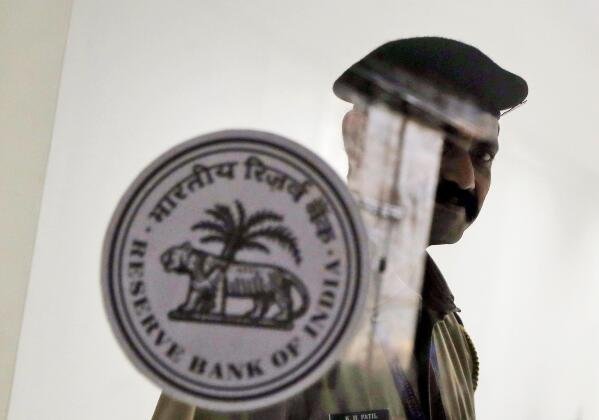
India’s Central Bank cut its key repo rate by 25 basis points on Wednesday, in a move to aid the sluggish economy that faces heat from the U.S reciprocal tariffs which are set to dampen New Delhi’s aspirations for an export-led recovery. That is the interest rate at which the institution lends money to commercial banks when there is a need for short-term needs.
The Monetary Policy Committee of the Reserve Bank of India unanimously voted to lower the repo rate to 6% for the second consecutive time this year, and changed its monetary policy stand from “neutral” to “accommodative.”
WATCH: Despite market tumult, Trump says ‘we’re making a fortune with tariffs’
President Donald Trump told a Republican gathering Tuesday evening that “we’re taking in a fortune in tariffs.” This, despite volatile U.S. markets that saw more losses on Tuesday.
Bank of Japan calls meeting on global economy and markets
The Bank of Japan says it’s meeting with other finance officials to discuss the global economy and markets.
Asian and European shares slide as the latest set of U.S. tariffs including a massive 104% levy on Chinese imports
A currency trader reacts near a screen showing the Korea Composite Stock Price Index (KOSPI), and the foreign exchange rate between U.S. dollar and South Korean won, right, at the foreign exchange dealing room of the KEB Hana Bank headquarters in Seoul, South Korea, Wednesday, April 9, 2025. (AP Photo/Ahn Young-joon)
Curves on a screen in the market surveillance room of the Euronext France,Tuesday, April 8, 2025 the business district of La Defense, outside Paris. (AP Photo/Thibault Camus)
Asian and European shares slid on Wednesday, with Japan’s Nikkei 225 dipping more than 5%, as the latest set of U.S. tariffs including a massive 104% levy on Chinese imports.
Japan’s Nikkei 225 lost 3.9% to 31,714.03. In Hong Kong, the Hang Seng lost 0.4% to 20,041.03, while the Shanghai Composite index reversed early losses, gaining 0.9%. to 3,173.56.
Taiwan led losses in Asia, as its Taiex plunged 5.8%. Big tech manufacturers were among the biggest decliners. Computer chip giant TSMC Corp. dropped 3.8% while iPhone maker Hon Hai Precision Industry plunged 10%.
South Korea’s Kospi lost 1.7% to 2,293.70, and the government said it would provide help for its beleaguered automakers.
The S&P/ASX 200 in Australia declined 1.8% to 7,375.00. Shares in New Zealand also fell.
In India, the Sensex declined 0.5% as the central bank cut its benchmark interest rate, while Bangkok’s SET shed 0.8%.
Watch live: China’s foreign ministry press conference
Watch live as China’s Ministry of Foreign Affairs holds its daily press conference in Beijing.
Tariffs and you
JUST IN: Asian markets resume slide and Tokyo’s Nikkei 225 drops 5% as Trump’s latest salvo of tariffs takes effect
Asia markets index of Japan, South Korea and Australia is seen on a screen as a currency trader works at the foreign exchange dealing room of the KEB Hana Bank headquarters in Seoul, South Korea, Wednesday, April 9, 2025. (AP Photo/Ahn Young-joon)
Asia markets index of Japan, South Korea and Australia is seen on a screen as a currency trader works at the foreign exchange dealing room of the KEB Hana Bank headquarters in Seoul, South Korea, Wednesday, April 9, 2025. (AP Photo/Ahn Young-joon)
Bangladesh manufacturers worried about losing market share in US
Factory workers operate machines to make garments at UHM Ltd. in Narayaganj, Bangladesh, Tuesday, April 8, 2025. (AP Photo/Mahmud Hossain Opu)
Factory workers check the garments before dispatching to their clients at UHM Ltd. in Narayaganj, Bangladesh, Tuesday, April 8, 2025. (AP Photo/Mahmud Hossain Opu)
Garment manufacturers and exporters in Bangladesh, the world’s second largest after China, are worried about losing its share in the apparel market of the United States, which is imposing new tariffs of 37%.
The U.S. is Bangladesh’s largest market as a single destination where the country’s nearly $39 billion industry exported apparel goods worth $7.34 billion in 2024.
Now, Bangladesh’s manufacturers say their U.S. buyers are halting orders, which could help competitors like India and Pakistan overtake Bangladesh in the U.S. market.
Bangladesh has already sought postponement of the application of the new tariff for three months to help the country assess the situation and smoothly implement its initiatives.
Asif Ashraf, managing director of Urmi Group, says they are worried about the U.S. market “because it will change the global equilibrium.” The sector employed about 4 million workers, mostly women from rural areas, and the industry accounts for about 80% of the country’s total annual exports.
South Korea launches emergency funding program for automobile industry
South Korea has launched an emergency funding program worth 3 trillion won ($2 billion) to help its automobile industry cope with the impact of increased tariffs imposed by the Trump administration.
The government package announced on Wednesday includes expanded low-cost financing from state-run lenders, as well as a new financing program backed by auto giants Hyundai and Kia, along with financial institutions, aimed at supporting struggling carmakers and auto parts manufacturers. The government will also expand subsidies for electric vehicle purchases.
Cars and auto parts stand as South Korea’s top export items to the United States, according to the Ministry of Trade, Industry and Energy, which raised concerns that the Trump administration’s imposition of a 25% tariff on these products will have a “significant shock” on the industry. The ministry says South Korea’s exports of automobiles to the United States totaled $34.7 billion last year, while exports of auto parts amounted to $8.2 billion.
President Donald Trump’s new tariffs go into effect, including a combined 104% levy on China
President Donald Trump’s sweeping new tariffs went into full effect just after midnight Wednesday.
When Trump announced the latest round of tariffs on April 2, he declared that the U.S. would now tax nearly all of America’s trading partners at a minimum of 10% — and impose steeper rates for countries that he says run trade surpluses with the U.S.
The 10% baseline already went into effect Saturday. Trump’s higher import tax rates on dozens of countries and territories took hold at midnight.
The steeper levies run as high as 50% — with that biggest rate landing on small economies that trade little with the U.S., including the African kingdom of Lesotho. Some other rates include a tax of 47% on imports from Madagascar, 46% on Vietnam, 32% on Taiwan, 25% on South Korea, 24% on Japan and 20% on the European Union.
Some of these new tariffs build on previous trade measures. Trump last week announced a tariff of 34% on China, for example, which would come on top of 20% levies he imposed on the country earlier this year. Trump has since threatened to add an another 50% levy on Chinese goods in response to Beijing’s recently promised retaliation. That would bring the combined total to 104% against China.
Asian shares sink ahead of tariffs going into effect
Currency traders watch monitors near a screen showing the Korea Composite Stock Price Index (KOSPI), top left, and the foreign exchange rate between U.S. dollar and South Korean won, top center, at the foreign exchange dealing room of the KEB Hana Bank headquarters in Seoul, South Korea, Wednesday, April 9, 2025. (AP Photo/Ahn Young-joon)
Currency traders watch monitors near a screen showing the Korea Composite Stock Price Index (KOSPI), top left, and the foreign exchange rate between U.S. dollar and South Korean won, top center, at the foreign exchange dealing room of the KEB Hana Bank headquarters in Seoul, South Korea, Wednesday, April 9, 2025. (AP Photo/Ahn Young-joon)
Japan’s Nikkei 225 index initially lost nearly 4% and markets in South Korea, New Zealand and Australia also declined.
On Tuesday, the S&P 500 dropped 1.6% after wiping out an early gain of 4.1%. That took it nearly 19% below its record set in February. The Dow Jones Industrial Average dropped 0.8%, while the Nasdaq composite lost 2.1%. Uncertainty is still high about what President Donald Trump will do with his trade war.
The sharply higher tariffs were scheduled to kick in after midnight Eastern time in the U.S., and investors have no idea what to make of President Donald Trump’s trade war.
The retreat overnight and into early Wednesday in Asia followed rallies for stocks globally earlier in the day, with indexes up 6% in Tokyo, 2.5% in Paris and 1.6% in Shanghai.
The Nikkei 225 in Tokyo fell more than 3.9% before leveling off. About an hour after the market opened it was down 3.5% at 31,847.40.
South Korea’s Kospi lost 1% to 2,315.27, while the S&P/ASX 200 in Australia declined 2% to 7,359.30. Shares in New Zealand also fell.
Canada retaliates with 25% auto tariffs in response to Trump’s import taxes
Canadian Prime Minister Mark Carney speaks during a news conference about tariffs on Parliament Hill, in Ottawa, Thursday, April 3, 2025. (Justin Tang/The Canadian Press via AP)
Canadian Prime Minister Mark Carney speaks during a news conference about tariffs on Parliament Hill, in Ottawa, Thursday, April 3, 2025. (Justin Tang/The Canadian Press via AP)
In response to President Donald Trump’s tariffs, Canada says it’s implementing retaliatory tariffs of its own just after midnight on Wednesday.
Canada will put a 25% tariff on auto imports from the United States that do not comply with the USMCA, the 2019 North American trade pact put into place during Trump’s first term.
The Canadian government is also putting in a framework to bolster auto production and investment in its country as well as providing a special exception on tariff countermeasures for residents of Campobello Island, New Brunswick.

![i’m-nervous,-too!-[part-2]](https://10xwealthreport.com/wp-content/uploads/2026/03/177042-im-nervous-too-part-2-1568x784.jpg)