Velvet Crab Fishery
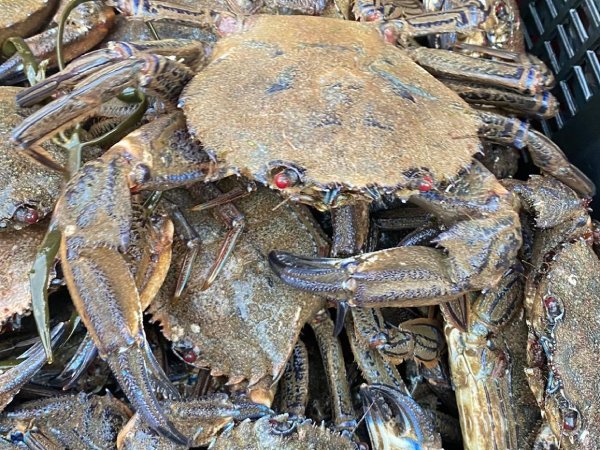
Landings and effort in the velvet crab fishery were down compared to 2022 levels, but the catch rate was higher. The fishery, established in the late 1980s, relies heavily on overseas markets and is regulated through creel limitations and two 4-week closures during the summer peak of the moult season. Better information is needed from fishermen on their logsheets to account for the factor of soak time. The fishery depends on vivier operators for transporting live crabs, and issues arise when landings exceed market demand or vivier capacity.
Queen Scallop Fishery
The queen scallop fishery involves limited targeted fishing, with most landings resulting from bycatch in the king scallop fishery. Annual landings have fluctuated, with a general decline from 2000 to 2015. Landings have been below 5 tonnes annually from 2018 to 2023. Future research aims to understand regional variations in LPUE and the spatial distribution of the fishery.
Common Whelk Fishery
The common whelk fishery targets whelks using pots, with a target season from February through September. Landings have fluctuated, peaking at 450 tonnes in 2020. LPUE has shown an overall increasing trend since 2005, stabilising in recent years. Due to the slow growth and late maturity of whelks, a cautious approach to fishing practices is necessary to ensure sustainable management and long-term viability of the fishery.
Green Crab Fishery
The green crab fishery is characterised by its sporadic nature, often occurring as incidental bycatch in the velvet crab fishery. Landings have stabilised at around 20 tonnes annually since 2008. The opportunistic nature of the fishery makes LPUE interpretation challenging. Irregular reporting and low confidence in data consistency impede analytical analyses for the green crab fishery.
Future Conservation Measures
The report does not explicitly mention any new conservation measures being considered for the fisheries. However, it highlights the need for further research to better understand regional variations in LPUE and the spatial distribution of the fisheries. This suggests that future conservation measures may be informed by this research and could potentially involve adjustments to fishing areas or efforts based on regional variations in stock populations.
The full stock report for 2023 will be available from late August to licensed fishermen in the members’ section of the Shetland Shellfish Management Association website.



![i’m-nervous,-too!-[part-2]](https://10xwealthreport.com/wp-content/uploads/2026/03/177042-im-nervous-too-part-2-1568x784.jpg)