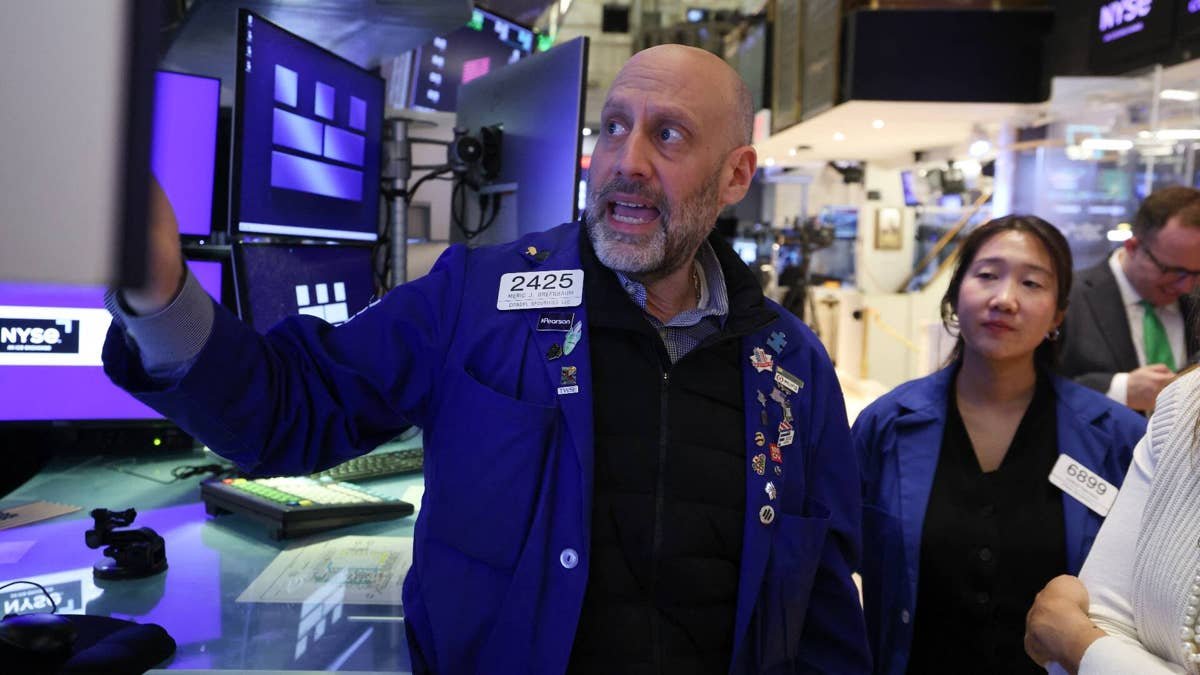
The stock market is currently in the throes of a broad-based sell-off because of the ongoing tensions in the Middle East. The S&P 500 index is currently down by 5.3% from its all-time high and was down as much as 9% a week ago. The Nasdaq-100 technology index plummeted as much as 12% before recovering somewhat to now be down about 7.8%. Throughout history, broad market dips have presented long-term investors with an opportunity to buy high-quality stocks at a discount.
The Vanguard Mega Cap Growth ETF (MGK +0.16%) is an exchange-traded fund that tracks the performance of the CRSP U.S. Mega Cap Growth Index, and it exclusively invests in 60 of the largest companies in the U.S. These giants account for 70% of the total value of all 3,498 companies listed on U.S. stock exchanges, which highlights the concentration of wealth in corporate America.
The Vanguard ETF is down 13% from its all-time high and was down as much as 17% last week, but it could emerge from this sell-off stronger than ever thanks to its top holdings, which include artificial intelligence (AI) powerhouses Nvidia (NVDA +0.07%), Apple (AAPL 2.21%), and Alphabet (GOOG +2.11%)(GOOGL +1.69%). Here’s how the fund could turn an investment of $250,000 into $1 million over the long-term.

Image source: Getty Images.
High exposure to the AI boom, with a splash of diversification
OpenAI launched its AI chatbot ChatGPT in November 2022, and it had amassed over 100 million users in its first two months. This marked the beginning of the AI revolution, which has since created trillions of dollars in value for some of the country’s largest companies.
Nvidia, for example, had a market capitalization of $360 billion at the start of 2023, and it has since exploded almost 12-fold to $4.3 trillion. Nvidia, Apple, and Alphabet are the world’s three largest companies, and they have a combined market capitalization of $11.6 trillion, which could grow even further over the long term as AI continues to supercharge their respective businesses.
- Nvidia supplies the world’s most powerful graphics processing units (GPUs) for data centers, which are the primary chips used in AI development. Demand is through the roof, and the company’s revenue is expected to soar by 71% to $370 billion during its current fiscal year.
- Apple’s latest iPhones, iPads, and Mac computers are fitted with custom chips designed for running the company’s growing portfolio of AI features and applications. With more than 2.5 billion Apple devices in use worldwide, this company could become the largest consumer AI distributor anywhere.
- Alphabet recently overhauled its flagship Google Search platform with a series of new AI features, which are driving an acceleration in its advertising revenue growth. Google Cloud revenue is also accelerating as demand for computing capacity soars from businesses trying to bring their AI aspirations to life.
Those stocks are the three largest holdings in the Vanguard Mega Cap Growth ETF, and their combined weighting of 35.7% means they have a significant influence over its performance.
|
Stock |
Vanguard Mega Cap Growth ETF Portfolio Weighting |
|---|---|
|
1. Nvidia |
13.14% |
|
2. Apple |
12.51% |
|
3. Alphabet |
10.12% |
Data source: Vanguard. Portfolio weightings were accurate as of Feb. 28, 2026, and are subject to change.
Some of the other prominent AI stocks in the Vanguard ETF include Microsoft, Meta Platforms, Amazon, and Broadcom, all of which sit among its top 10 holdings.
However, the fund does offer some diversification. Its 60-stock portfolio also includes pharmaceutical company Eli Lilly, payment processors Visa and Mastercard, Boeing, and consumer companies McDonald’s and Monster Beverage. These holdings could offer the ETF some modest protection if the AI boom hits a speed bump.

NYSEMKT: MGK
Vanguard World Fund – Vanguard Mega Cap Growth ETF
Today’s Change
Current Price
Turning $250,000 into $1 million
The Vanguard Mega Cap Growth ETF has delivered a compound annual return of 12.8% since its inception in 2007, and an accelerated annual return of 22.1% since the AI revolution started gathering momentum three years ago.
Here’s how long it could take the ETF to turn an investment of $250,000 into $1 million based on three different average annual returns:
|
Starting Balance |
Annual Return |
Time to Reach $1 Million |
|---|---|---|
|
$250,000 |
12.8% |
12 Years |
|
$250,000 |
17.4% (midpoint) |
9 Years |
|
$250,000 |
22.1% |
7 Years |
Calculations by author.
It’s unrealistic to expect any ETF to deliver annual returns of over 20% in perpetuity because the law of large numbers eventually becomes a hurdle. For example, if Nvidia stock returned 20% per year for the next decade, it would become a $26 trillion company. That probably isn’t a likely outcome, considering the total output of the entire U.S. economy was around $30 trillion last year.
However, AI could fuel above-average returns in the Vanguard Mega Cap ETF for the foreseeable future. Nvidia CEO Jensen Huang says AI workloads require a thousand times more computing capacity than classical computing workloads, so he estimates data center operators will spend up to $4 trillion per year on infrastructure by 2030 to meet demand.
Companies like Alphabet, Microsoft, and Amazon have been some of the biggest spenders on AI infrastructure so far, which wouldn’t be the case unless they expected a return over the long run. Accelerating revenue growth at Google Cloud, Microsoft Azure, and Amazon Web Services over the last few years is an early sign that the aggressive spending is paying off.
With that said, the Vanguard Mega Cap Growth ETF can still turn $250,000 into $1 million over 12 years if its annual return reverts back to its long-term average 12.8%, so investors can still do well even if the AI industry pumps the brakes.
Anthony Di Pizio has no position in any of the stocks mentioned. The Motley Fool has positions in and recommends Alphabet, Amazon, Apple, Boeing, Mastercard, Meta Platforms, Microsoft, Monster Beverage, Nvidia, and Visa and is short shares of Apple. The Motley Fool recommends Broadcom. The Motley Fool has a disclosure policy.