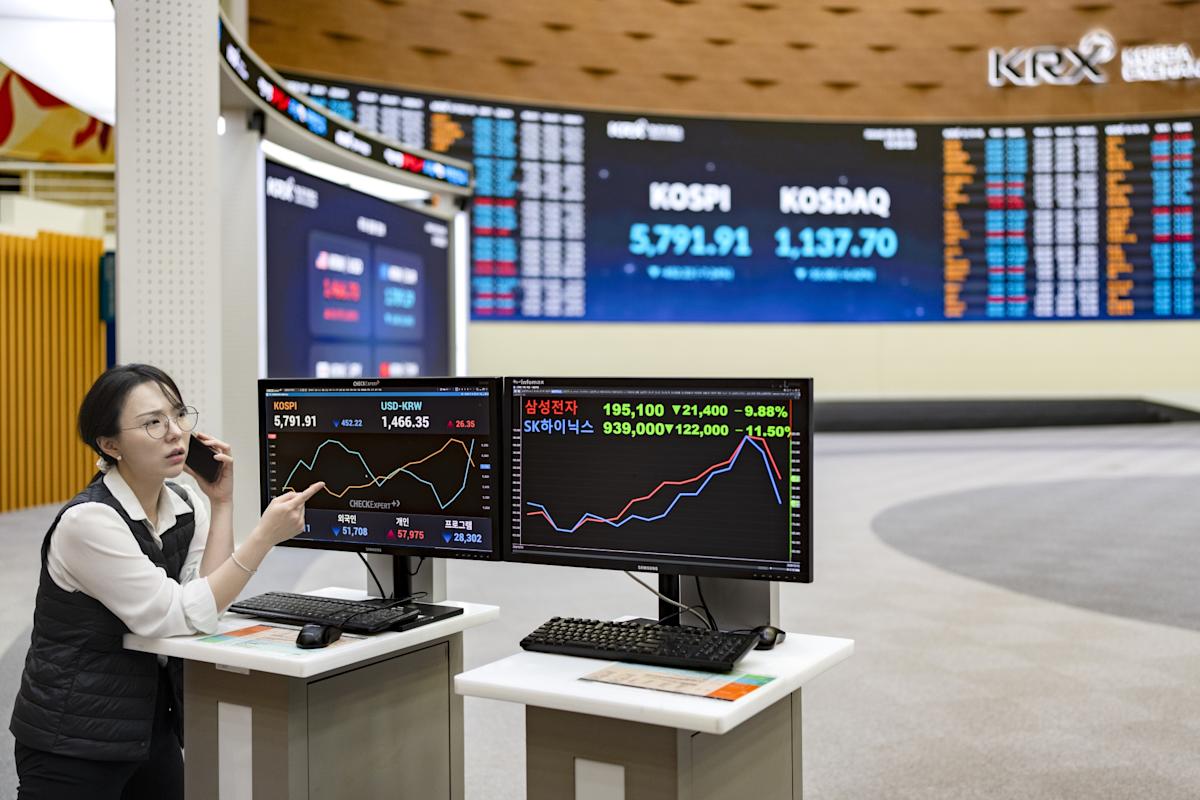
(Bloomberg) — Panic swept through South Korea’s trading floors as concerns over the Middle East conflict sent the world’s hottest stock market to its biggest-ever selloff.
Most Read from Bloomberg
The Kospi Index plunged 12% — following a 7.2% drop on Tuesday — as heavyweights Samsung Electronics Co., SK Hynix Inc. and Hyundai Motor Co. tumbled. The rout triggered a 20-minute trading halt early in the Wednesday session. Of more than 800 stocks on the benchmark, only 10 finished in the green. A key volatility gauge jumped to its highest level since 2008.

From Wall Street strategists to mom-and-pop traders, few saw it coming. Optimism on artificial intelligence and the ensuing demand for memory chips was so strong that retail investors were piling in with borrowed money and analysts were raising their already-bullish calls on Korean equities.
Then came the Iran war. While the conflict has dragged down equities worldwide on concern that higher oil prices will stoke inflation, Korea’s losses have been exacerbated by a record build-up of margin debt. Leveraged wagers that once magnified gains are now accelerating declines, as heavy borrowing turns into forced liquidation with prices in freefall.
“Moves are too extreme so forecasting feels almost impossible — analysis doesn’t really help,” said An Hyungjin, chief executive officer at Seoul-based Billionfold Asset Management Inc. “Retail investors seem to hesitate as well, bids are fading since yesterday. While we’re picking quality names and hedging, this isn’t a clear opportunity.”

Read: Won Hit by ‘VaR Shock’ May Face Even More Losses, Banks Say
The selloff is a stark reminder of how swiftly market exuberance can turn into anxiety. Insatiable demand for memory chips and optimism over corporate reforms had helped push the Kospi up nearly 50% at its peak this year.
Yet there were signs that things were starting to get out of control. Margin debt as well as investor deposits at brokerages surged to new highs, with the rally focused on a handful of big stocks.
“There’s been a lot of buying on credit, especially those heavyweight stocks, with investors putting down only 30%-40% in margin deposit,” said Kim Dojoon, chief executive and investment officer at Seoul-based Zian Investment Management.
Those holdings are seeing forced liquidation, and if there’s another drop on Thursday, nobody will rush to catch a falling knife, Kim said.

![i’m-nervous,-too!-[part-2]](https://10xwealthreport.com/wp-content/uploads/2026/03/177042-im-nervous-too-part-2-1568x784.jpg)