You have a preview view of this article while we are checking your access. When we have confirmed access, the full article content will load.
The economy has repeatedly defied predictions of a downturn since the pandemic recovery began. Now signs of strength contend with shakier readings.

The U.S. economy has spent three years defying expectations. It emerged from the pandemic shock more quickly and more powerfully than many experts envisioned. It proved resilient in the face of both inflation and the higher interest rates the Federal Reserve used to combat it. The prospect many forecasters once considered imminent — a recession — looked increasingly like a false alarm.
Until now.
An unexpectedly weak jobs report on Friday — showing slower hiring in July, and a surprising jump in unemployment — triggered a sell-off in the stock market as investors worried that an economic downturn might be underway after all. By Monday, that decline had turned into a rout, with financial markets tumbling around the world.
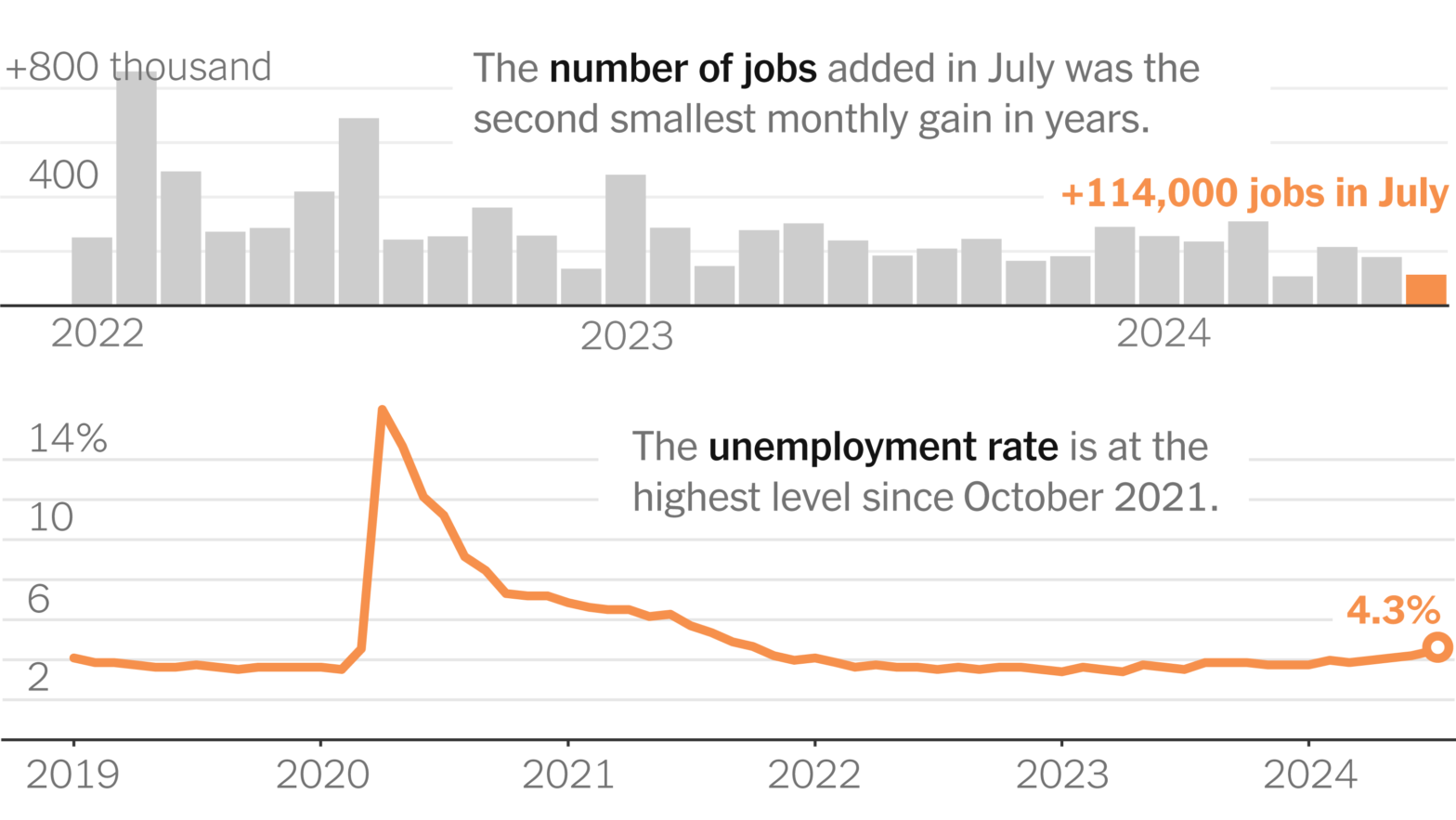
The number of jobs added in July was the second smallest monthly gain in years.
The unemployment rate in July rose to the highest level since October 2021.
Some economists said investors were overreacting to one weak but hardly disastrous report, since many indicators show the economy on fundamentally firm footing.
But they said there were also reasons to worry. Historically, increases in joblessness like the one in July — the unemployment rate rose to 4.3 percent, the highest since 2021 — have been a reliable indicator of a recession. And even without that precedent, there has been evidence that the labor market is weakening.
The Sahm Rule indicator suggests a recession might have already begun.

![i’m-nervous,-too!-[part-2]](https://10xwealthreport.com/wp-content/uploads/2026/03/177042-im-nervous-too-part-2-1568x784.jpg)