By Jennifer Sor
Follow Jennifer Sor
Every time Jennifer publishes a story, you’ll get an alert straight to your inbox!
By clicking “Sign up”, you agree to receive emails from Business Insider. In addition, you accept Insider’s Terms of Service and Privacy Policy.
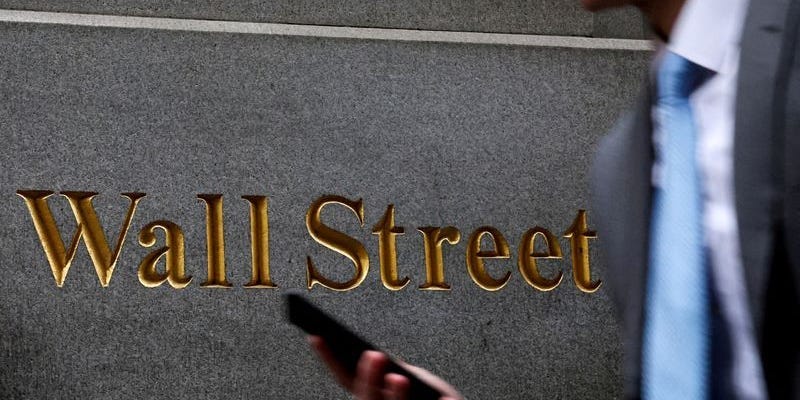
Brendan McDermid/Reuters
- Strategist Mike Green says he’s worried about a 1929-style stock crash.
- That’s because he says a bubble has formed in passive investing, he said.
- Green, who went viral over his claim that $140,000 is the new poverty line, also sees issues in private credit
The strategist who went viral for saying $140,000 is the new poverty line has another hot take: there’s a different bubble in markets more worrying than the one that’s been rattling the artificial intelligence trade.
Michael Green, a portfolio manager and the chief market strategist at Simplify Asset Management, says he’s not so worried about the AI trade losing steam, but instead, he is concerned about a more pressing issue in markets.
That’s the bubble in passive investing, he told Business Insider in an interview, referring to the overwhelmingly common practice of investors putting their money into passively managed funds, such as those that track the S&P 500.
“I am actually much less concerned about the impact of AI on the stock market in terms of valuations or anything else,” Green, whose firm manages over $10 billion in assets, told Business Insider amid the sell-off in software stocks this week, calling passive investing a “much more salient” risk to investors.
“Basically, this is a scenario in which you are creating a crash of a 1929-type framework,” he said.
Investing in passive funds that track sectors or whole indexes has exploded over the last decade. Global assets under management in passive funds soared by more than 400% from 2012 to 2023, overtaking assets managed in active funds, according to LSEG data.
Green said he believes the immense popularity of passive investing has artificially inflated valuations. By his own estimates, flows to passive funds are inflating the US stock markets’ valuation by around 15% each year, with the effect being the most pronounced among large-cap companies.
“Unfortunately, I think that largely people are being allocated into radically overvalued securities with no real fundamental link to much of the performance that we have seen over the past several years,” he said, adding that the hype for AI was largely produced by the popularity of passive investing.
Flows to passive funds could slow or turn negative, Green said, pointing to potential catalysts such as increased layoffs, which could prompt more Americans to cash out their stock holdings.
In the worst-case scenario, he sees an event similar to the “volatility volmaggedon” the market experienced in 2018, when the VIX spiked and caused investors to dump inverse volatility ETPs. The products, which benefit from lower volatility, crashed more than 90% in a single day.
“What causes it to burst is simply a change of direction,” he said.
Green, who has grown more prominent in recent months for his contrarian and bearish views posted on his Substack, said he’s also worried about the private credit market.
Software accounts for around 40% of all private equity-backed loans outstanding, according to a recent Bloomberg analysis, and the sector has been hit with a wave of stock selling as investors fear the hit to software makers’ margins from AI.
Commentators have flagged recent problems in private credit as a “canary in the coalmine” moment and raised concerns about contagion risk stemming from stress in the sector.
“This is not a small space,” Green said. “Crises tend to emerge from the credit space.”
Read next