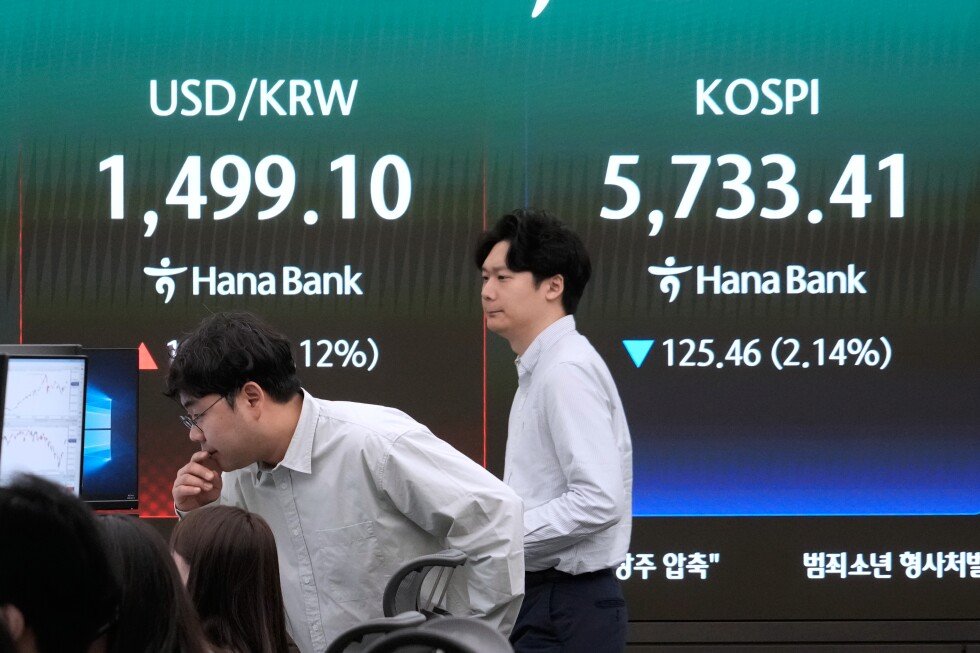

After the US attacked Iran on 27 February, financial markets started sliding. By 30 March, the US S&P 500 index was 9.4% below its record high. However, this fell short of a correction, when prices fall 10%+ from the previous peak. It’s also far from a full-blown stock-market crash (price plunges of 20%+).
I began investing in 1986/87, so I’ve lived through many market wobbles. Yet I’ve witnessed only six proper stock-market crashes in four decades — including three since 2019.
The first — and perhaps most shocking — collapse came on Black Monday, 19 October 1987. On that day, the S&P 500 plummeted by 20.5%, producing the only 24-hour stock-market crash in my lifetime. However, the index ended 1987 slightly ahead. This delivered my first lesson: sudden, sharp market falls later appear as mere blips for long-term investors.
My second lesson came after the bursting of the ‘dotcom bubble’. From March 2000 to October 2002, the tech-heavy Nasdaq Composite index nosedived by 78%. This taught me that the more overvalued assets are, the harder prices plunge when bubbles burst.
My third market failure was the global financial crisis (GFC) of 2007/09. I vividly recall the S&P 500 hitting 666 points — the biblical ‘Number of the Beast’. Back then, it felt like capitalism itself was close to collapse. Yet the S&P 500 has soared more than tenfold since, teaching me to buy stocks during times of maximum misery.
Lesson #4: as the Covid-19 pandemic swept the globe, investors started panic-selling risky assets. In five weeks, both the S&P 500 and FTSE 100 had dived 35%. Remembering the wise words of legendary investor Warren Buffett, my wife and I were “greedy when others were fearful”, investing 50% of our entire wealth into shares during these lows. Our subsequent returns have been life-changing, demonstrating that time heals all wounds — including financial trauma.
Lesson #5: during turbulent times, cash can often be king. Also, spreading money around diversifies portfolio risk to ride out stock-market crashes. For safety’s sake, we now own low-risk money-market funds.
Of course, some stocks keep sliding, even during the biggest market booms. Take the shares of Diageo (LSE: DGE), the global alcoholic-drinks Goliath. While other stocks have boomed over the last five years, Diageo shares have crashed by 55.1%. They are also down by 30% in the past 12 months.
On Friday, 10 April, the Diageo share price closed at 1,441p, valuing the group at £32bn. This is perhaps a third of its peak valuation at end-2021. Yet the producer of Guinness stout, Johnnie Walker whisky, Smirnoff vodka, and Tanqueray gin has origins dating back almost four centuries.