
mbbirdy
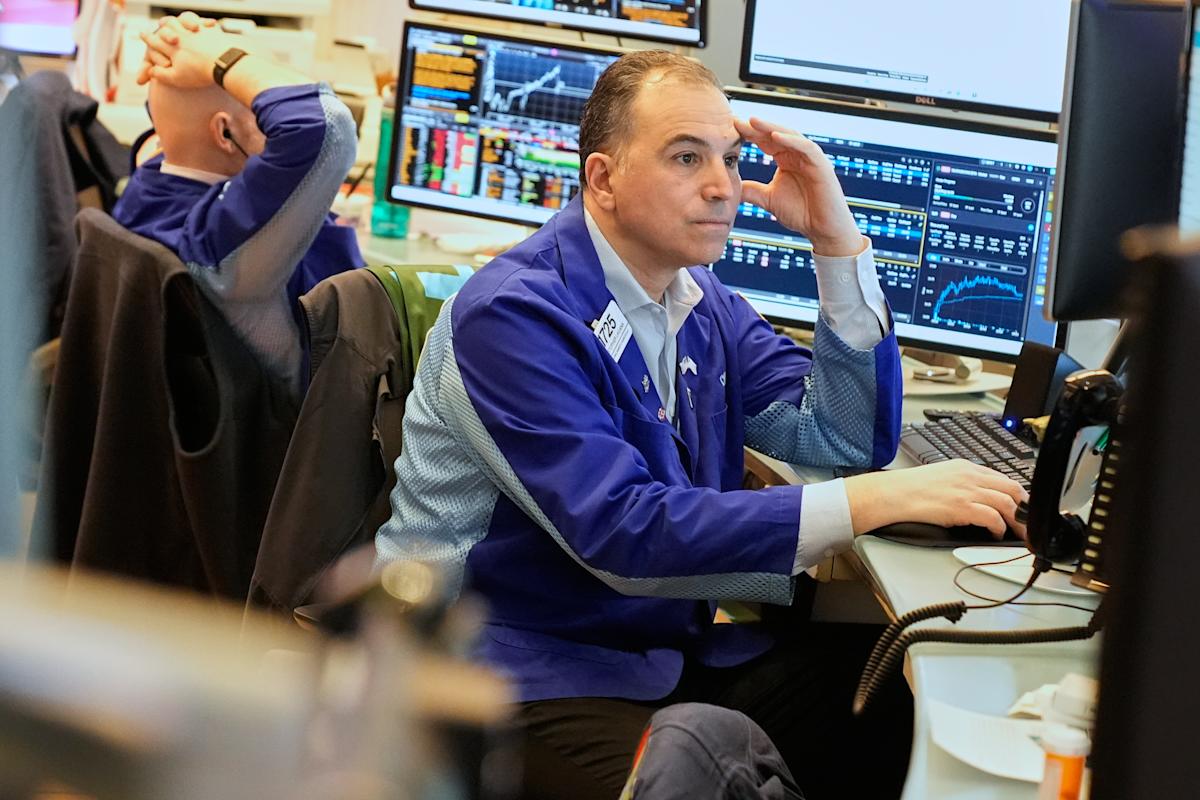
Wall Street marched higher on Friday, after earnings from tech behemoths Microsoft (MSFT) and Alphabet (GOOG) (GOOGL) reignited the artificial intelligence (AI) craze. Moreover, traders bracing for another hotter-than-expected reading on inflation were calmed after the Federal Reserve’s preferred price gauge largely matched estimates.
The benchmark S&P 500 (SP500) climbed 1.07% to 5,102.33 points in mid-day trade. Meanwhile, the tech-heavy Nasdaq Composite (COMP:IND) surged 2.01% to 15,924.85 points and was headed for its best day since February 22. The blue-chip Dow (DJI) lagged the other two indexes in terms of gains, but was still up 0.44% to 38,252.98 points.
Of the 11 S&P sectors, seven were in the green. Communication Services saw an outsized jump of +4%, boosted by Microsoft (MSFT) and Alphabet (GOOG) (GOOGL).
The two tech giants on Thursday delivered quarterly results that cemented their dominance in the AI race. Investors took heart from the reports, especially after soft guidance from Meta Platforms (META) and its heavy spending on AI had sent alarm bells ringing. The Google-parent’s stock in particular clocked a double-digit rise on Friday after top boss Sundar Pichai touted that the company was “well under way with” its Gemini era, referring to its AI model.
Friday also saw Big Oil jumping into the earnings action. Exxon Mobil (XOM) and Chevron (CVX) both reported a fall in their quarterly earnings, as lower refining margins and natural gas prices offset a jump in production.
The other major event today was the release of personal income and outlays data for March. The report from the Bureau of Economic Analysis showed that the core personal consumption expenditures (PCE) price index – the Fed’s favored inflation gauge – rose 0.3% M/M in March, matching the +0.3% consensus and flat from February’s pace. On a Y/Y basis, the core PCE price index rose 2.8%, topping the +2.7% consensus but unchanged from February.
With hotter-than-expected consumer price index reports recently along with Thursday’s data that showed a higher-than-anticipated jump in the Q1 core PCE price index, market participants were bracing for the worst coming into today’s announcement. The largely in-line result alleviated some concerns that interest rate cuts were almost entirely off the table for 2024.
“After the freak-out induced by the Q1 numbers, the March print ended up in one of the ‘less bad’ places relative to what might’ve been. Most of the upside Q1 surprise came from the Jan revision. March was firmer than forecasts but not outrageously so,” the Wall Street Journal’s Fed watcher Nick Timiraos said on X (formerly Twitter).
“That said, the March report doesn’t change the overall picture of 1) inflation progress having stalled, undercutting the ‘start-of-the-year bump in the road’ story (and) 2) The Fed becoming less confident at a time it was hoping to *gain* confidence,” Timiraos added.
Treasury yields slipped on Friday in reaction to the PCE deflator reading, as traders snapped up bonds and ended a three-day sell-off. The longer-end 30-year (US30Y) and 10-year yields (US10Y) were both down 3 basis points each to 4.79% to 4.67%, respectively. The shorter-end more rate-sensitive 2-year yield (US2Y) was down 1 basis point to 4.99%.
See live data on how Treasury yields are doing across the curve at the Seeking Alpha bond page.
“March headline and core PCE inflation are slightly higher than the consensus forecasts… Having said that, the miss is smaller than yesterday, and the monthly readings are in line,” Mohamed El-Erian, chief economic advisor at Allianz, said on X.
“Meanwhile, personal spending rose by more than expected – this after yesterday’s disappointing GDP growth for Q1. The combination matters: While high inflation is bad for an economy still dealing with the consequences of the previous price surge and a Fed having lost some policy credibility, stagflation is a lot worse for the economy, policies, and markets. Thus, yesterday’s market reaction and, thus, today’s calmer response,” El-Erian added.