2 min read
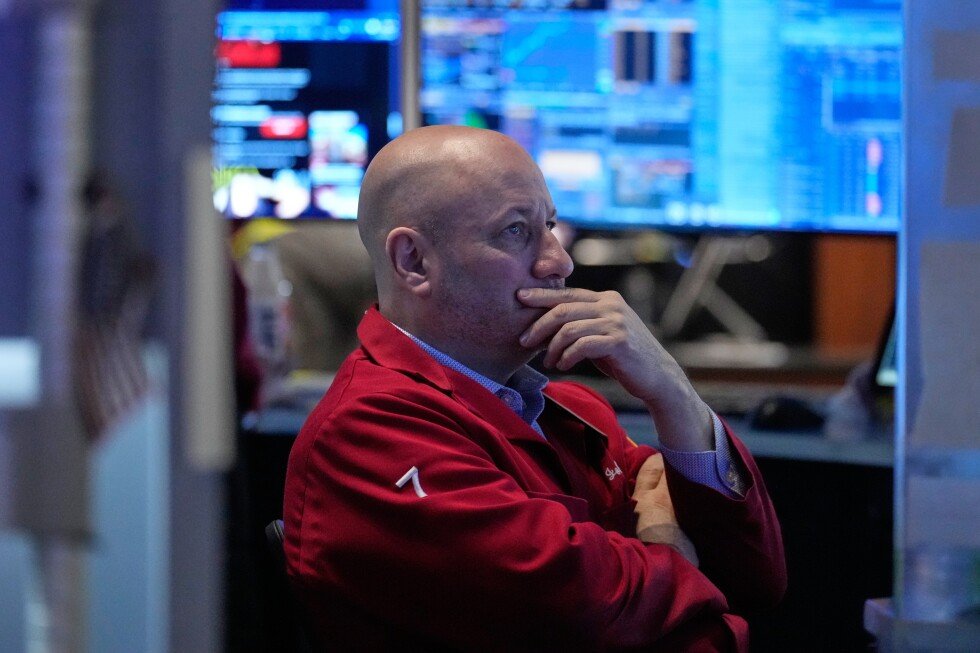
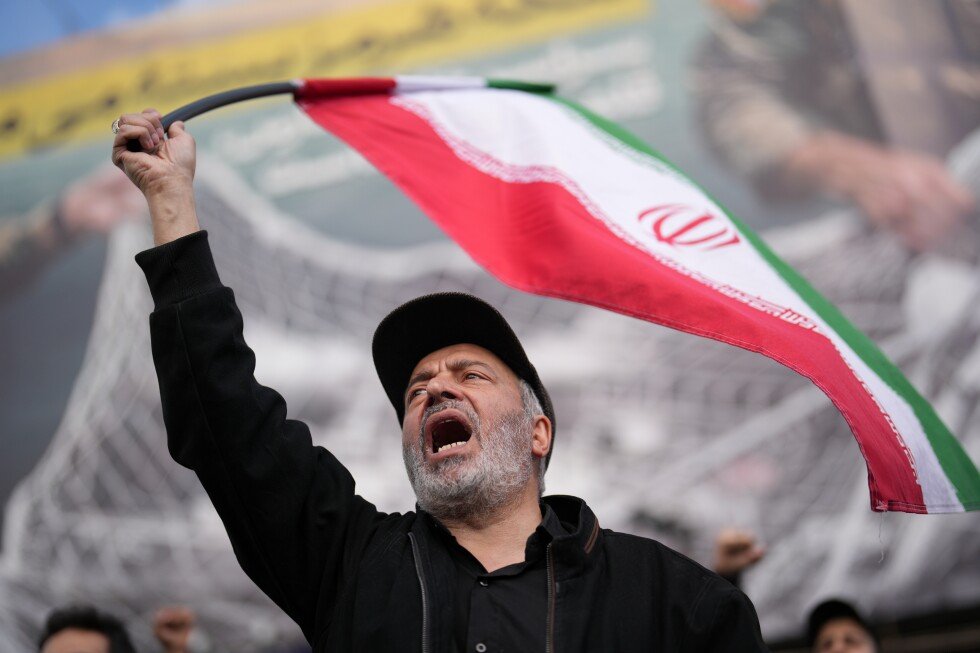
US stocks surged on Wednesday, while oil prices cratered amid relief after the US and Iran agreed to a two-week ceasefire that could lead to a reopening of the Strait of Hormuz to shipping.
The S&P 500 (^GSPC) soared 2.5%, while the tech-heavy Nasdaq Composite (^IXIC) vaulted 3.1%. The Dow Jones Industrial Average (^DJI) jumped 2.7%, or over 1,000 points.
Global markets saw a return of risk appetite after President Trump called for a two-week suspension in hostilities in return for Tehran lifting its blockade of the Strait of Hormuz. He wrote on Truth Social: “I agree to suspend the bombing and attack of Iran for a period of two weeks. This will be a double sided CEASEFIRE!”
Iran’s minister of foreign affairs, Abbas Araghchi, confirmed acceptance of the terms in a statement shortly after Trump’s announcement, saying if attacks on Iran are halted, its own operations would cease and that “for a period of two weeks, safe passage through the Strait of Hormuz will be possible via coordination with Iran’s Armed Forces.”
Some ships have since transited the crucial 21-mile-wide waterway, signs of a reopening that will have the most direct effect on energy markets. Oil prices sank, with Brent crude futures (BZ=F) falling over 13% to $94 per barrel, and West Texas Intermediate crude (CL=F) diving almost 15% to about $95.
Oil’s plunge helped fuel bets that the Federal Reserve will resume interest rate cuts this year, given the lower risk of sticky inflation. Minutes from the Fed’s March meeting, due for release on Wednesday, could shed light on policymakers’ thinking around the impact of the Iran war on the economy.
On the corporate front, Delta Air Lines (DAL) stock jumped after it reported first quarter earnings that beat expectations. The airline said growth in its premium business will continue to deflect major concerns, such as fuel costs and the ongoing government shutdown affecting TSA workers.
LIVE 20 updates
-

You might be looking at the wrong tech stocks
Today’s tech breakout isn’t coming from Big Tech.
The Invesco S&P SmallCap Information Technology ETF (PSCT) just surged to a fresh intraday all-time high after the Iran “truce,” extending a move that has quietly left big-cap tech in the dust.
The chart tells the story: PSCT began pulling away from the large-cap tech (XLK) in late 2025, and that gap has only widened in 2026.
TrendLabs founder J.C. Parets had flagged that divergence even before today’s surge. As he put it on X, “If you’re only looking at the large-cap indexes, you’re missing it.”
He pointed out that when investors say tech is weak, they’re often talking about a handful of megacaps, while smaller tech stocks keep acting like leaders.
There don’t appear to be any obvious pure-play mid-cap tech ETFs, but nearby growth proxies are pressing toward highs too. The Vanguard S&P Mid-Cap 400 Growth ETF (IVOG) and Invesco S&P MidCap 400 Pure Growth ETF (RFG) are both within striking distance of all-time highs.
I’ll be talking with J.C. live today at the top of the 3 p.m. ET hour on Yahoo Finance’s Market Domination.
-
Oil and gas production in the Middle East faces ‘months-long’ recovery process, Wood Mackenzie says
Oil and gas production in the Middle East faces a “months-long” process toward normalization, even with a ceasefire deal in place, the energy consultancy Wood Mackenzie said on Wednesday.
Throughout the war’s first five weeks, the effective closure of the Strait of Hormuz by Iran has filled onshore storage tanks and forced producers throughout the Middle East to shut in, or halt, roughly 11 million barrels per day, Wood Mackenzie said.
Before any of that production can be restarted, oil tankers need confidence that they can safely and reliably begin transiting the strait, said Alan Gelder, Wood Mackenzie senior vice president of refining, chemicals, and oil markets.
“A ‘workable system’ of transit and shipowner confidence in the security of the transiting vessels is essential,” Gelder said. “Ballasting vessels are unlikely to enter via the Strait of Hormuz any sooner than a ‘just in time’ logistics basis, at risk of becoming trapped if hostilities resume.”
Even if shipping bottlenecks are cleared, which could take weeks, producers could face timelines of six to nine months to restart production at the wellhead, Wood Mackenzie said. Repairs to refineries may also impede the progress toward normalization.
In the gas market, repairs at QatarEnergy’s Ras Laffan LNG export terminal are likely to take roughly four months — something the company likely wouldn’t undertake without confidence in legitimate stability, Wood Mackenzie said.
The consultancy noted that major producers already had contingency plans in place before the war broke out, and that most, if not all, production can be brought back to pre-war levels. That said, the desire to move fast could create more problems.
“All this comes with a health warning,” said Fraser McKay, head of upstream analysis at Wood Mackenzie. “Operators hastened by regulators and governments to restore production too rapidly will risk doing more long-term damage to foundational assets.”
-
Retail investors are buying the dip in Tesla stock
After falling 23% year to date, some traders see a bottom in Tesla’s (TSLA) stock price. The EV maker is up slightly in morning trading.
Yahoo Finance’s Brian Sozzi reports:
-
Chips lead a broad Nasdaq 100 charge
The Nasdaq 100 (^NDX) is a sea of green today, with broad participation underneath the surface.
Semis are leading the charge. We just noted that the Philadelphia Semiconductor Index (^SOX) and the iShares Semiconductor ETF (SOXX) hit their first intraday record highs since February, and that strength is showing up all over the board, with names like Lam Research (LRCX), Applied Materials (AMAT), Western Digital (WDC), Micron (MU), Intel (INTC), ASML (ASML), and KLA (KLAC) among the top movers.
There’s also clear strength in travel. Airbnb (ABNB), Booking Holdings (BKNG), and Marriott (MAR) are all firmly higher.
The biggest laggard is Diamondback Energy (FANG). It tracks with crude oil, which is getting crushed by roughly 15%.
The megacaps are helping too: Alphabet (GOOGL), Amazon (AMZN), Meta (META), and Broadcom (AVGO) are up around 3%, while Nvidia (NVDA), Apple (AAPL), Microsoft (MSFT), and Tesla (TSLA) are also higher.
Breadth today is impressive.
-
A key hurdle just gave way for stocks
The Dow (^DJI), Nasdaq (^IXIC), and S&P 500 (^GSPC) are all surging more than 2.5%, vaulting back above their 200-day moving averages — a key technical line traders have been watching closely.
Meanwhile, the Russell 2000 (^RUT), which never lost its 200-day moving average, has now climbed to within 3% of its January record high.
And then there’s the “other Dow.” The Dow Jones Transportation Average (^DJT) is soaring 4% and has hit its first intraday record high since February.
-
Cypherpunk stock surges, apparently on a naming coincidence
Cypherpunk Technologies (CYPH), a microcap biopharma company turned Zcash (ZEC-BTC) digital asset treasury, got a major boost in Wednesday’s trading session, with its shares soaring as much as 20%.
The catalyst appears to be a naming coincidence.
On Wednesday, the New York Times published a story purportedly unmasking the true identity of bitcoin’s enigmatic inventor, who goes by the pseudonym Satoshi Nakamoto. The Times laid out a case that Adam Back, a 55-year-old British cryptographer, is the cryptocurrency’s developer.
A detail in that story linked Back to a group of anarchists formed in the late 1980s called cypherpunks, who wanted to use cryptography to develop a worldwide system of anonymous transactions.
Although no direct link between the company and the group is evident, other than perhaps a shared mission about enhancing privacy technologies, the detail was enough to lift Cypherpunk’s stock and market cap.
Back spoke to Yahoo Finance in December about bitcoin and cryptocurrency. You can watch that interview here.
-
Amid fragile ceasefire, Washington and Tehran remain far apart on key issues
As the market waits for any potential signals on the status of the temporary ceasefire agreed by Washington and Tehran, the two sides remain far apart on key issues that are likely to serve as red lines for both.
On nuclear enrichment:
On the Strait of Hormuz:
Satellite and positioning data showed only limited movement through the Strait on Wednesday morning, essentially unchanged from the weeks before the ceasefire. Oil prices fell by roughly 16% through Tuesday night and Wednesday morning, but they remain far above the fair value of oil, Rystad Energy’s head of geopolitical analysis, Jorge León, told Yahoo Finance.
“Prices went down from $110 to $95,” León said. “That is a significant decline … but still you focus on the absolute level, prices are still at $95 per barrel. I think that the market is becoming skeptical about a fragile ceasefire. I don’t think that this is over.”
-
Mortgage applications fall thanks to higher rates
Mortgage applications are falling, and weeks of rising rates are likely to blame.
Combined refinancing and purchase mortgage applications were down 0.8% through Friday, according to Mortgage Bankers Association data. Lower refinancing activity was responsible for the bulk of that drop, falling 3% from a week earlier and trending 4% lower than a year ago.
Purchase volumes, meanwhile, were up 1% from a week earlier.
“Higher mortgage rates and continued economic uncertainty weighed down on mortgage applications again,” Joel Kan, MBA’s vice president and deputy chief economist, said in a statement.
In the last month, mortgage rates rose from multiyear lows of below 6% to around 6.5%. That jump has closed the refinancing window for some borrowers. The MBA estimated that 30-year conventional mortgage rates averaged 6.51% last week, down slightly from 6.57% a week earlier, but still high enough to give potential borrowers pause.
-
Stocks rally at the open as Iran ceasefire relief sweeps through markets
A two-week ceasefire between the US and Iran sparked a relief rally in markets at the open.
The S&P 500 (^GSPC) surged 2.5%, while the tech-heavy Nasdaq Composite (^IXIC) jumped 3.5%. The Dow Jones Industrial Average (^DJI) added more than 1,300 points, or about 3%, to trade at its highest level in over a month.
Oil prices tumbled well below the $100-per-barrel threshold. Futures on West Texas Intermediate (CL=F) crude traded around $92 per barrel, while Brent (BZ=F), the international benchmark, fell to $91 per barrel.
The 10-year yield (^TNX) also fell 9 basis points to 4.25% as inflation expectations eased on the potential of coordinating traffic through the Strait of Hormuz. Expectations of a Federal Reserve interest rate hike in the coming months also eased, according to CME Group’s FedWatch.
We’re also watching the dollar index (DX-Y.NYB), which has dropped 1.2% to below 100 (for more on that, see my colleague Jared Blikre’s post below).
-
Dollar tumbles as the fear trade breaks
The dollar is cratering as it loses its war premium.
The US dollar index (DX-Y.NYB) is in the midst of its third-biggest decline this year, wiping out all the gains since March 3. The Bloomberg dollar spot index has erased its entire 2026 gain.
Meanwhile, risk markets are surging — especially foreign equities that suffered as the dollar ripped higher off its January lows. The iShares MSCI Emerging Market ETF (EEM) is already on track for its biggest jump since the post-“Liberation Day” mammoth surge on April 9, 2025.
South Korea (EWY) leads the world in country exchange-traded funds with a gain of more than 10%. Chile (ECH) is up 7%, while Taiwan (EWT), Turkey (TUR), the UAE (UAE), Mexico (EWW), Japan (EWJ), and India (INDA) are all up more than 5%.
Gold (GC=F) and copper (HG=F) futures are gaining 3%, while silver (SI=F) and platinum (PL=F) are surging 7%.
This puts all the “dollar wrecking ball” headlines on the back burner for now.
-
The AI industry knows it has a massive image problem
While the AI transformation is built on the hopes of augmented productivity, the expected downside that comes with it is job displacement on a massive scale. The industry knows just how big a problem this could become.
Yahoo Finance’s Hamza Shaban reports:
Read more here in the takeaway from today’s Morning Brief.
-
Exxon shares fall as company says war in Middle East will lower Q1 oil-equivalent production by 6%
Shares in energy giant Exxon Mobil (XOM) fell roughly 5.5% in premarket trading on Wednesday after the company said conflict in the Middle East will likely lower its first quarter global oil-equivalent production by 6% on a quarter-on-quarter basis.
The Middle East accounts for roughly 20% of Exxon’s upstream assets and 5% of its global refining and chemical capacity, the company said in a regulatory filing published Wednesday.
Exxon explicitly cited attacks on two LNG assets at Qatar’s Ras Laffan LNG export terminal, which the company said accounted for 3% of its 2025 global upstream production, with reports indicating that “the damage will take a prolonged period to repair.”
Volume disruptions in the Middle East, which include production disruptions, shutdowns, and lower availability of crude deliveries, are expected to have a negative impact of roughly $300 million to $500 million on first quarter results.
On the other hand, Exxon said it expects a positive impact of $1.9 billion to $2.3 billion on the quarter’s results due to heightened oil prices.
As Exxon looks to address the shortfalls caused by conflict in the Middle East, the company noted it is “increasing Permian production to 1.8 million oil-equivalent barrels in 2026, optimizing logistics and crude and product flows, and maximizing refinery throughput wherever safe and feasible.”
-
Delta stock jumps after Q1 earnings beat
Delta (DAL) stock surged 12% before the bell on Wednesday following the release of its positive first quarter earnings.
Yahoo Finance’s senior reporter Pras Subramanian discusses the latest earnings release from the airline giant.
-
Fed’s vice chair says oil price shock complicates inflation outlook
Yahoo Finance’s Jennifer Schonberger reports:
Federal Reserve Vice Chair Philip Jefferson said Tuesday that the jolt in energy prices complicates his inflation outlook, and depending on how long the Middle East conflict lasts, elevated oil prices could weigh on consumer and business spending.
“It is difficult to say how long the conflict in the Middle East and related disruptions could last,” Jefferson said in a speech in Detroit. “I am highly attentive to the fact that inflation has remained above the Fed’s 2 percent target for five years … That is why I am committed to returning inflation to our target.”
-
How the math works on a $1.75 trillion SpaceX valuation
Elon Musk’s SpaceX (SPAX.PVT) is seeking a $1.75 trillion valuation in its forthcoming IPO — a huge number that would immediately make it the sixth most-valuable listed company. Here’s an analysis of the math behind that lofty figure.
From Reuters:
-
Premarket trending tickers: Micron, Western Digital, and Levi’s
Micron (MU) stock rose 10% during premarket hours following the rise seen in fellow chipmakers SK Hynix (000660.KS) and Samsung Electronics (005930.KS), which forecast record quarterly earnings on Tuesday.
Western Digital (WDC) stock rose 8% before the bell today. Morgan Stanley recently reiterarted its Overweight rating for Western Digital, which makes hard disks and lifted its price target to $380 from $369.
Levi’s (LEVI) stock jumped 10% during premarket hours on Wednesday following the news that it had beat analysts estimates for revenue and earnings and raised its fiscal year guidance.
-
Shell: Oil trade profit surged as Iran war caused chaos
Oil giant Shell (SHEL) announced on Wednesday that its oil trading operation saw a boost in earnings during the first quarter, as the Iran war caused a rise in oil prices due to the blockage of the Strait of Hormuz.
Shell’s stock price fell 4% before the bell today following the news of a two-week ceasefire between the US and Iran.
Bloomberg News reports:
-
SK Hynix shares jump after peer Samsung projects blowout earnings
SK Hynix (000660.KS) shares surged 12% on Wednesday following the news that the chipmaker’s peer, Samsung (005930.KS), had forecast record quarterly earnings, leading investors to expect positive results from SK Hynix, which will release its first quarter earnings on April 29, 2026.
Reuters reports:
-
Gold rises as Tump and Iran agree to two-week ceasefire
Bloomberg reports:
-
Oil prices plummet as US and Iran reach ceasefire deal