1 min read
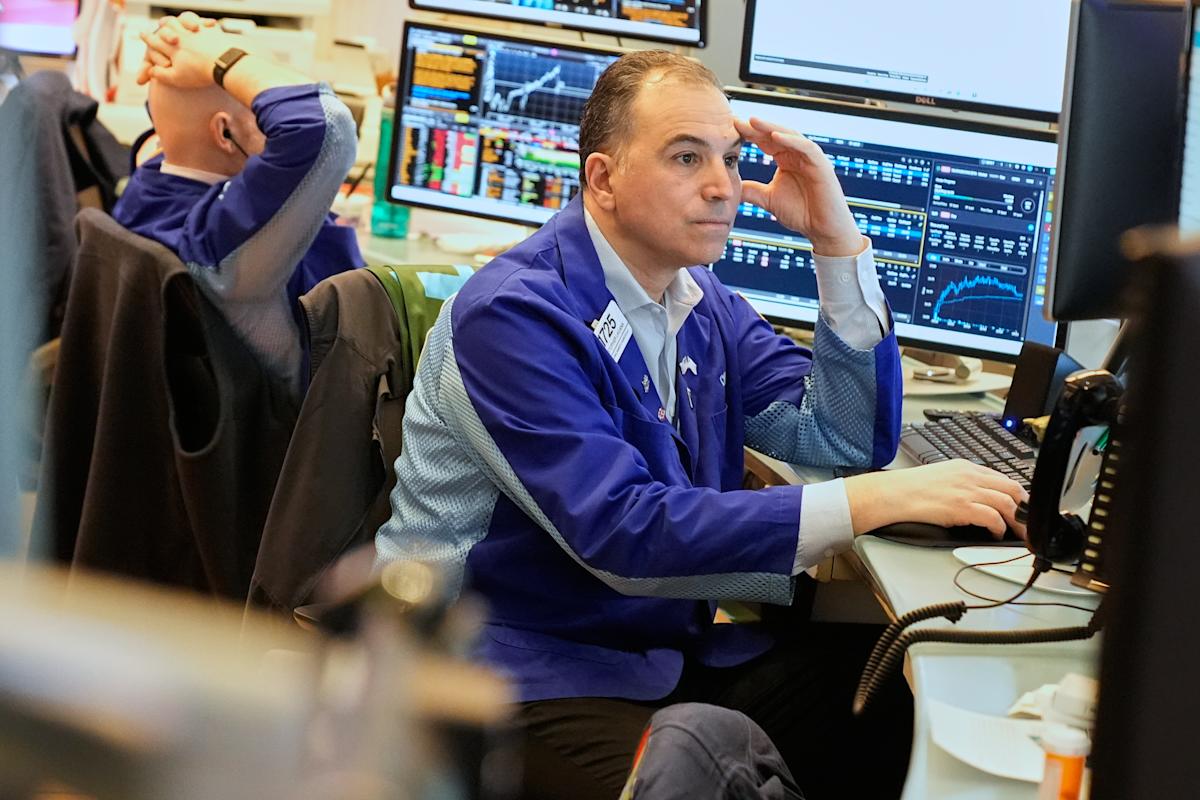
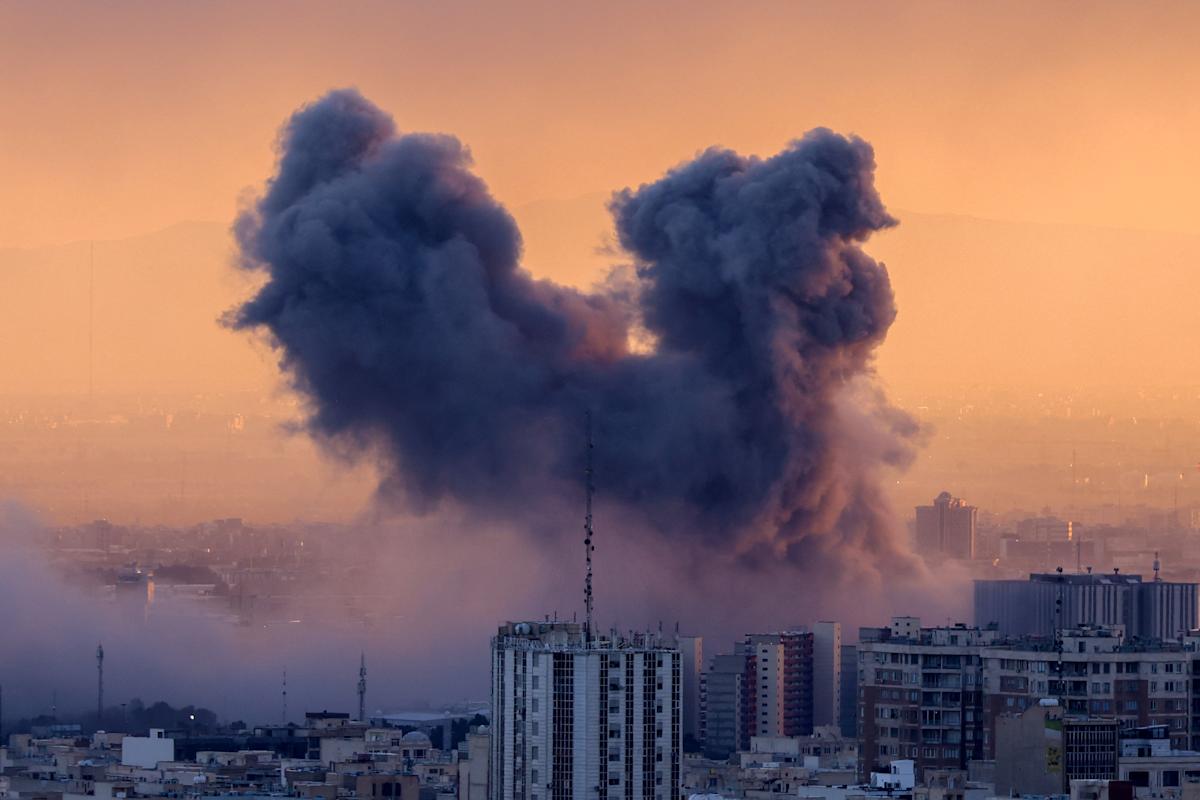
US stocks declined but came back from deeper losses for the second day in a row on Tuesday after Israel and US jets launched new strikes on Iran, as the widening conflict stoked worries about a drawn-out regional war.
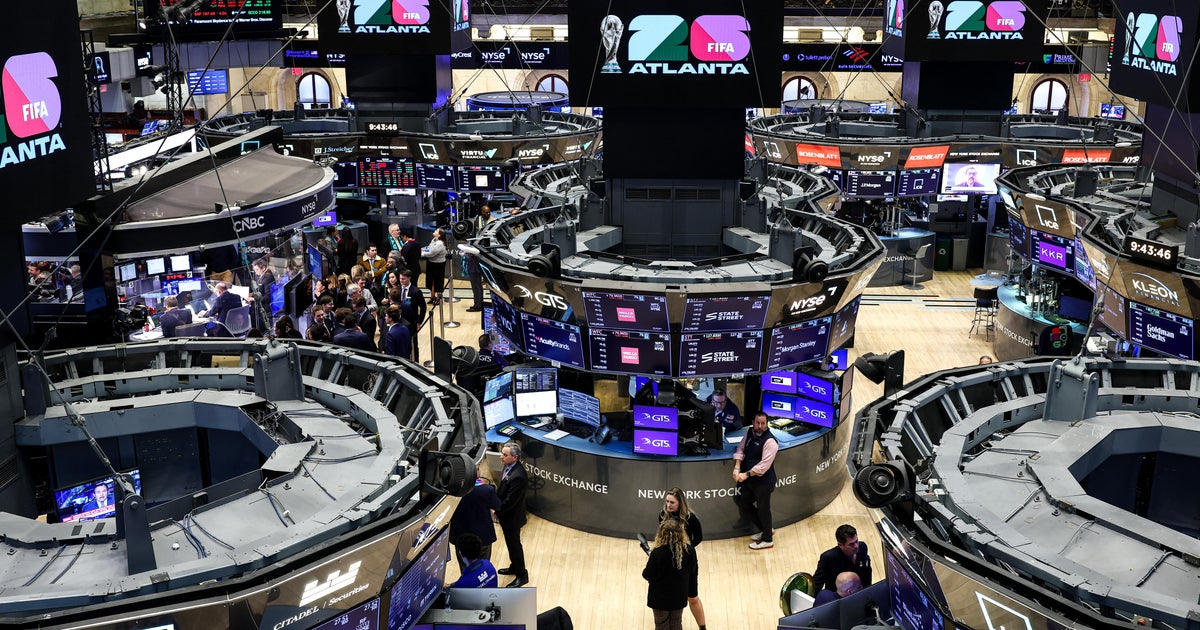
The Dow Jones Industrial Average (^DJI) fell 0.7%, or over 350 points, while the S&P 500 (^GSPC) and the Nasdaq Composite (^IXIC) both dropped 0.8% as oil prices continued to rally on concerns about blocked supply.
The fresh wave of Israeli-led attacks has jolted markets that on Monday mostly managed to shake off the initial shock of the outbreak of US-Iran hostilities. The focus is now on Tehran’s response after Iran targeted oil infrastructure and other targets across a huge swathe of the region, with at least nine countries reporting hits.
President Trump fueled fears that the US would be drawn into a prolonged war, as he refused to rule out putting American boots on the ground. “Right from the beginning, we projected four to five weeks,” Trump said. “But we have the capability to go far longer than that.”
Crude prices (BZ=F, CL=F) continued to rise on concerns of disruption to key supply routes, up around 4% after stronger gains earlier in the session as inflation worries grew. Meanwhile, gold (GC=F) prices turned lower after a four-day rally, slipping by around 4%.
Beyond geopolitics, investors are watching corporate earnings. Shares in Target (TGT) rose after the retail giant posted lackluster holiday and full-year sales that met Wall Street estimates.
LIVE 28 updates
-
US stocks pare losses, oil futures trim gains as markets recalibrate to Mideast conflict
The major stock indexes in the US recovered from heavy losses that occurred after US officials said that the military operation in Iran could last for weeks.
The Dow Jones Industrial Average (^DJI), which sank by more than 1,000 points earlier in the session, was down 0.7%, or around 350 points, by 2 p.m. ET.
The S&P 500 (^GSPC) and Nasdaq Composite (^IXIC) were down 0.8%, also after a greater drawdown in the morning.
Crude oil prices continued to surge but trimmed some of those gains after President Trump said he expects higher oil prices to be short-lived. Brent (BZ=F) and WTI (CL=F) crude futures rose 4%.
In a press conference with German Chancellor Friedrich Merz, Trump said the US could see “a little high oil prices for a little while,” but added that, “as soon as this [war in Iran] ends, those prices are going to drop — I believe lower than even before.”
-
Trending tickers: Plug Power, Sea Limited stocks suffer sharp losses, Pinterest rises
MongoDB (MDB) wasn’t the only stock making outsized moves on Tuesday (see blog below). Several stocks were highly active during a volatile session.
Here’s a look at some trending tickers on Yahoo Finance, as of 12:45 p.m. ET:
-
MongoDB stock crushed on disappointing Q1 guidance, Atlas growth worries
MongoDB (MDB) stock is getting pummeled during Tuesday’s trading session. Shares of the software firm fell 20% after the company reported earnings on Wednesday and forecast first quarter profit below Wall Street expectations.
MongoDB reported that revenue in its Atlas business rose 29% in the fourth quarter, a slight deceleration from the previous quarter, which disappointed investors and fueled concerns over the cloud database platform’s long-term growth prospects.
Of the 42 analysts who cover the stock, more than 19 lowered their price targets after the results, according to Reuters.
Shares of MongoDB had already been down year to date before Tuesday’s sell-off. Software has been among the hardest-hit industries in the “AI scare trade,” as new artificial intelligence integrations have spooked investors worried about how the AI disruption could affect companies’ revenue streams.
-
Fed’s Williams: War in Iran heightens uncertainty in the economy, near-term inflation outlook
New York Federal Reserve president John Williams said on Tuesday that the Middle East war will affect the near-term inflation outlook and increase economic uncertainty.
Yahoo Finance’s Jennifer Schonberger reports:
Williams also addressed the effects of the Trump administration’s tariffs, which he said have been overwhelmingly borne by US consumers and businesses, and concerns in the private credit market after investors in fund manager Blue Owl have asked for their money back.

Cue the ‘dollar wrecking ball’ headlines
The US dollar index (DX-Y.NYB) is rapidly nearing three-month highs, amid the biggest two-day surge since late July. The dollar pain trade is already making its rounds through global stock markets and the metals complex.
Though gold (GC=F) clearly benefited from haven flows Monday as investors priced in the Iran conflict, it’s down 3.7% this morning — the most since the giant $600 slide on Jan. 30.
Platinum (PL=F) is down 10%, silver (SI=F) is off 6%, and palladium (PA=F) 7%.
Meanwhile, energy commodities are soaring, with heating oil up (HO=F) nearly 9%, crude oil (CL=F, BZ=F) up 7%-8%, natural gas (NG=F) up 6%, and RBOB gasoline futures (RB=F) up around 4%.
While the dollar pain trade is clearly starting to flex, it intensifies with the dollar index north of 100. Given this ceiling has held since last May, there’s a decent chance of some relief at that level, should the rally continue.
The Iran conflict ‘could be different’ — and more impactful — than previous flare-ups
As the Iran conflict runs into its fourth day, retaliatory strikes from what remains of the regime are increasingly crossing red lines not passed in previous conflicts.
Iran is now targeting energy infrastructure throughout the Middle East, including strikes on tankers that have effectively closed the Strait of Hormuz. The moves will have a “big psychological impact on the markets” and signal that this conflict “may be different” than previous flare-ups where tensions and prices quickly settled, analysts said.
Chip stocks hammered
The engine of the AI trade — chip stocks — is getting sold hard.
Of concern, the broader industry index (SOXX) opened just under its 50-day moving average — a key technical level that hasn’t been breached since December.
To be fair, it’s the 200-day average that matters most, and that’s still 15% to the downside around the 280 level.
After the SOXX first rose above the 200-day last May following the “Liberation Day” washout, dips below the 50-day have been short-lived — with the 100-day ultimately holding in the most extreme case (currently about 315).
A quick scan of our semiconductor heat map, which shows how far each stock is from its 52-week high, reveals that nearly half of these names are off by 20% or more.
US stock market sells off on Iran conflict escalation
The US stock market slid deeply into the red on Tuesday after the US and Israel began a new barrage of attacks against Iran, and a widening conflict turned up nerves about a drawn-out regional war.
The Nasdaq Composite (^IXIC) led the retreat, losing roughly 1.9%, while the S&P 500 (^GSPC) and the Dow Jones Industrial Average (^DJI) saw slightly leaner drops of 1.6% and 1.7%, respectively, as oil prices rallied further on concerns about blocked supply and, increasingly, threats to production.
Crude prices (BZ=F, CL=F) began to climb again as key supply routes remain blocked and Iranian attacks widened out to include Middle East energy infrastructure, gaining over 6% as inflation worries grew. Meanwhile, gold (GC=F) prices turned lower after a four-day rally, slipping 2%.
In the corporate world, shares in Target (TGT) rose in premarket after the retail giant posted lackluster holiday and full-year sales that met Wall Street estimates.
Korean stocks tank by most since 2020, leading US chips down
It’s a sea of red in foreign stock markets and foreign exchange-land this morning, as my colleague Jake Conley has been writing. Investors pricing in higher energy costs, lower risk appetite, and a more expensive dollar are unwinding many of the most profitable trades of the last year.
After a decent drubbing on Friday and being closed for a holiday Monday, the iShares MSCI South Korea ETF (EWY) is sinking 12% this morning — the most since 2020. (It has still tripled from the April 2025 post-Liberation Day lows.)
Korea is heavily leveraged to the chip trade, which is also getting repriced (to the downside) this morning.
Micron (MU), Sandisk (SNDK), and Lumentime (LITE) are off 6%, while Western Digital (WDC), ASML (ASML), and Taiwan Semi (TSM) are down 5%.
Having said that, the Philly semiconductor index (SOX) is set to open about 8% from its record high, just above the 50-day moving average at the 336 level. That’s one to watch as the day develops.
The currency market is pricing in a supply-side inflation shock
Global currencies swung widely this morning as foreign exchange traders priced in the effects of what has become an increasingly broad supply-side inflationary shock.
The dollar is gaining not only on an index basis but against a basket of other currencies as the market assesses that the US is less exposed to direct physical supply disruption, though not immune.
Meanwhile, Europe’s currencies are taking the brunt of the blow in the foreign exchange market. Europe remains heavily reliant on imported liquefied natural gas (LNG), including significant flows from Qatar, and the country’s production stoppage of LNG has sent European Title Transfer Facility (TTF) gas prices (TTF=F) soaring by more than 85% over the past five sessions.
Unlike a typical geopolitical shock that drives flows into government bonds, this episode has seen yields rise as traders price in higher inflation and fewer central bank rate cuts.
Emerging market currencies tied to energy imports are also under pressure. Egypt’s pound breached a key sympathy level of 50 per dollar as investors brace for prolonged regional instability, and predictions of a South African interest rate hike later this month are surging after predictions as recently as Friday that South Africa’s central bank would cut rates at its upcoming March meeting.
Best Buy posts same-store sales decline as consumer demand softened in key holiday quarter
Best Buy (BBY) stock jumped as much as 12% in premarket trading despite the retailer reporting a surprise sales slump in its key holiday shopping season.
Same-store sales declined 0.8% in the fourth quarter, the company said Tuesday. Wall Street had hoped for a 0.2% increase after two straight quarters of positive growth.
“Our data sources show our overall market share was at least flat, pointing to slightly softer customer demand for our industry during the holiday quarter,” Best Buy CEO Corie Barry said in the release.
Best Buy expects first quarter same-store sales to return to growth, rising 1%.
Revenue for the fourth quarter totaled $13.81 billion, less than the $13.88 billion Wall Street had expected, per Bloomberg consensus data. Adjusted earnings per share came in higher at $2.61, more than the $2.46 the Street predicted. Best Buy stock is down more than 30% in the past year.
For the full year, revenue came in at $41.69 billion, just below the $41.76 billion Wall Street predicted. Adjusted earnings per share came in at $6.43, $0.12 above Wall Street’s estimates for $6.31.
For the year, same-store sales grew 0.5%, less than the 0.9% increase Wall Street was looking for.
Oil rally builds as ‘staggering’ Middle East war jolts energy
Bloomberg reports:
Bottom line on Target earnings that just hit
There will be a lot of pomp and circumstance for Target (TGT) today. At the same time as the retailer puts out its earnings release, it’s holding its annual investor day in its backyard of Minneapolis.
I think the company — now led by a new CEO, Michael Fiddelke, and an almost entirely new leadership team — will hype its store investment plans and say that 2025 results will be a low-water mark.
Execs will probably use today’s earnings beat and call out of positive sales in February to help their pitch to Wall Street (and investors more broadly, who have been burned badly by the stock in the past five years).
All of that said, I am not taking the bait, and you shouldn’t take it either. Target should stay in the penalty box and is a “prove it” stock. That means until it starts stacking positive quarters, you just don’t buy the stock and continue to favor Walmart (WMT) or Costco (COST) on pullbacks.
Here’s what I didn’t like from Target’s quarter to underscore my point:
The market’s 3 biggest questions about the Iran conflict
Markets provided an initial response to the war in Iran, with the impact on oil prices and inflation at the forefront, writes Yahoo Finance’s Hamza Shaban.
He writes:
Here are the three biggest questions about the Iran conflict.
Target sales fall 2.5% during holiday quarter to cap ‘challenging’ 2025
Shares in Target (TGT) popped before the bell after the retail giant’s Q4 and 2025 sales dropped, but met Wall Street expectations.
Yahoo Finance’s Brooke DiPalma reports:
Treasury yields rise as Iran war fuels global bond rout
US Treasurys followed other bond markets lower, with traders retreating from bets for interest-rate cuts in response to the potentially inflationary impact of an escalating Iran war.
Bloomberg reports:
Trump vows ‘Whatever it takes’ on Iran as conflict widens
From Bloomberg:
… The Trump administration will soon roll out a program to help mitigate rising energy costs, Secretary of State Marco Rubio told reporters in Washington before heading into a briefing for US lawmakers. He said the campaign would only intensify.
“I’m not going to give away the details of our tactical efforts, but the hardest hits are yet to come from the US military,” Rubio said.
Qatar’s LNG blackout just broke the global gas market
Iranian drone strikes forced QatarEnergy to halt production at Ras Laffan and Mesaieed, effectively taking one-fifth of global LNG export capacity offline in a single geopolitical event.
From Oilprice.com:
Continued weakness in Ford & General Motors pre-market
You may be wondering why we are seeing Ford (F) and General Motors (GM) sell-off more than the broader market this week. Sure, there is the thinking that with stocks down and with us at war, people put off buying the more expensive cars and trucks each automaker continues to hawk.
But keep this mind. Both automakers have made a hard pivot away from electric vehicles and passenger cars, each being ideal in an environment of sustained higher gas prices (which we may be looking at). Ford especially is really playing up its pickup truck bonafides.


Stay Ahead of the Curve: Subscribe Now to Receive Instant Breaking News Alerts Directly to Your Inbox!
- Latest
- Popular