Updated 1 min read
US stock futures rose early Wednesday as Wall Street reacted to Trump’s State of The Union address and braced for Nvidia’s earnings report.
Futures linked to the Dow Jones Industrial Average (YM=F) held above the baseline, contracts on the S&P 500 (ES=F) rose 0.1%, and Nasdaq 100 futures (NQ=F) made gains of around 0.2%.
The muted action in futures followed a strong regular session on Tuesday where the S&P 500, Nasdaq Composite and Dow all rose as investors rotated back into technology shares.
Software and cybersecurity names staged a relief rally after AI startup Anthropic introduced new enterprise capabilities on its Claude Cowork platform, allowing integration with corporate applications such as Google (GOOG) Drive, DocuSign (DOCU), and LegalZoom (LZ).
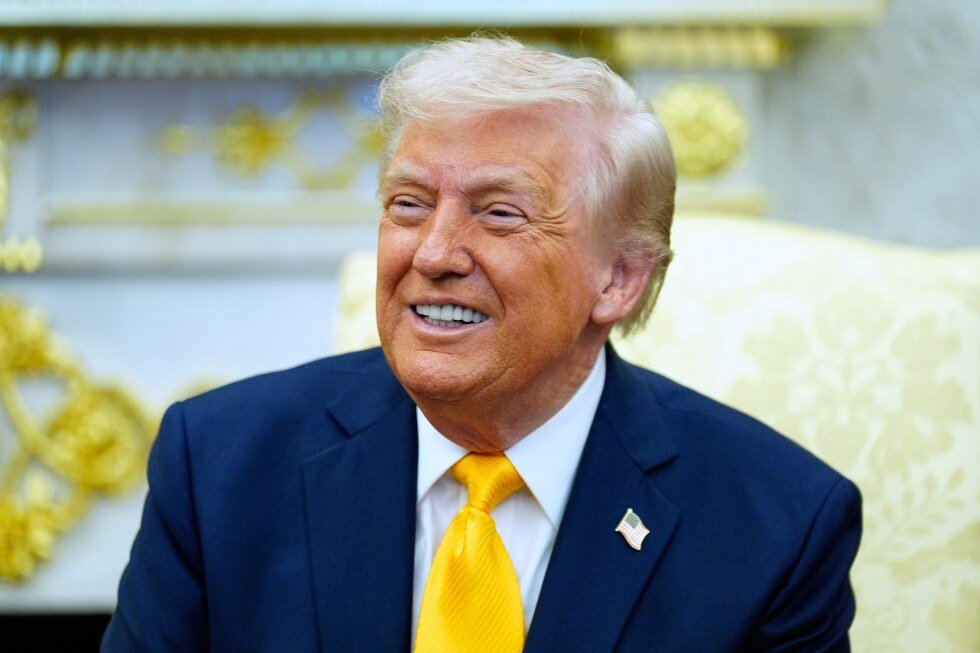
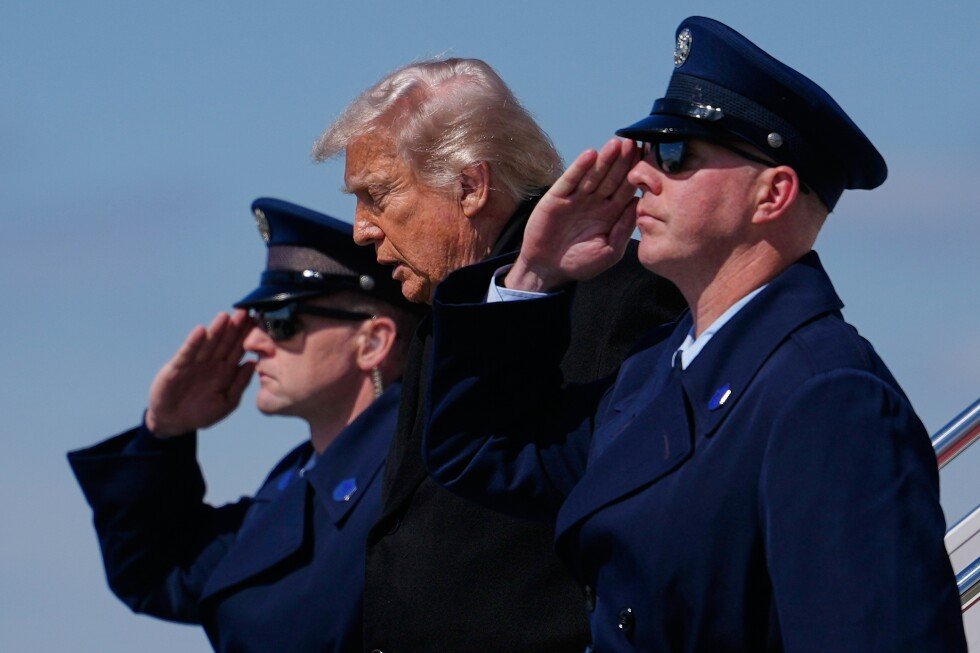
Looking ahead for the week, Trump delivered his 2026 State of the Union address Tuesday night. Considering Trump experienced the first major political pushback to tariffs over the past week, the address saw Trump rail against the Supreme Court while pushing forward on global tariffs.
Beyond the State of Union, traders are also monitoring geopolitical developments, including rising tensions between the US. and Iran. Over the weekend, President Donald Trump threatened to lift global tariffs to 15%, though a 10% levy on imports took effect Tuesday.
With earnings still rolling on, all eyes now turn to Nvidia’s (NVDA) quarterly results, due Wednesday after the bell, alongside earnings from Salesforce (CRM) and Snowflake (SNOW). The reports arrive as investors reassess elevated tech valuations and scrutinize heavy AI-related capital spending by hyperscalers.
LIVE 3 updates
-
Trump says US wants to make a deal in Iran but needs guarantees Iran will ‘never have a nuclear weapon’
In comments on Tuesday night, President Trump said he is hoping to make a deal with Iran, but only if the Iranians are willing to pledge to never develop nuclear weapons.
“We want to make a deal but we haven’t heard those secret words: ‘We will never have a nuclear weapon,'” Trump said.
“My preference is to solve this problem through diplomacy but one thing is certain: I will never allow the world’s number one sponsor of terrorism, which they are by far, to have a nuclear weapon — cant let that happen.”
Futures on US pricing benchmark West Texas Intermediate (WTI) crude (CL=F) and international benchmark Brent crude (BZ=F) ticked up by roughly 0.7% earlier in the day and remained unchanged throughout the evening.
Conflict between the two nations could threaten the Strait of Hormuz, a shipping chokepoint largely controlled by Iran that is vital to the global oil trade.
Iranian foreign minister Abbas Araghchi, who has been representing Iran in negotiations with the US, said in an X post on Tuesday that “Iran will under no circumstances ever develop a nuclear weapon.”
“Our fundamental convictions are crystal clear: Iran will under no circumstances ever develop a nuclear weapon; neither will we Iranians ever forgo our right to harness the dividends of peaceful nuclear technology for our people,” Araghchi wrote.
Over the past few weeks, the US has amassed a large armada in the Gulf region, including two aircraft carriers and the largest air power buildup in the region since the country’s 2003 invasion of Iraq.
During his State of the Union address Tuesday night, Trump cited Iran’s military capabilities, including ballistic missiles that can reach Europe and attempts to build missiles that could reach the US, as serious national security concerns.
“I will never hesitate to confront threats to America wherever we must,” Trump said Tuesday night. “We wiped it out [the Iranian nuclear program], and they want to start it up all over again.”
US Special Envoy Steve Witkoff and Jared Kushner, the president’s son-in-law, who are leading US negotiations, are set to meet with their Iranian counterparts in Geneva on Thursday in what is seen as a last-ditch attempt to find a diplomatic solution.
-
Trump says Big Tech developers will fund their own energy usage under new ‘ratepayer protection pledge’
During his State of the Union address on Tuesday night, President Trump said major tech companies will be required to fund their own electricity usage under a new “ratepayer protection pledge” he negotiated with the Big Tech industry.
“We have an old grid, and an amount of energy that’s never been needed before,” Trump said. Americans, he noted in his comments, are concerned that “energy demand from AI data centers could drive up their electricity utility bills.”
According to estimates from the Lawrence Berkeley National Laboratory, power demand from US data centers doubled between 2018 and 2024 and could triple by 2028.
President Trump promised to cut electricity bills by half on the campaign trail, but prices have instead surged throughout his second term on the back of the growing AI industry. The average retail price for electricity reached 17.24 cents per kilowatt-hour in December, roughly 6% higher than the same time the year prior, according to data from the Energy Information Administration.
With the administration’s rate payer protection pledge requirements, Trump said, “No prices will go up, and in many cases energy prices will go down for communities.”
A federally funded study published in December noted that adding new customers, such as tech companies, onto the grid can lower prices if there is excess power capacity on the market.
The White House is also pressuring PJM Interconnection, the largest power grid operator, to hold an emergency auction where tech companies would be able to bid for long-term power agreements to control costs.
In the service region for PJM Interconnection, the country’s largest grid operator, capacity prices — the price utilities must pay to generators for electricity — have exploded, rising to $329.17 per megawatt-day for the 2026-2027 period from $28.92 in the 2024-2025 period.
-
Trump slams Supreme Court’s ‘unfortunate involvement’ in tariffs, says the duties aren’t going anywhere
President Trump on Tuesday night offered another strong defense of tariffs during the State of the Union and proclaimed that “the deals are all done” with no changes in the offing, even as he pilloried “an unfortunate ruling from the United States Supreme Court.”
The highly anticipated moment saw the president address the issue and condemn “the Supreme Court’s unfortunate involvement” as four justices in attendance sat motionless a few feet away.
The president also claimed that congressional action will not be necessary to keep his tariffs in force and even claimed that the duties would eventually “substantially replace the modern-day system of income tax, taking a great financial burden off the people that I love.”
Trump again overstated the effects of tariffs. Tariffs have actually been bringing in only a small fraction of income tax revenue so far — about $30 billion a month in recent months. It was another forceful defense of Trump’s central economic policy, even as his public support on tariffs has been ebbing.
Lawmakers’ reaction in the room was mixed, after bipartisan votes in both chambers have rebuked Trump’s tariffs and Democrats are already pledging to block an extension of the new Section 122 tariffs when they come up for congressional review in 150 days.
The skepticism is also evident among voters. Some polls show Americans opposed to Trump’s tariffs by a nearly 2-to-1 margin. Just this week, a new ABC News/Washington Post/Ipsos poll found that 64% of Americans disapprove of Trump’s handling of tariffs, while only 34% approve.






![i’m-nervous,-too!-[part-2]](https://10xwealthreport.com/wp-content/uploads/2026/03/177042-im-nervous-too-part-2-1568x784.jpg)