Updated 1 min read
US stocks rocketed higher on Monday, shaking off earlier losses as President Trump eased fears of an escalation in the Middle East war by postponing threatened strikes on Iran’s power plants.
Dow Jones Industrial Average futures (YM=F) surged 1.3%, or around 600 points, paring gains from a 1,000-point advance earlier. Futures on the S&P 500 (ES=F) and Nasdaq 100 (NQ=F) also both jumped around 1.2%.
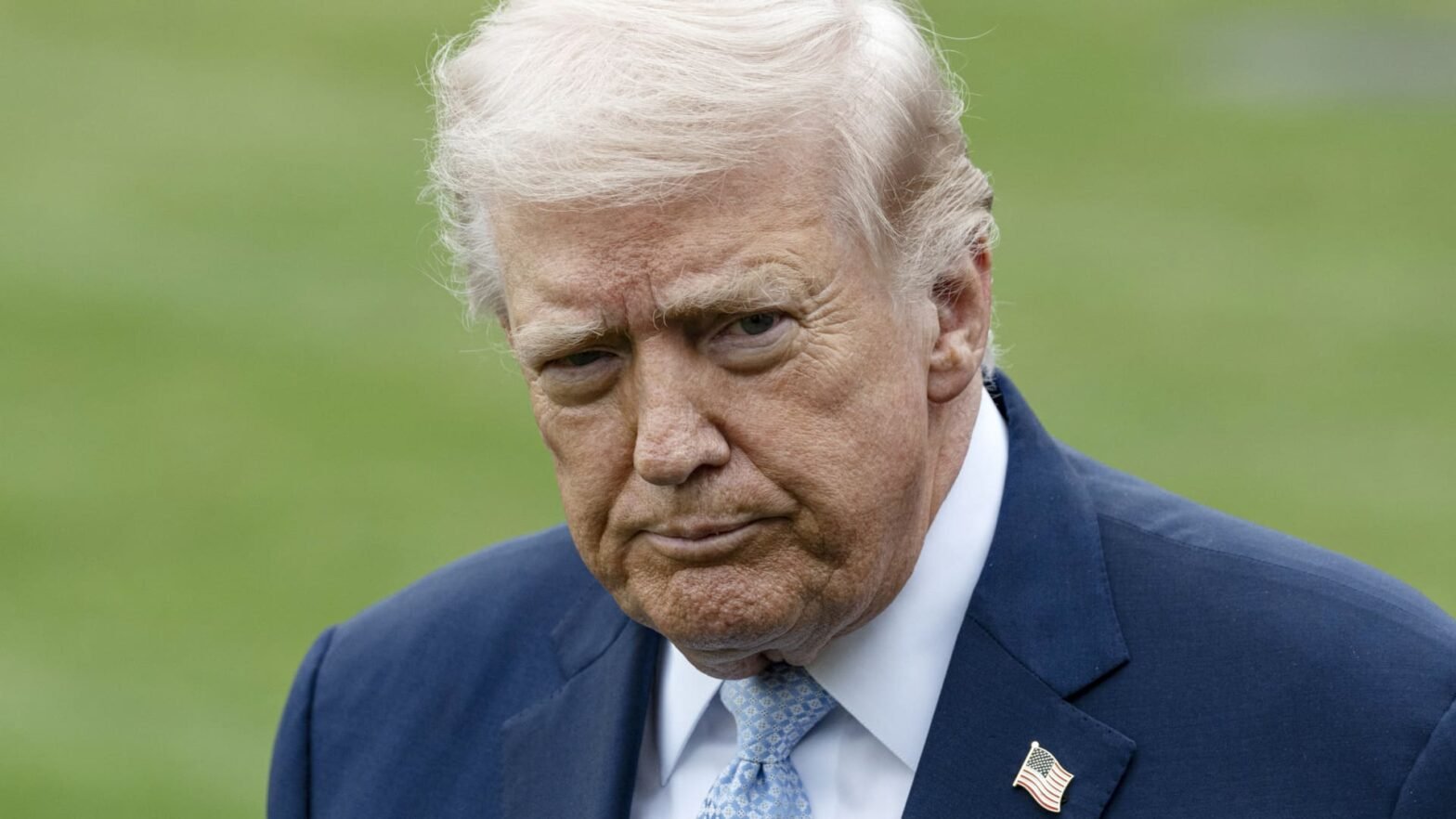
Markets turned upbeat after Trump said he has given instructions to postpone military strikes on Iran’s energy infrastructure, thanks to “very good and productive” talks between the US and Tehran that will continue throughout the week.
That eased market fears stoked by an intensifying exchange of violent rhetoric over the weekend. Trump gave Iran an ultimatum on Saturday, saying that if the Strait of Hormuz remained closed after 48 hours, he would order attacks on Iran’s power facilities. On Monday, Tehran launched fresh attacks in the region.
Stocks now look poised for a respite from a brutal sell-off that owed a lot to a full-on rally in oil prices, with its threatened knock-on effect in higher inflation, the Federal Reserve’s policy outlook, and across industries.
Oil prices dived after Trump’s post, also pulling back from early morning gains. West Texas Intermediate (CL=F) crude futures sank around 7% to trade just over $91 a barrel, while global benchmark Brent (BZ=F) crude pulled back to around $104 after topping $113 during earlier trading.
Meanwhile, gold (GC=F) futures continued to trade lower, but pared losses. The traditional haven asset erased all its 2026 gains earlier Monday amid concerns that rising inflationary pressure could persuade the Fed to hold off from interest-rate cuts.
LIVE 8 updates
-
S&P 500 rebalancing highlights AI tilt in market
Vertiv (VRT), Lumentum (LITE), Coherent (COHR), and EchoStar (SATS) stocks all jumped more than 2% premarket after joining the S&P 500 index (^GSPC) before trading began on Monday, continuing a theme of AI concentration in the benchmark index.
The four companies — which operate in the data center, optical networking, and satellite communications space — replaced Match Group (MTCH), Molina Healthcare (MOH), Lamb Weston Holdings (LW), and Paycom Software (PAYC) on the index as part of the S&P’s quarterly rebalancing.
The S&P 500 undergoes a quarterly rebalancing to ensure its composition reflects the current market and the 500 largest publicly traded companies. The rebalancing can influence stock prices in the short term through the “index effect,” but these effects are usually minimal over the long run.
Vertiv, Lumentum, and Coherent have seen particularly large run-ups year to date, with their stocks rising 37% (Coherent) to 91% (Lumentum) since the beginning of the year. All three companies have partnerships with Nvidia (NVDA) — the AI leader that makes up about 7% of the S&P 500’s valuation.
These three, along with satellite communications provider EchoStar, highlight the growing tilt in the market toward the artificial intelligence theme.
-

The market is fading the TACO trade
Stock futures surged, and energy futures tumbled after President Trump said early Monday that strikes on Iranian energy targets would be paused while the US and Iran engage in talks.
Markets betting that Trump chooses to deescalate the war in Iran from here is a militarized version of the trade-related TACO trade (betting “Trump Always Chickens Out”) that became so popular among investors last summer. This time around, however, investors don’t seem to have as much faith in the TACO thesis, with a good chunk of Monday’s knee-jerk move having already been given up.
Take oil futures — the price of WTI crude oil fell from around $100 a barrel to closer to $86 almost instantly on these headlines. An hour later, we’re back at $92.
Stock futures surged as much as 2.5% following Trump’s comments. Near 8:20 a.m. ET, stock futures were up closer to 1.4%.
Trump turning down the temperature on US military action in the Middle East is positive for markets, but the message from last week that will take more than one post on Truth Social to shake is that the economic consequences of Trump’s war in Iran will be greater than nothing.
-
Stock futures jump after President Trump postpones energy infrastructure strikes for 5 days
Stock futures jumped after President Trump said he instructed the Department of Defense to postpone military strikes against Iranian power and energy infrastructure for five days while the US and Iran engage in talks.
The president posted on Truth Social that the two sides have been engaged in “very good and productive conversations regarding a complete and total resolution of our hostilities in the Middle East.” Over the weekend, Trump issued an ultimatum to the Iranians, telling them via social media that if they didn’t reopen the Strait of Hormuz by Monday evening, the US would “obliterate their various power plants.”
Futures on the Dow (YM=F), S&P 500 (ES=F), and Nasdaq 100 (NQ=F) shot higher following the post, suggesting an off-ramp to the fighting, while WTI (CL=F) and Brent (BZ=F) crude oil prices dropped about $8 per barrel instantly to trade at $90 and $99 a barrel, respectively.
-
Goldman raises oil forecasts on largest-ever supply shock
Bloomberg reports:
-
Bonds lose $2.5 trillion in Iran war wipeout that mirrors 2022
From Bloomberg:
“Markets are beginning to price what I think is going to be a stagflationary impulse manifested very soon,” Kathryn Rooney Vera, chief market strategist at StoneX Group Inc., said in an interview on Bloomberg Television. “The longer this goes on, the higher oil prices can rise.”
-
Oil pushes higher as clock ticks on Trump’s Hormuz ultimatum
Bloomberg reports:
-
Gold winds back yearly gains after largest weekly drop since 1983
Yahoo Finance’s Ines Ferré reports:
-
Oil trades down as Trump threatens Iran power infrastructure, Goldman Sachs raises price targets
Oil traded slight below last week’s closing prices at the start of futures trading on Sunday, with roughly 24 hours to go on President Trump’s 48-hour ultimatum to Iran.
Futures prices on Brent crude (BZ=F), the international pricing benchmark, initially surged but quickly gave up gains in the minutes after the open on Sunday, trading around $106 per barrel. Those on US benchmark West Texas Intermediate crude (CL=F) changed hands around $97.90 per barrel.
In a post on Truth Social at 6:45 p.m. ET on Saturday, President Trump said Iran had 48 hours to “FULLY OPEN, WITHOUT THREAT, the Strait of Hormuz,” or else “within 48 HOURS from this exact point in time, the United States of America will hit and obliterate their various POWER PLANTS, STARTING WITH THE BIGGEST ONE FIRST!”
The threat by the US president comes after a week of attacks by the Iranian regime against energy infrastructure throughout the Gulf, including Qatar’s Ras Laffan LNG export terminal — the world’s largest such facility.
In a note to clients on Sunday evening, Goldman Sachs’ oil desk, led by head of oil research Daan Struyven, raised its price targets for oil, now looking for Brent to trade at $110 per barrel through March and April, up from a previous call for $98 per barrel over the same timeframe under the assumption that “Hormuz flows remain at only 5% of normal levels for a longer 6-week period before a gradual 1-month recovery.”
The bank is now assuming an average 2026 price of $85 and $79 per barrel, respectively, for Brent and WTI, up from previous estimate of $77 and $72 per barrel for the two benchmarks. In 2027, Goldman expects Brent and WTI to average $80 and $75 per barrel, respectively.
“In the short-run, the market is likely to require a growing risk premium to generate precautionary demand destruction to hedge against shortages in longer disruptions risk scenarios,” Goldman’s Struyven, Yulia Grigsby, and Alexandra Paulus wrote.
“A recognition of the risks from the high concentration of production and spare capacity is likely to lead to structurally higher strategic stockpiling and long-dated prices.”

![i’m-nervous,-too!-[part-2]](https://10xwealthreport.com/wp-content/uploads/2026/03/177042-im-nervous-too-part-2-1568x784.jpg)