Updated 1 min read
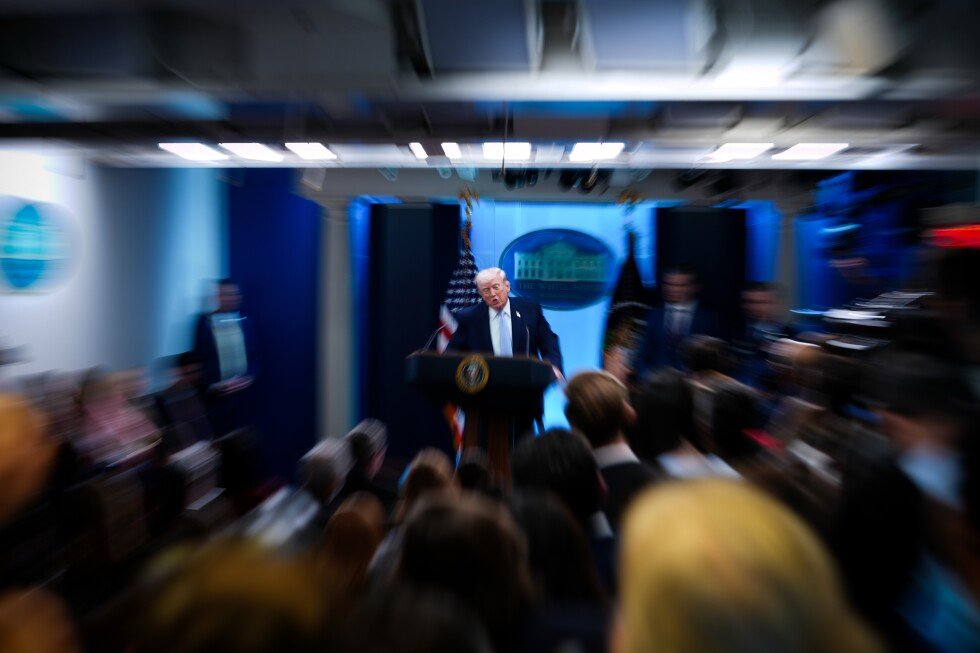
US stocks mounted a late-day comeback on Tuesday after President Trump escalated bombing rhetoric ahead of his fast-approaching deadline for Iran to reopen the Strait of Hormuz or face destruction of its key infrastructure.
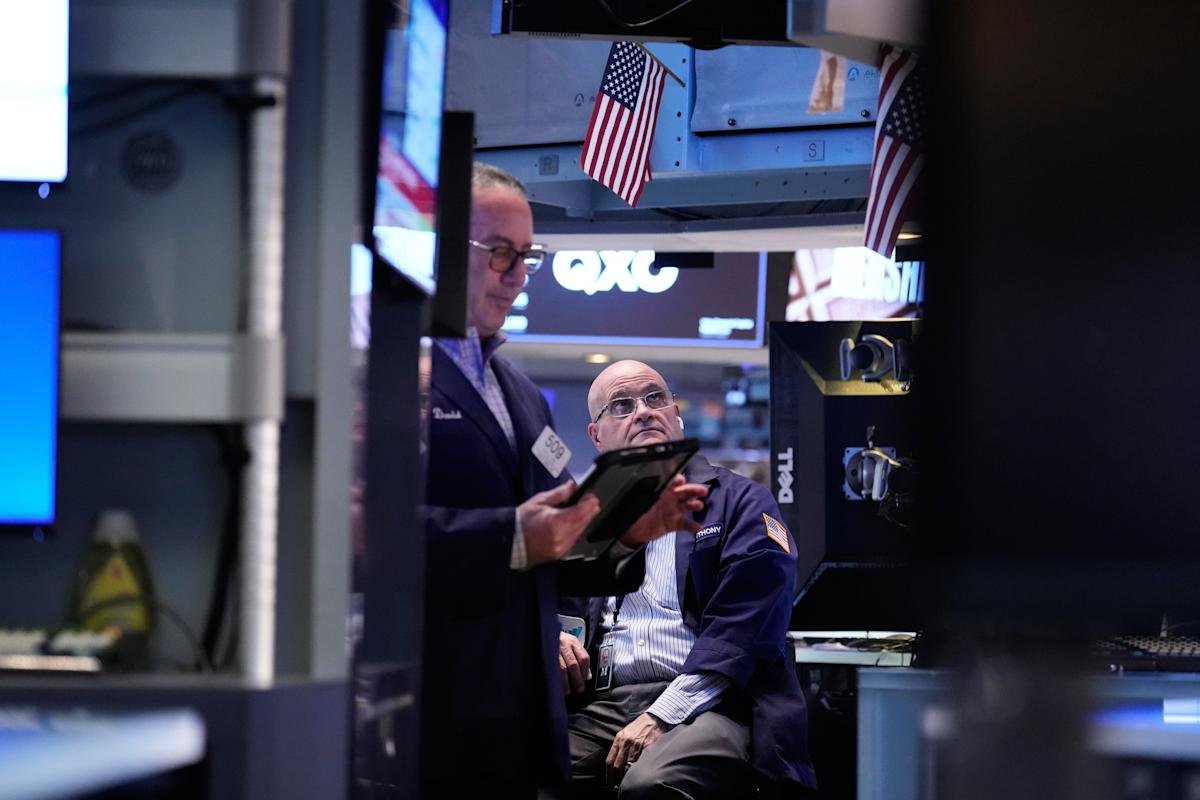
The S&P 500 (^GSPC) and the tech-heavy Nasdaq Composite (^IXIC) closed slightly higher, while the Dow Jones Industrial Average (^DJI) dropped 0.2% after stocks finished in positive territory on Monday.
Markets are on alert for any breakthrough on a Middle East truce as Trump’s renewed deadline for Iran closes in, set to expire Tuesday evening.
Stocks climbed in the afternoon after Pakistan proposed a two-week extension to Trump’s deadline, offering a potential off-ramp to the hostilities that were stoked earlier on Tuesday. In the morning, the president posted on Truth Social, “A whole civilization will die tonight, never to be brought back again. I don’t want that to happen, but it probably will.”
Denting hopes, media reports said the US has carried out strikes on military targets across Kharg Island, home to Iran’s major oil shipment facility. US benchmark West Texas Intermediate crude futures (CL=F) dipped by 0.8% to top $111 a barrel as investors assessed the chances of a ceasefire. Meanwhile, Brent crude futures (BZ=F), the international benchmark, fell nearly 3% to $106.
LIVE 16 updates
-
S&P 500, Nasdaq end the day with slight gains after late-day surge
Stocks recovered in the final half-hour of trading as Pakistan asked for a two-week extension to President Trump’s deadline for Iran to reopen the Strait of Hormuz, reviving hopes of an offramp to the war’s escalation.
The S&P 500 (^GSPC) and the tech-heavy Nasdaq Composite (^IXIC) clinched gains of around 0.1% after a choppy day of trading. The Dow Jones Industrial Average (^DJI) pared losses to 0.2%.
Oil also reversed on optimism of US-Iran negotiations to reopen the Strait of Hormuz. West Texas Intermediate (CL=F) crude futures, the US benchmark, dropped fractionally to $112 per barrel, while Brent (BZ=F) crude futures, the international benchmark, fell 2% to $107 per barrel.
Earlier in the day, oil had surged while stocks fell after Trump wrote on Truth Social, “A whole civilization will die tonight, never to be brought back again. I don’t want that to happen, but it probably will.”
-
Chicago Fed’s Goolsbee ‘nervous’ about impact of oil shock on economy
Chicago Federal Reserve Bank president Austan Goolsbee said Tuesday he’s concerned that the energy shock from the Iran war could potentially create a “stagflationary” price spiral.
Yahoo Finance’s Jennifer Schonberger reports:
-
Full-scale attack or another pause? Markets wait as Trump’s Iran deadline approaches.
-
Universal Music stock soars as Bill Ackman plans $64 billion acquisition and US listing
-

Commodities are gunning for stocks again
Commodities are waking up — and it’s more than just gold (GC=F) and crude oil (CL=F).
The long downtrend in commodities versus stocks that followed the 2008 global financial crisis is starting to crack.
The setup looks a bit like an echo of how this century began: After the 1999-2000 bottom, commodities broke higher for nearly a decade. Gold led first, energy followed, and the move eventually spread into food.
That stretch became what’s called a commodities supercycle — a long period when raw materials prices surge as supply and demand remain structurally imbalanced.
This year, we’ve already seen metals rip to record highs. Now energy is joining in.
The next tell is grains. They’ve rallied this year, but not in a way that screams broad food inflation… yet.
-
OPEC monthly oil production falls most in more than 30 years
Oil production by the Organization of Petroleum Exporting Countries (OPEC+) fell by the largest monthly margin in at least 30 years in March as the war in Iran blocked key export routes and damaged critical infrastructure.
Production by the OPEC+ member states fell to 22 million barrels per day (bpd) from 29.56 million bpd, according to a Bloomberg survey. The difference marked a roughly 25% decline, the largest monthly drop in production since at least 1989, Bloomberg said, with the exception of a brief period during 2020.
Since the US and Israel began an airstrike campaign against Iran on Feb. 28, the Iranian regime has effectively closed off the Strait of Hormuz, the world’s most critical shipping chokepoint for oil.
Even with other routes such as Saudi Arabia’s East-West pipeline running at full capacity, the closure of the strait has removed roughly 10 million bpd of export capacity, forcing oil producers along the Persian Gulf to fill their onshore storage tanks and cut production, with nowhere left to put new oil.
Shipping traffic through the Strait of Hormuz has begun to slowly recover as countries including Pakistan, India, and France have acquiesced to a tolling regime established by the Iranian regime for safe passage, but traffic levels remain far below their normal levels.
-
US households see their finances deteriorating amid rising gas prices
-
Stock losses pick up after Iran reportedly stops negotiation efforts
Stock losses picked up on Tuesday morning following President Trump’s latest threats against Iran, which raised concerns that a potential off-ramp to the hostilities may be closing.
Sentiment turned even more pessimistic after the New York Times reported that Iran has stopped negotiation efforts with the United States, with three senior Iranian officials informing Pakistan that Iran would no longer engage in ceasefire talks.
Most sectors were in the red, as of 11:15 a.m. ET. Energy, utilities, and real estate were the only ones in positive territory, while technology and consumer cyclicals led to the downside.
-
UnitedHealth and other insurer stocks jump after Medicare agrees to lift payments next year
UnitedHealth Group (UNH) and other health insurer stocks surged on Tuesday after the US government said it would boost payments for Medicare Advantage plans next year.
The US Centers for Medicare & Medicaid Services (CMS) said it would increase payments to insurers for older Americans by an average of 2.48% in 2027, amounting to a $13 billion annual increase in payments to plans.
UnitedHealth stock jumped 8%, while Humana (HUM) popped 5%, and Aetna’s parent company, CVS Health (CVS), rose more than 4%.
-
Markets subdued at the open ahead of potential fierce bombing campaign in Iran
US stocks opened lower after President Trump declared that “a whole civilization will die tonight” unless “something revolutionarily wonderful” happens to intervene in his deadline, set for 8 p.m. ET.
The S&P 500 (^GSPC) and the Dow Jones Industrial Average (^DJI) fell 0.2% at the open, while the tech-heavy Nasdaq Composite (^IXIC) led the indexes lower with a loss of 0.4%.
Crude oil futures rose, with Brent futures (BZ=F) gaining less than 1% to trade around $110 a barrel and West Texas Intermediate futures (CL=F) climbing 2% to $115.
The 10-year Treasury yield (^TNX) was flat at 4.33%, as were gold futures (GC=F) at $4,684 an ounce.
-
Oil rallies as Trump reiterates threat of bombing campaign against Iran
Oil prices rallied Tuesday morning after comments from President Trump suggested the US leader is planning to stick to his imposed deadline of 8 p.m. ET tonight before ordering a widespread airstrike campaign inside Iran.
Futures on Brent crude, the international pricing benchmark, surged by 1.3% to trade above $111 per barrel. Those on US benchmark West Texas Intermediate (WTI) crude jumped by 3.3% to change hands around $116 per barrel.
In a post on Truth Social Tuesday morning, President Trump wrote, “A whole civilization will die tonight, never to be brought back again. I don’t want that to happen, but it probably will.”
He continued, possibly suggesting a road to concessions, “However, now that we have Complete and Total Regime Change, where different, smarter, and less radicalized minds prevail, maybe something revolutionarily wonderful can happen, WHO KNOWS?”
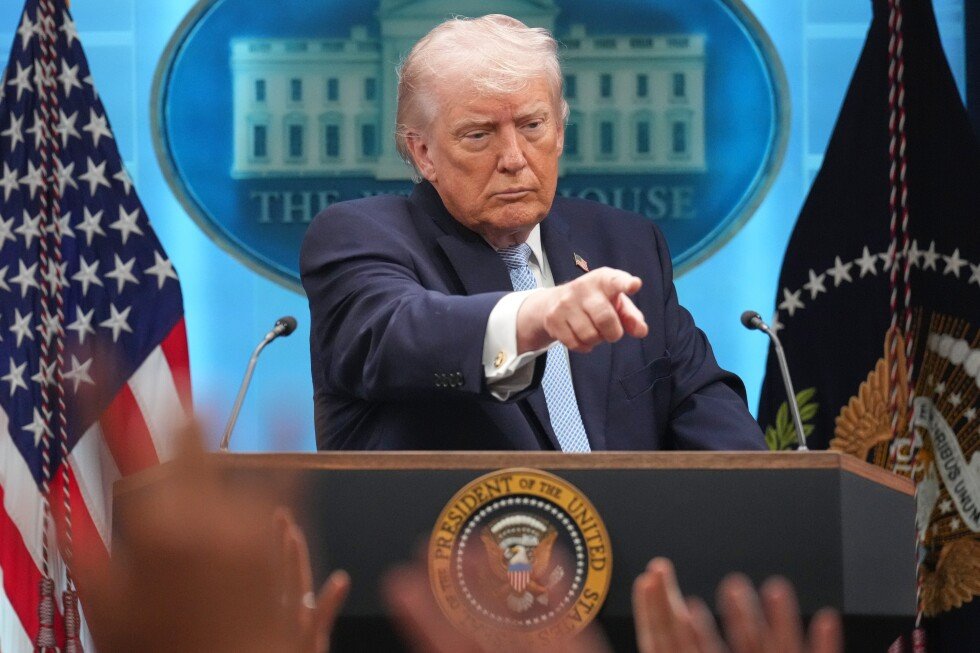
In posts through the weekend and at a press conference on Monday, Trump announced a deadline of 8 p.m. ET Tuesday night for Iran to make a deal, or else Trump will order the US military to bombard power stations and bridges throughout Iran.
“After that, they’re going to have no bridges, they’re going to have no power plants — stone ages,” Trump said during Monday’s press conference.
In comments reported overnight into Tuesday, Iran reportedly has said it will no longer hold back from widespread attacks against infrastructure throughout the Gulf.
When asked during the press conference about the status of negotiations with the Iranian regime, Trump said, “I can’t talk about ceasefire, but I can tell you we have an active willing participant on the other side.”
Attacks overnight by Iran reportedly targeted Saudi Arabia’s Jubail petrochemical plant, a major production facility. Inside Iran, the US and Israel reportedly struck a series of bridges, roads, an airport, and other infrastructure throughout Monday night and into Tuesday, according to Iranian media.
Iran has reportedly denied proposals for a temporary ceasefire, saying the regime will only accept a full end to the conflict, along with guarantees of reparations for damage and other measures.
-
‘Magnificent Seven’ stocks are looking cheap
My colleague Brian Sozzi highlighted a chart (below) that shows how “Magnificent Seven” stocks — Apple (AAPL), Alphabet (GOOGL, GOOG), Microsoft (MSFT), Amazon (AMZN), Meta (META), Tesla (TSLA), and Nvidia (NVDA) — have had a tough start to 2026.
The chart from JPMorgan strategist Mislav Matejka shows that the Magnificent Seven stocks are hovering around fresh lows for the year relative to the S&P 500 (^GSPC).
“Mag 7 relative [to S&P 500] is not acting as a safe haven,” Matejka said.
“The underperformance of the technology sector is also starting to generate attractive valuation opportunities for investors as its valuation, relative to expected consensus growth, has fallen below that of the global aggregate market,” Goldman Sachs strategist Peter Oppenheimer wrote in a separate note on Tuesday.
Oppenheimer continued, “… In the US, the valuation premium of the technology hyperscalers has fallen to close to the same as the rest of the market.”
-
Premarket trending tickers: Broadcom, Universal Music Group, and US health insurers
Broadcom (AVGO) stock rose 3% before the bell on Tuesday following the news that it had signed an agreement with Google (GOOG) to develop and supply future generations of custom artificial intelligence chips. The tech company also signed a deal with Anthropic (ANTH.PVT) to provide the AI startup access to about 3.5 gigawatts of AI computing capacity.
US Health insurers: Humana (HUM) rose 10% during premarket hours on Tuesday, alongside UnitedHealth (UNH) and CVS (CVS) which both climbed around 5% after the government said it plans a larger-than-expected increase in 2027 payment rates for Medicare Advantage plans.
Universal Music Group’s (UMG.AS) Amsterdam shares rose 10% on Tuesday after Pershing Square’s Bill Ackman proposed merging its acquisition vehicle with with a plan to list in the United States.
-
Apple’s foldable iPhone faces engineering snags, potential shipment delays: report
Apple’s (AAPL) first foldable iPhone was expected by industry watchers to launch in 2026. But that timeframe could get pushed back as engineering tests revealed issues with the new model, per a Nikkei report.
From Reuters:
Apple has been encountering setbacks in the engineering test phase of its first foldable iPhone, which could lead to delays in its mass production and product shipment schedule, Nikkei Asia reported on Monday, citing sources.
… Engineering development issues could delay the first shipments of the foldable iPhones by months in a worst-case scenario, according to the Nikkei report.
“It’s true that more issues than expected have emergedduring the early test production phase, and additional time willbe needed to resolve them and make necessary adjustments,” the report said, quoting one source familiar with the matter.
-
Bitcoin falls overnight as Iran war rattles crypto markets
Bitcoin (BTC-USD) led crypto markets lower overnight as the US-Israeli war against Iran has spooked riskier investors amid sky-high global volatility.
Bloomberg reports:
-
Oil rises as tensions build as Trump’s deadline for Iran looms
Bloomberg reports: