Lunchtime market round-up
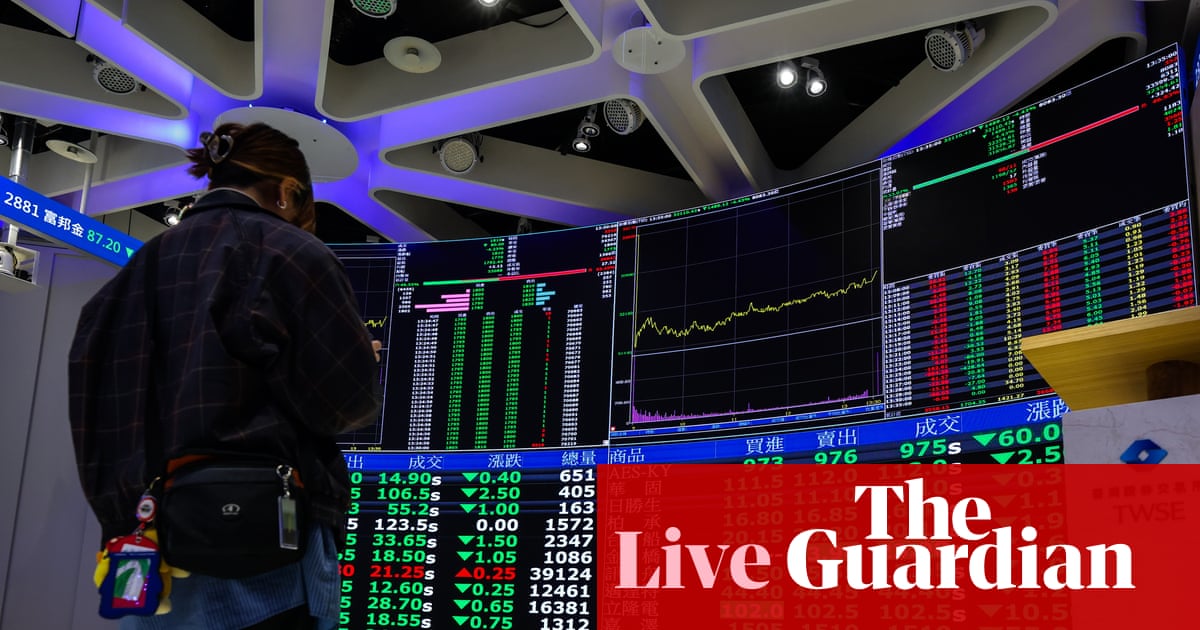
After a volatile morning, European stock markets are still in the red – but off their earlier lows – after steep losses in Asia-Pacific markets overnight.
The oil price is still trading over the $100 mark, on track for its highest close since 2022.
Here’s the situation:
-
UK’s FTSE 100 share index: down 112 points or -1.1% at 10,172 points
-
Germany’s DAX share index: down 350 points or -1.5% at 23,241 points
-
France’s CAC share index: down 152 points or 1.9% at 7,840 points
UK bond prices are still sharply lower; that has lifted the yield, or interest rate, on two-year gilts to 4.14%, up from 3.52% before the crisis began. That shows the markets are lifting their expectations for inflation and interest rates.
The odds of a Bank of England interest rate cut this month have evaporated. There’s a 93.5% chance that that UK’s central bank holds rates on 19 March, and a 6.5% possibility of a hike, according to the money markets.
Daniel Casali, chief investment strategist at UK wealth manager Evelyn Partners, sums up the mood:
“The ramifications of the escalating conflict in the Middle East are increasingly uncertain. Moreover, the US and Israeli military strikes on Iran are now reverberating through energy prices: Brent crude oil has risen more than 50% since the conflict started to US$107 a barrel at the time of writing, its highest level in a year. In turn, Iranian drone and missile strikes on regional oil and gas infrastructure, along with damage to multiple tankers, have further heightened concerns about supply disruptions.
“So far, the price action in financial and currency markets has been volatile rather than disorderly. Nonetheless, the balance of risks is shifting. Upside inflation pressures are building as energy costs rise, while equities face mounting downside risk and bonds are increasingly exposed to renewed inflation momentum. Geopolitical events are inherently unpredictable, which is precisely why we invest in highly diversified portfolios, built to withstand such risks over the long term.”
“,”elementId”:”1176e07e-d9c1-4faf-81d0-64476028da6a”}],”attributes”:{“pinned”:false,”keyEvent”:true,”summary”:false},”blockCreatedOn”:1773061079000,”blockCreatedOnDisplay”:”08.57 EDT”,”blockLastUpdated”:1773061097000,”blockLastUpdatedDisplay”:”08.58 EDT”,”blockFirstPublished”:1773061097000,”blockFirstPublishedDisplay”:”08.58 EDT”,”blockFirstPublishedDisplayNoTimezone”:”08.58″,”title”:”India not planning to release oil in coordination with IEA”,”contributors”:[],”primaryDateLine”:”Mon 9 Mar 2026 09.01 EDT”,”secondaryDateLine”:”First published on Mon 9 Mar 2026 03.10 EDT”},{“id”:”69aebf788f080482c628dcf0″,”elements”:[{“_type”:”model.dotcomrendering.pageElements.TextBlockElement”,”html”:”
The Europea Commission has said that member states have sufficient stocks of oil and gas despite the disrupted supply chains due to the war in the Middle East.
“,”elementId”:”05fa0e12-b396-4b8c-a7a8-752c7e50a6fa”},{“_type”:”model.dotcomrendering.pageElements.TextBlockElement”,”html”:”
EC spokesperson Anna-Kaisa Itkonen told reporters in Brussels:
“,”elementId”:”85af7919-fa28-48f4-8817-8a9768a2f1fa”},{“_type”:”model.dotcomrendering.pageElements.BlockquoteBlockElement”,”html”:”
n
“We are far less concerned about the security of supply than we are of the high energy prices.”
n
“,”elementId”:”cac9c080-3fc5-4def-9e35-020af478c634″},{“_type”:”model.dotcomrendering.pageElements.TextBlockElement”,”html”:”
Itkonen added that EU members had stocks of oil or equivalents to last up to 90 days, and that there was no sign of any emergency situation.
“,”elementId”:”08b74e8d-53a1-48cd-8ab0-58124a5eb08a”}],”attributes”:{“pinned”:false,”keyEvent”:true,”summary”:false},”blockCreatedOn”:1773059960000,”blockCreatedOnDisplay”:”08.39 EDT”,”blockLastUpdated”:1773060052000,”blockLastUpdatedDisplay”:”08.40 EDT”,”blockFirstPublished”:1773060052000,”blockFirstPublishedDisplay”:”08.40 EDT”,”blockFirstPublishedDisplayNoTimezone”:”08.40″,”title”:”European Commission: we have sufficient stocks of oil and gas”,”contributors”:[],”primaryDateLine”:”Mon 9 Mar 2026 09.01 EDT”,”secondaryDateLine”:”First published on Mon 9 Mar 2026 03.10 EDT”},{“id”:”69aebc038f08ef977b472838″,”elements”:[{“_type”:”model.dotcomrendering.pageElements.TextBlockElement”,”html”:”
Mortgage lenders are repricing their products, higher, due to the turmoil in the markets since the Iranian war began.
“,”elementId”:”c5973757-5c2f-4375-b523-36969bef7663″},{“_type”:”model.dotcomrendering.pageElements.TextBlockElement”,”html”:”
PA Media reports that mortgage borrowers looking for a new deal will have some “unwelcome news”, a website has warned, as it saw a flurry of lenders reveal hikes to their rates, pushing up average fixed rates for homeowners to choose from.
“,”elementId”:”05e32b2d-6e9c-4b40-ab0a-4453d5515b04″},{“_type”:”model.dotcomrendering.pageElements.TextBlockElement”,”html”:”
Financial information website Moneyfacts said that it had seen several lenders adjust pricing on their fixed deals, including First Direct, Coventry Building Society, Yorkshire Building Society and Nottingham Building Society.
“,”elementId”:”1bcd67b4-bc9d-4428-aa4e-efedf8377dd5″},{“_type”:”model.dotcomrendering.pageElements.TextBlockElement”,”html”:”
Cumberland Building Society was also withdrawing products while it repriced its mortgages, Moneyfacts said.
“,”elementId”:”ec6cbeb8-7011-4848-8720-78ff3b5398a3″},{“_type”:”model.dotcomrendering.pageElements.TextBlockElement”,”html”:”
The hikes came on top of increases made last week, with HSBC UK, NatWest and Nationwide Building Society having made changes.
“,”elementId”:”4f49efeb-d23d-414c-9256-5f6758914397″},{“_type”:”model.dotcomrendering.pageElements.RichLinkBlockElement”,”prefix”:”Related: “,”text”:”HSBC, Nationwide and Coventry raise rates on fixed mortgages amid Middle East crisis”,”elementId”:”e5b28544-07c1-4259-9cf3-97e9bff0d8d1″,”role”:”thumbnail”,”url”:”https://www.theguardian.com/money/2026/mar/05/hsbc-coventry-raise-rates-fixed-mortgages-iran-middle-east-crisis”}],”attributes”:{“pinned”:false,”keyEvent”:true,”summary”:false},”blockCreatedOn”:1773059075000,”blockCreatedOnDisplay”:”08.24 EDT”,”blockLastUpdated”:1773059286000,”blockLastUpdatedDisplay”:”08.28 EDT”,”blockFirstPublished”:1773059286000,”blockFirstPublishedDisplay”:”08.28 EDT”,”blockFirstPublishedDisplayNoTimezone”:”08.28″,”title”:”Flurry of mortgage rate hikes, Moneyfacts warns”,”contributors”:[],”primaryDateLine”:”Mon 9 Mar 2026 09.01 EDT”,”secondaryDateLine”:”First published on Mon 9 Mar 2026 03.10 EDT”},{“id”:”69aeb9ea8f089ad2051874e7″,”elements”:[{“_type”:”model.dotcomrendering.pageElements.TextBlockElement”,”html”:”
After a volatile morning, European stock markets are still in the red – but off their earlier lows – after steep losses in Asia-Pacific markets overnight.
“,”elementId”:”5693b0e1-51cf-42fc-bddb-b7e72f423a29″},{“_type”:”model.dotcomrendering.pageElements.TextBlockElement”,”html”:”
The oil price is still trading over the $100 mark, on track for its highest close since 2022.
“,”elementId”:”c60a399e-6d1a-4ea0-af1e-fe3fd57a63fb”},{“_type”:”model.dotcomrendering.pageElements.TextBlockElement”,”html”:”
Here’s the situation:
“,”elementId”:”61c9ed2b-f68d-4cfe-a58e-3b046c38c411″},{“_type”:”model.dotcomrendering.pageElements.TextBlockElement”,”html”:”
- n
- n
UK’s FTSE 100 share index: down 112 points or -1.1% at 10,172 points
- n
Germany’s DAX share index: down 350 points or -1.5% at 23,241 points
- n
France’s CAC share index: down 152 points or 1.9% at 7,840 points
n
n
n
“,”elementId”:”86a533b9-a377-4930-ab39-3d322aaad49e”},{“_type”:”model.dotcomrendering.pageElements.TextBlockElement”,”html”:”
UK bond prices are still sharply lower; that has lifted the yield, or interest rate, on two-year gilts to 4.14%, up from 3.52% before the crisis began. That shows the markets are lifting their expectations for inflation and interest rates.
“,”elementId”:”4cdb2410-6ee2-4c77-a37b-2db97a4e2e7c”},{“_type”:”model.dotcomrendering.pageElements.TextBlockElement”,”html”:”
The odds of a Bank of England interest rate cut this month have evaporated. There’s a 93.5% chance that that UK’s central bank holds rates on 19 March, and a 6.5% possibility of a hike, according to the money markets.
“,”elementId”:”338c677b-8f6b-4360-b00f-24407b2ceb8c”},{“_type”:”model.dotcomrendering.pageElements.RichLinkBlockElement”,”prefix”:”Related: “,”text”:”UK interest rate cuts unlikely this year amid Iran war – and a rise could be ahead”,”elementId”:”56c726db-09af-4930-8023-9db5a9088fcb”,”role”:”thumbnail”,”url”:”https://www.theguardian.com/business/2026/mar/09/uk-interest-rate-cuts-iran-rise-bank-of-england-bond-yields”},{“_type”:”model.dotcomrendering.pageElements.TextBlockElement”,”html”:”
Daniel Casali, chief investment strategist at UK wealth manager Evelyn Partners, sums up the mood:
“,”elementId”:”56db94f0-604b-4583-9909-c813429abf84″},{“_type”:”model.dotcomrendering.pageElements.BlockquoteBlockElement”,”html”:”
n
“The ramifications of the escalating conflict in the Middle East are increasingly uncertain. Moreover, the US and Israeli military strikes on Iran are now reverberating through energy prices: Brent crude oil has risen more than 50% since the conflict started to US$107 a barrel at the time of writing, its highest level in a year. In turn, Iranian drone and missile strikes on regional oil and gas infrastructure, along with damage to multiple tankers, have further heightened concerns about supply disruptions.
n
“So far, the price action in financial and currency markets has been volatile rather than disorderly. Nonetheless, the balance of risks is shifting. Upside inflation pressures are building as energy costs rise, while equities face mounting downside risk and bonds are increasingly exposed to renewed inflation momentum. Geopolitical events are inherently unpredictable, which is precisely why we invest in highly diversified portfolios, built to withstand such risks over the long term.”
n
“,”elementId”:”cd0ea9c8-4e43-4ea9-b7e6-b8284f5dd5a6″}],”attributes”:{“pinned”:true,”keyEvent”:true,”summary”:false},”blockCreatedOn”:1773058538000,”blockCreatedOnDisplay”:”08.15 EDT”,”blockLastUpdated”:1773059179000,”blockLastUpdatedDisplay”:”08.26 EDT”,”blockFirstPublished”:1773059042000,”blockFirstPublishedDisplay”:”08.24 EDT”,”blockFirstPublishedDisplayNoTimezone”:”08.24″,”title”:”Lunchtime market round-up”,”contributors”:[],”primaryDateLine”:”Mon 9 Mar 2026 09.01 EDT”,”secondaryDateLine”:”First published on Mon 9 Mar 2026 03.10 EDT”},{“id”:”69aeb45d8f08ef977b4727de”,”elements”:[{“_type”:”model.dotcomrendering.pageElements.TextBlockElement”,”html”:”
The sharp jump in oil prices has forced markets to rethink the idea that UK interest rates are on a smooth downward path, says Jonathan Raymond, investment manager at Quilter Cheviot:
“,”elementId”:”8792fc7b-da34-4381-b644-b8c1766a23b2″},{“_type”:”model.dotcomrendering.pageElements.BlockquoteBlockElement”,”html”:”
n
A sustained move in Brent oil over $100 is effectively an inflationary tax. It raises costs for businesses, squeezes real incomes and risks keeping headline inflation above target for longer.
n
If that persists, gilt yields and swap rates will remain under upward pressure, which is why we are already seeing mortgage pricing move higher before the Bank has done anything. The Bank is likely to initially look through the shock because it is energy driven, but if the Middle East situation deteriorates further the risk of policy tightening later in 2026 becomes harder to dismiss.
n
“,”elementId”:”5a4c8dd1-b491-4540-be51-b4eb866ad28e”},{“_type”:”model.dotcomrendering.pageElements.TextBlockElement”,”html”:”
The key question for central bankers is how “persistent” the oil shock becomes.
“,”elementId”:”39a0b210-ad08-4168-a350-8c0fa0d4cb2f”},{“_type”:”model.dotcomrendering.pageElements.TextBlockElement”,”html”:”
Raymond adds:
“,”elementId”:”92c571e1-9641-4b13-a19c-ce03db972a29″},{“_type”:”model.dotcomrendering.pageElements.BlockquoteBlockElement”,”html”:”
n
It remains too early to expect the Bank to actively raise rates this year, but every day without progress on Iran increases the economic damage and the risk that higher energy prices feed more firmly into underlying inflation. That is why the market is starting to recognise that inflation is not yet last year’s problem.
n
“,”elementId”:”30cd4477-56f6-4c0f-87e6-42fe2c916e2a”}],”attributes”:{“pinned”:false,”keyEvent”:true,”summary”:false},”blockCreatedOn”:1773057117000,”blockCreatedOnDisplay”:”07.51 EDT”,”blockLastUpdated”:1773057323000,”blockLastUpdatedDisplay”:”07.55 EDT”,”blockFirstPublished”:1773057323000,”blockFirstPublishedDisplay”:”07.55 EDT”,”blockFirstPublishedDisplayNoTimezone”:”07.55″,”title”:””Too early” to expect Bank of England to raise interest rates this year”,”contributors”:[],”primaryDateLine”:”Mon 9 Mar 2026 09.01 EDT”,”secondaryDateLine”:”First published on Mon 9 Mar 2026 03.10 EDT”},{“id”:”69aeac4b8f080482c628dc28″,”elements”:[{“_type”:”model.dotcomrendering.pageElements.TextBlockElement”,”html”:”
Saudi Arabia has started reducing oil production as the near-blockage of the critical Strait of Hormuz starts filling up storage tanks, Bloomberg reports.
“,”elementId”:”0b194862-556b-4b09-bce6-f8ce80c019af”},{“_type”:”model.dotcomrendering.pageElements.TextBlockElement”,”html”:”
They explain:
“,”elementId”:”f9c9bfd9-b3ef-4f75-ab66-9cd753dff1b2″},{“_type”:”model.dotcomrendering.pageElements.BlockquoteBlockElement”,”html”:”
n
The move by the kingdom, the world’s biggest oil exporter, follows the United Arab Emirates, Kuwait and Iraq.
n
The war in the Middle East has all but closed the Strait of Hormuz, the narrow waterway linking the Persian Gulf to the open seas, to maritime traffic following Iranian threats to shipping. That’s clogged up exports from major producing countries, sending oil sharply higher and rippling through the global economy.
n
“,”elementId”:”743aa88a-bc96-40d5-846d-7a0d4592a224″}],”attributes”:{“pinned”:false,”keyEvent”:true,”summary”:false},”blockCreatedOn”:1773055051000,”blockCreatedOnDisplay”:”07.17 EDT”,”blockLastUpdated”:1773059312000,”blockLastUpdatedDisplay”:”08.28 EDT”,”blockFirstPublished”:1773055679000,”blockFirstPublishedDisplay”:”07.27 EDT”,”blockFirstPublishedDisplayNoTimezone”:”07.27″,”title”:”Bloomberg: Saudi cutting oil production”,”contributors”:[],”primaryDateLine”:”Mon 9 Mar 2026 09.01 EDT”,”secondaryDateLine”:”First published on Mon 9 Mar 2026 03.10 EDT”},{“id”:”69ae90c48f080482c628db2a”,”elements”:[{“_type”:”model.dotcomrendering.pageElements.TextBlockElement”,”html”:”
UK motorists are already being hit by the surge in oil prices, and being encouraged to cut out non-essential journeys.
“,”elementId”:”77d05dda-a068-484f-b11a-19ed85e82009″},{“_type”:”model.dotcomrendering.pageElements.TextBlockElement”,”html”:”
The RAC report that petrol has risen by 5p to 137.5p a litre since the Iran war began on Saturday 28 February. Diesel is up 9p to 151p a litre.
“,”elementId”:”0de8c0cc-2ee3-4022-ae55-c1cfd9127c37″},{“_type”:”model.dotcomrendering.pageElements.TextBlockElement”,”html”:”
RAC head of policy Simon Williams says fuel prices are “unfortunately likely to keep on rising”, and advises against slamming down the accelerator and then hammering the brakes:
“,”elementId”:”8c696482-6a27-4160-9791-3998bbcfad88″},{“_type”:”model.dotcomrendering.pageElements.BlockquoteBlockElement”,”html”:”
n
“Unleaded is almost certainly going to reach an average of 140p in the next week or so while diesel looks highly likely to climb to at least 160p a litre. The price of diesel is increasing more quickly now than at any point since the start of the Ukraine conflict. With oil at a sustained $100, petrol could rise towards 150p a litre – a price not seen since June 2024. Diesel could reach almost 180p, which would be a three-year high.
n
“We encourage drivers to continue filling up as normal but to shop around for the best prices using apps like myRAC as there can be big local differences between forecourts. Driving fuel efficiently by avoiding harsh accelerating and braking and ensuring tyres are inflated to the right pressures can help eke out every last mile and save money.”
n
“,”elementId”:”71cacad6-23be-41f1-b48f-ec45bad7d9fe”},{“_type”:”model.dotcomrendering.pageElements.TextBlockElement”,”html”:”
Prices at the pump shouldn’t immediately rise when the crude price does, though. It takes time for a barrel of Brent to be refined, and for fuel to be transported to pumps.
“,”elementId”:”2adc4e24-c927-4882-b42c-cf1bdcbc3480″},{“_type”:”model.dotcomrendering.pageElements.TextBlockElement”,”html”:”
Edmund King, AA president, points out prices shouldn’t rise overnight:
“,”elementId”:”ef0ef1a6-d138-4334-a66f-aae7d3cfe5e4″},{“_type”:”model.dotcomrendering.pageElements.BlockquoteBlockElement”,”html”:”
n
“As we predicted last week, the longer this conflict goes on, the more effect it will have on the cost of oil. Anytime Brent Crude passes $100 per barrel raises concern across the markets, for the haulage industry and drivers. One positive is that there are still reserves of oil out there and IEA intervention may release more supplies.
n
“In the meantime, there will be gradual increases in pump prices, but this shouldn’t happen over night as fuel has been purchased at previous prices. Our suggestion is that drivers should not change their refuelling habits but can consider cutting out some non-essential journeys and changing their driving style to conserve fuel. These measures linked to warmer weather means than drivers can ensure their fuel stretches further.
n
“There is still a wide disparity of fuel prices at the pumps so drivers can use the AA App or Government’s fuel finder to find the best pump prices close-by.”
n
“,”elementId”:”7c2ba6d7-bada-4581-8bf5-8bed6dbc4c52″}],”attributes”:{“pinned”:false,”keyEvent”:true,”summary”:false},”blockCreatedOn”:1773048004000,”blockCreatedOnDisplay”:”05.20 EDT”,”blockLastUpdated”:1773061278000,”blockLastUpdatedDisplay”:”09.01 EDT”,”blockFirstPublished”:1773054769000,”blockFirstPublishedDisplay”:”07.12 EDT”,”blockFirstPublishedDisplayNoTimezone”:”07.12″,”title”:”Drivers advised to avoid ”non-essential trips’ as fuel prices rise”,”contributors”:[],”primaryDateLine”:”Mon 9 Mar 2026 09.01 EDT”,”secondaryDateLine”:”First published on Mon 9 Mar 2026 03.10 EDT”},{“id”:”69aea1158f080482c628dba3″,”elements”:[{“_type”:”model.dotcomrendering.pageElements.TextBlockElement”,”html”:”
Financial markets are also expecting the European Central Bank to raise eurozone interest rates this year, to fight the inflationary hit from pricier oil.
“,”elementId”:”4c64df50-96cc-4d12-a867-554eb2cf232c”},{“_type”:”model.dotcomrendering.pageElements.TextBlockElement”,”html”:”
The money markets are now fully pricing in a quarter-point rise in ECB rates by July this year.
“,”elementId”:”3710e493-8f6a-45a4-a472-c78e8e84f6b6″},{“_type”:”model.dotcomrendering.pageElements.TextBlockElement”,”html”:”
Bloomberg reports that swaps [derivatives that measure investor expectations for interest rates] imply around a 70% probability of two 25-basis-point rate increases by the ECB this year, compared with the one move that was priced on Friday.
“,”elementId”:”c2730ef1-e6ea-494d-9657-de97c725082a”}],”attributes”:{“pinned”:false,”keyEvent”:true,”summary”:false},”blockCreatedOn”:1773052181000,”blockCreatedOnDisplay”:”06.29 EDT”,”blockLastUpdated”:1773052702000,”blockLastUpdatedDisplay”:”06.38 EDT”,”blockFirstPublished”:1773052682000,”blockFirstPublishedDisplay”:”06.38 EDT”,”blockFirstPublishedDisplayNoTimezone”:”06.38″,”title”:”Traders lift bets on interest-rate hikes from the European Central Bank”,”contributors”:[],”primaryDateLine”:”Mon 9 Mar 2026 09.01 EDT”,”secondaryDateLine”:”First published on Mon 9 Mar 2026 03.10 EDT”},{“id”:”69ae9d098f08ef977b4726db”,”elements”:[{“_type”:”model.dotcomrendering.pageElements.TextBlockElement”,”html”:”
UK chancellor Rachel Reeves is speaking to the Bank of England “on a daily basis”, Sir Keir Starmer has said this morning, as he tries to calm fears about the impact of the energy crisis.
“,”elementId”:”a5807675-c02e-434b-9e11-75afacf4ba3f”},{“_type”:”model.dotcomrendering.pageElements.TextBlockElement”,”html”:”
Speaking at a community centre in London, the prime minister says:
“,”elementId”:”2c220ff5-8c3c-44fc-a981-f2857ddc01f6″},{“_type”:”model.dotcomrendering.pageElements.BlockquoteBlockElement”,”html”:”
n
The job of government is obviously to get ahead, to look around the corner, to work with others, and the chancellor speaks to the governor of the Bank of England on a daily basis, with looking cross-departmental within government, assessing the risks, monitoring and talking to our international partners as well about what more we can do together to reduce the likely impact on people here and businesses here, of course.
n
But it is important to acknowledge that that work is needed, because people will sense, you will sense I think, that the longer this goes on, the more likely the potential for an impact on our economy, impact into the lives and households of everybody and every business.
n
And our job is to get ahead of that, to look around the corner, assess the risk, monitor the risks, and work with others in relation to that.
n
“,”elementId”:”fbaacb05-d6ef-4b11-ac67-d0c9a08586e8″},{“_type”:”model.dotcomrendering.pageElements.TextBlockElement”,”html”:”
Our Politics Live blog has more details:
“,”elementId”:”a3a87411-96d8-423a-92c9-08b1b33fa62b”},{“_type”:”model.dotcomrendering.pageElements.RichLinkBlockElement”,”prefix”:”Related: “,”text”:”Starmer seeks to reassure public over cost of living as oil surges above $100 a barrel – UK politics live”,”elementId”:”59e2b964-a878-45d9-a985-7f5d613e8902″,”role”:”thumbnail”,”url”:”https://www.theguardian.com/politics/live/2026/mar/09/keir-starmer-uk-gas-oil-prices-100-petrol-energy-inflation-latest-news-live-updates”}],”attributes”:{“pinned”:false,”keyEvent”:true,”summary”:false},”blockCreatedOn”:1773051145000,”blockCreatedOnDisplay”:”06.12 EDT”,”blockLastUpdated”:1773051280000,”blockLastUpdatedDisplay”:”06.14 EDT”,”blockFirstPublished”:1773051280000,”blockFirstPublishedDisplay”:”06.14 EDT”,”blockFirstPublishedDisplayNoTimezone”:”06.14″,”title”:”Chancellor Reeves is talking to Bank of England governor every day”,”contributors”:[],”primaryDateLine”:”Mon 9 Mar 2026 09.01 EDT”,”secondaryDateLine”:”First published on Mon 9 Mar 2026 03.10 EDT”},{“id”:”69ae982f8f08ef977b4726ac”,”elements”:[{“_type”:”model.dotcomrendering.pageElements.TextBlockElement”,”html”:”
The US crude oil has now slipped back below the $100 a barrel level, now changing hands at $99.30 a barrel.
“,”elementId”:”acc63164-0a97-449c-8bdf-f5b323987859″},{“_type”:”model.dotcomrendering.pageElements.TextBlockElement”,”html”:”
That’s still a jump of 7.8% today, but lower than the $119.50 a barrel seen when markets opened overnight.
“,”elementId”:”9157356f-6334-47f9-862c-9159efbea0ec”},{“_type”:”model.dotcomrendering.pageElements.TextBlockElement”,”html”:”
Brent crude, the international benchmark, is still over $100 though – up 10% at $102.27 a barrel.
“,”elementId”:”3b23d2e2-d20e-4808-b355-1cf3571c79c5″},{“_type”:”model.dotcomrendering.pageElements.TextBlockElement”,”html”:”
That follows this morning’s reports that G7 finance ministers are preparing to discuss the release of emergency oil reserves, to ease fears of shortages.
“,”elementId”:”d07c4c23-c339-481d-a642-f0d281e9a776″},{“_type”:”model.dotcomrendering.pageElements.RichLinkBlockElement”,”prefix”:”Related: “,”text”:”G7 to discuss release of emergency oil reserves as price tops $100″,”elementId”:”faf61cdf-1996-4fc4-aaec-177ae19340a9″,”role”:”thumbnail”,”url”:”https://www.theguardian.com/business/2026/mar/09/g7-release-emergency-reserves-oil-price-us-middle-east-war”},{“_type”:”model.dotcomrendering.pageElements.TextBlockElement”,”html”:”
Investors may have also noted comments from US energy secretary Chris Wright overnight, who said the recent surge in oil prices reflects a temporary “fear premium” tied to the Iran war.
“,”elementId”:”500082ab-dcbd-4644-acaf-d787952368a1″},{“_type”:”model.dotcomrendering.pageElements.TextBlockElement”,”html”:”
Wright argued that the jump in oil prices was unlikely to persist because global energy supplies remain adequate.
“,”elementId”:”fa68d612-ad16-46db-816f-dc6e4b4f62ef”},{“_type”:”model.dotcomrendering.pageElements.TextBlockElement”,”html”:”
Speaking on CNN’s State of the Union on Sunday, Wright said the conflict’s disruption to energy markets and shipping routes should be short-lived.
“,”elementId”:”0c2fb362-04be-4ff1-a2ac-3b9221dedab9″},{“_type”:”model.dotcomrendering.pageElements.BlockquoteBlockElement”,”html”:”
n
“The oil is there.”
n
“You’re seeing a little bit of fear premium in the marketplace. But the world is not short of oil today or natural gas.”
n
“,”elementId”:”4b99940a-2043-42a3-8355-4fa3c228c96e”},{“_type”:”model.dotcomrendering.pageElements.TextBlockElement”,”html”:”
[Reminder, flows through the strait of Hormuz, which carries 20% of global oil and gas, have pretty much dried up]
“,”elementId”:”75afd9c6-95a4-4388-a8af-b9d9d4876b37″}],”attributes”:{“pinned”:false,”keyEvent”:true,”summary”:false},”blockCreatedOn”:1773049903000,”blockCreatedOnDisplay”:”05.51 EDT”,”blockLastUpdated”:1773050214000,”blockLastUpdatedDisplay”:”05.56 EDT”,”blockFirstPublished”:1773050214000,”blockFirstPublishedDisplay”:”05.56 EDT”,”blockFirstPublishedDisplayNoTimezone”:”05.56″,”title”:”US crude oil back below $100!”,”contributors”:[],”primaryDateLine”:”Mon 9 Mar 2026 09.01 EDT”,”secondaryDateLine”:”First published on Mon 9 Mar 2026 03.10 EDT”},{“id”:”69ae90288f089ad20518731b”,”elements”:[{“_type”:”model.dotcomrendering.pageElements.TextBlockElement”,”html”:”
It might be a serious mistake for central banks to respond to the oil price shock by raising interest rates.
“,”elementId”:”0e640e0c-718d-419d-954e-fe949c8f35e3″},{“_type”:”model.dotcomrendering.pageElements.TextBlockElement”,”html”:”
Chris Beauchamp, chief market analyst at IG, explains:
“,”elementId”:”2d7559b4-a6b1-47e5-86c7-c6c194ea054f”},{“_type”:”model.dotcomrendering.pageElements.BlockquoteBlockElement”,”html”:”
n
“Stock markets have finally woken up to the implications of the Iran war, as oil hits three figures for the first time in four years. Having remained remarkably complacent last week, it looks like the rush for the exits has begun in earnest. Even high-flying defence stocks are being hit hard in London today, a sign that investors are no longer concerned about potential upside, but instead are focusing on protecting their profits, opting to sell now and sit out the volatility for the time being.”
n “The morning has already seen markets begin to price in rate hikes by the ECB and the Bank of England. But that seems odd given the major hit to consumer spending that is about to make itself felt – this is a supply-driven shock, not some huge surge in demand. Policymakers may well have learned the wrong lesson from 2021, and risk setting off a much deeper recession if they get too trigger-happy on rate hikes.”n
“,”elementId”:”87567ded-6483-4f82-ab14-cfff40da49ec”}],”attributes”:{“pinned”:false,”keyEvent”:true,”summary”:false},”blockCreatedOn”:1773047848000,”blockCreatedOnDisplay”:”05.17 EDT”,”blockLastUpdated”:1773047907000,”blockLastUpdatedDisplay”:”05.18 EDT”,”blockFirstPublished”:1773047907000,”blockFirstPublishedDisplay”:”05.18 EDT”,”blockFirstPublishedDisplayNoTimezone”:”05.18″,”title”:”Stock markets ‘finally wake up’ to implications of Iran war”,”contributors”:[],”primaryDateLine”:”Mon 9 Mar 2026 09.01 EDT”,”secondaryDateLine”:”First published on Mon 9 Mar 2026 03.10 EDT”},{“id”:”69ae8d238f089ad2051872fc”,”elements”:[{“_type”:”model.dotcomrendering.pageElements.TextBlockElement”,”html”:”
After an hour’s trading, European markets are still firmly in the red.
“,”elementId”:”4453a66b-4343-4237-838d-2b4e83d46cd8″},{“_type”:”model.dotcomrendering.pageElements.TextBlockElement”,”html”:”
- n
- n
UK’s FTSE 100: down 200 points or 1.9% at 10,087 points
- n
German DAX: down 548 points or 2.3% at 23,043 points
- n
French CAC: down 198 points or 2.5% at 7,795 points
n
n
n
“,”elementId”:”7e35c761-b0f4-4aea-a353-740b7d6ec484″},{“_type”:”model.dotcomrendering.pageElements.TextBlockElement”,”html”:”
Fears of a stagflationary shock last seen half a century ago are hitting markets today, reports Neil Wilson, investor strategist at Saxo UK:
“,”elementId”:”a616ec5c-a5bb-40e5-8fb4-048e17a8295b”},{“_type”:”model.dotcomrendering.pageElements.BlockquoteBlockElement”,”html”:”
n
A 1970s oil shock? Perhaps. The global economy is a lot less dependent on the price of a barrel than it was then – oil intensity has declined steadily since the 70s.
n
But clearly there are fears of a global economic slowdown and inflation crisis which is roiling global markets after a weekend of further escalation in the Middle East war. The 1970s crisis led to the 80s bull market – will it also create the roaring 20s bull market? For the moment, financial markets are concerned about a 1970s-style stagflation situation first.
n
“,”elementId”:”5df31c93-1729-42f3-bbf0-b15a244e5cfc”}],”attributes”:{“pinned”:false,”keyEvent”:true,”summary”:false},”blockCreatedOn”:1773047075000,”blockCreatedOnDisplay”:”05.04 EDT”,”blockLastUpdated”:1773047391000,”blockLastUpdatedDisplay”:”05.09 EDT”,”blockFirstPublished”:1773047391000,”blockFirstPublishedDisplay”:”05.09 EDT”,”blockFirstPublishedDisplayNoTimezone”:”05.09″,”title”:”European market update: losses across the board”,”contributors”:[],”primaryDateLine”:”Mon 9 Mar 2026 09.01 EDT”,”secondaryDateLine”:”First published on Mon 9 Mar 2026 03.10 EDT”},{“id”:”69ae85098f089ad2051872ce”,”elements”:[{“_type”:”model.dotcomrendering.pageElements.TextBlockElement”,”html”:”
Inflation fears mean UK short-term government bonds are on track for their worst day since former prime minister Liz Truss’s mini-budget roiled the markets in September 2022.
“,”elementId”:”5f534a0e-4e89-4a6a-b75d-17bc3b0cf090″},{“_type”:”model.dotcomrendering.pageElements.TextBlockElement”,”html”:”
With prices tumbling this morning, the yield (or interest rate) on UK two-year bonds has jumped by as much as 37 basis points (0.37 percentage points) to 4.239%.
“,”elementId”:”a5f5f9d0-f740-4d72-ad05-9d431a8b5429″},{“_type”:”model.dotcomrendering.pageElements.TextBlockElement”,”html”:”
That, Reuters reports, puts two-year yields on course for the biggest one-day increase since Truss’s brief tenure, when plans for unfunded tax cuts and energy bill support sparked a surge in bond yields and sent the pound down to a record low.
“,”elementId”:”9ff487c4-1cd1-4e07-a8f5-94cefa7502c2″},{“_type”:”model.dotcomrendering.pageElements.RichLinkBlockElement”,”prefix”:”Related: “,”text”:”The mini-budget that broke Britain – and Liz Truss”,”elementId”:”7e0134d3-f2d4-4716-8ead-3a815bc0c082″,”role”:”thumbnail”,”url”:”https://www.theguardian.com/business/2022/oct/20/the-mini-budget-that-broke-britain-and-liz-truss”},{“_type”:”model.dotcomrendering.pageElements.TextBlockElement”,”html”:”
Such a large move in two-year bond yields underlines how investors have ripped up hopes of cuts to UK interest rates.
“,”elementId”:”c7ba1576-1c14-4904-88fb-33c2030ce6ee”},{“_type”:”model.dotcomrendering.pageElements.TextBlockElement”,”html”:”
Earlier this year, two cuts to interest rates in 2026 were expected – the market is now indicating that borrowing costs are more likely to rise this year (see earlier post).
“,”elementId”:”2601e943-fd15-47ea-ad08-76e4c15be015″}],”attributes”:{“pinned”:false,”keyEvent”:true,”summary”:false},”blockCreatedOn”:1773045001000,”blockCreatedOnDisplay”:”04.30 EDT”,”blockLastUpdated”:1773046422000,”blockLastUpdatedDisplay”:”04.53 EDT”,”blockFirstPublished”:1773046422000,”blockFirstPublishedDisplay”:”04.53 EDT”,”blockFirstPublishedDisplayNoTimezone”:”04.53″,”title”:”UK two-year bond yields on track for worst day since Liz Truss’s mini-budget”,”contributors”:[],”primaryDateLine”:”Mon 9 Mar 2026 09.01 EDT”,”secondaryDateLine”:”First published on Mon 9 Mar 2026 03.10 EDT”},{“id”:”69ae7ba58f080482c628dab4″,”elements”:[{“_type”:”model.dotcomrendering.pageElements.TextBlockElement”,”html”:”
Fears that the jump in the oil price will spark an inflationary surge are hurting government bonds.
“,”elementId”:”436dea99-5dd8-42c7-aa49-5ec119171334″},{“_type”:”model.dotcomrendering.pageElements.TextBlockElement”,”html”:”
With prices falling, the yield (or interest rate) on government debt is rising, sharply.
“,”elementId”:”197af856-aff3-4c5a-8130-b52eb1afe5c5″},{“_type”:”model.dotcomrendering.pageElements.TextBlockElement”,”html”:”
The benchmark 10-year UK bond yield is up 9.5 basis points (0.095 percentage points) to 4.756%, its highest level since early October last year.
“,”elementId”:”d8f94805-5cf4-499c-b71d-c85cdf57f41d”},{“_type”:”model.dotcomrendering.pageElements.TextBlockElement”,”html”:”
This highlights how the crisis is putting pressure on the UK’s economy, and its public finances.
“,”elementId”:”1f39449e-1a8f-4544-87d1-b38cde57032f”},{“_type”:”model.dotcomrendering.pageElements.TextBlockElement”,”html”:”
Kathleen Brooks, research director at XTB, says:
“,”elementId”:”ce8d70db-bda4-435d-a351-3f060415e369″},{“_type”:”model.dotcomrendering.pageElements.BlockquoteBlockElement”,”html”:”
n
The UK is paying for natural gas than our European neighbors, so it is natural that our bond market sell off could be worse than Europe’s today.
n
“,”elementId”:”34f58ef4-ae16-458c-af82-99a38bbda9b7″}],”attributes”:{“pinned”:false,”keyEvent”:true,”summary”:false},”blockCreatedOn”:1773042597000,”blockCreatedOnDisplay”:”03.49 EDT”,”blockLastUpdated”:1773044998000,”blockLastUpdatedDisplay”:”04.29 EDT”,”blockFirstPublished”:1773044634000,”blockFirstPublishedDisplay”:”04.23 EDT”,”blockFirstPublishedDisplayNoTimezone”:”04.23″,”title”:”UK government borrowing costs jump”,”contributors”:[],”primaryDateLine”:”Mon 9 Mar 2026 09.01 EDT”,”secondaryDateLine”:”First published on Mon 9 Mar 2026 03.10 EDT”},{“id”:”69ae81b08f08ef977b47262a”,”elements”:[{“_type”:”model.dotcomrendering.pageElements.TextBlockElement”,”html”:”
Oil companies are among the few risers on the FTSE 100 index this morning, with Shell (+1.7%) and BP (+1.4%) benefitting from the surge in crude prices.
“,”elementId”:”b57855ca-b35f-497d-a8b4-b8e863d80521″}],”attributes”:{“pinned”:false,”keyEvent”:true,”summary”:false},”blockCreatedOn”:1773044144000,”blockCreatedOnDisplay”:”04.15 EDT”,”blockLastUpdated”:1773044360000,”blockLastUpdatedDisplay”:”04.19 EDT”,”blockFirstPublished”:1773044360000,”blockFirstPublishedDisplay”:”04.19 EDT”,”blockFirstPublishedDisplayNoTimezone”:”04.19″,”contributors”:[],”primaryDateLine”:”Mon 9 Mar 2026 09.01 EDT”,”secondaryDateLine”:”First published on Mon 9 Mar 2026 03.10 EDT”},{“id”:”69ae80638f080482c628dace”,”elements”:[{“_type”:”model.dotcomrendering.pageElements.TextBlockElement”,”html”:”
Continental European stock markets have joined the global sell-off too, with
“,”elementId”:”7e0a8f3d-e169-45a7-a1b4-220e00beff98″},{“_type”:”model.dotcomrendering.pageElements.TextBlockElement”,”html”:”
Germany’s DAX index dropped by 2.5% in early trading, France’s CAC 40 shed 2.4% and Spain’s IBEX lost 3.1%, amid alarm over the surge in oil prices.
“,”elementId”:”8ba048f7-a45c-4f1f-9944-a2b783e994a3″},{“_type”:”model.dotcomrendering.pageElements.TextBlockElement”,”html”:”
This has pushed the pan-European Stoxx 600 index has dropped by 2% at the start of trading, to its lowest since December, Reuters reports.
“,”elementId”:”dca1fe1c-aaa0-485c-be34-23a0c6e0d686″}],”attributes”:{“pinned”:false,”keyEvent”:true,”summary”:false},”blockCreatedOn”:1773043811000,”blockCreatedOnDisplay”:”04.10 EDT”,”blockLastUpdated”:1773044047000,”blockLastUpdatedDisplay”:”04.14 EDT”,”blockFirstPublished”:1773044047000,”blockFirstPublishedDisplay”:”04.14 EDT”,”blockFirstPublishedDisplayNoTimezone”:”04.14″,”title”:”European stock markets hit lowest since December”,”contributors”:[],”primaryDateLine”:”Mon 9 Mar 2026 09.01 EDT”,”secondaryDateLine”:”First published on Mon 9 Mar 2026 03.10 EDT”},{“id”:”69ae7e6b8f089ad2051872af”,”elements”:[{“_type”:”model.dotcomrendering.pageElements.TextBlockElement”,”html”:”
The London stock market is open, and shares are tumbling.
“,”elementId”:”d9e33dc5-46cd-41d0-912f-41fb5ae39c6d”},{“_type”:”model.dotcomrendering.pageElements.TextBlockElement”,”html”:”
The FTSE 100 index of blue-chip shares has dropped by 179 points or 1.75% at the start of trading to hit 10,106 points.
“,”elementId”:”ddbaca77-c536-465e-a52b-ed04c4d4a62e”},{“_type”:”model.dotcomrendering.pageElements.TextBlockElement”,”html”:”
That looks to be its lowest level since mid-January, as the Iran war wipes out most of the gains recorded this year.
“,”elementId”:”ecbcdf67-2a64-42a5-945b-931c6ee4fed7″},{“_type”:”model.dotcomrendering.pageElements.TextBlockElement”,”html”:”
Mining stocks such as Anglo American (-6.2%) and Antofagasta (-5%) are among the fallers, along with Rolls-Royce (-5%) whose jet engine business will suffer from a slump in travel.
“,”elementId”:”43e3696a-5b31-4d01-adfd-b171f2ded82a”}],”attributes”:{“pinned”:false,”keyEvent”:true,”summary”:false},”blockCreatedOn”:1773043307000,”blockCreatedOnDisplay”:”04.01 EDT”,”blockLastUpdated”:1773043785000,”blockLastUpdatedDisplay”:”04.09 EDT”,”blockFirstPublished”:1773043785000,”blockFirstPublishedDisplay”:”04.09 EDT”,”blockFirstPublishedDisplayNoTimezone”:”04.09″,”title”:”FTSE 100 tumbles”,”contributors”:[],”primaryDateLine”:”Mon 9 Mar 2026 09.01 EDT”,”secondaryDateLine”:”First published on Mon 9 Mar 2026 03.10 EDT”},{“id”:”69ae7bce8f080482c628dab6″,”elements”:[{“_type”:”model.dotcomrendering.pageElements.TextBlockElement”,”html”:”
Any lingering hope that the Bank of England might cut interest rates this month have been crushed by the surge in oil prices.
“,”elementId”:”bdbdd497-79b5-44d0-9ed7-2c6a3518fd89″},{“_type”:”model.dotcomrendering.pageElements.TextBlockElement”,”html”:”
The money markets indicate that there is a 99% probability that the BoE leaves rates on hold at its next meeting, on 19 March.
“,”elementId”:”0ba6e390-b89f-4553-95d5-f47dda45cdbf”},{“_type”:”model.dotcomrendering.pageElements.TextBlockElement”,”html”:”
Before the Iran war began, a rate cut had been an 80% chance, but policymakers are now expected to wait to see how the conflict develops.
“,”elementId”:”5437720f-b8cd-4360-bff2-274ed55fe1d4″},{“_type”:”model.dotcomrendering.pageElements.TextBlockElement”,”html”:”
Looking further ahead, the markets indicate the Bank is more likely to raise rates than cut them this year. The money markets are pricing in 15 basis points of increases (0.015 percentage points) to Bank Rate by December.
“,”elementId”:”cdb9cedf-b341-4693-afd6-5ffc6d2135c2″}],”attributes”:{“pinned”:false,”keyEvent”:true,”summary”:false},”blockCreatedOn”:1773042638000,”blockCreatedOnDisplay”:”03.50 EDT”,”blockLastUpdated”:1773042866000,”blockLastUpdatedDisplay”:”03.54 EDT”,”blockFirstPublished”:1773042866000,”blockFirstPublishedDisplay”:”03.54 EDT”,”blockFirstPublishedDisplayNoTimezone”:”03.54″,”title”:”Bank of England certain to leave rates on hold this month, money markets indicate”,”contributors”:[],”primaryDateLine”:”Mon 9 Mar 2026 09.01 EDT”,”secondaryDateLine”:”First published on Mon 9 Mar 2026 03.10 EDT”},{“id”:”69ae74c78f089ad20518727d”,”elements”:[{“_type”:”model.dotcomrendering.pageElements.TextBlockElement”,”html”:”
Optimism among some investors that the Iran conflict might end quickly has been dashed by the further escalation seen over the weekend.
“,”elementId”:”051cec1d-c0be-4da2-81e3-0486a64bf63a”},{“_type”:”model.dotcomrendering.pageElements.TextBlockElement”,”html”:”
Mohit Kumar, economist at investment bank Jefferies, says there had been a sense of complacency around the geopolitical impact, but now there is “some forced selling as investors reassess their positions”.
“,”elementId”:”bdc03cc7-b187-4189-9da3-7469c763366e”},{“_type”:”model.dotcomrendering.pageElements.TextBlockElement”,”html”:”
Kumar told clients that the war has “taken a turn for the worse over the weekend”:
“,”elementId”:”7ea331c5-0612-416f-961e-2b409d8d3b5a”},{“_type”:”model.dotcomrendering.pageElements.BlockquoteBlockElement”,”html”:”
n
Bombing of oil depots in Iran not only sent oil prices surging but also shows the shift in war strategy. Qatar indicated that war will force Gulf countries to stop energy exports within weeks. The attack on the desalination plant suggest that the human cost of the war is likely to increase over the coming days. Iran has confirmed Mojtaba Khamenei as its new Supreme Leader, a move that is unlikely to be acceptable to the US. Iran increased its missile attack over the weekend, though some reports suggest that it may limit its attacks on other gulf countries. FT reported that G-7 countries may discuss emergency oil reserve release to help with oil prices.
n
“,”elementId”:”5be54551-63c6-422c-98e7-0d19173b8651″},{“_type”:”model.dotcomrendering.pageElements.TextBlockElement”,”html”:”
Kumar added that the choice of Mojtaba Khamenei as the new Supreme Leader shows that Iran would be willing to carry on the war further and negotiations would not be easy.
“,”elementId”:”f2a91f07-72ea-40cd-bedb-b17f54cd1626″}],”attributes”:{“pinned”:false,”keyEvent”:true,”summary”:false},”blockCreatedOn”:1773040839000,”blockCreatedOnDisplay”:”03.20 EDT”,”blockLastUpdated”:1773041369000,”blockLastUpdatedDisplay”:”03.29 EDT”,”blockFirstPublished”:1773041369000,”blockFirstPublishedDisplay”:”03.29 EDT”,”blockFirstPublishedDisplayNoTimezone”:”03.29″,”title”:”Markets slump after Iran war takes ‘a turn for the worse'”,”contributors”:[],”primaryDateLine”:”Mon 9 Mar 2026 09.01 EDT”,”secondaryDateLine”:”First published on Mon 9 Mar 2026 03.10 EDT”},{“id”:”69ae764a8f089ad205187286″,”elements”:[{“_type”:”model.dotcomrendering.pageElements.TextBlockElement”,”html”:”
Japan’s prime minister has said her country will consider steps to cushion the economic blow from rising fuel costs caused by the conflict in the Middle East including curbing gasoline prices.
“,”elementId”:”f963f129-f873-4478-b0f6-9b678c18ff91″},{“_type”:”model.dotcomrendering.pageElements.TextBlockElement”,”html”:”
Prime minister Sanae Takaichi told the Tokyo parliament:
“,”elementId”:”a0bdcec1-a2f6-4dee-aa9d-aef1f1742d94″},{“_type”:”model.dotcomrendering.pageElements.BlockquoteBlockElement”,”html”:”
n
“Many people are worried about rising gasoline prices.
n
Taking this into account, the government has been considering since last week what steps it can take.”
n
“We’re considering steps to avoid gasoline prices from rising to levels intolerable for the public.”
n
“,”elementId”:”e5976a98-e11d-44f9-805f-3a6952997e50″},{“_type”:”model.dotcomrendering.pageElements.TextBlockElement”,”html”:”
Takaichi added that such measures could be funded by tapping reserves.
“,”elementId”:”7d147ea6-0713-4b3b-8267-ef412d9e2490″}],”attributes”:{“pinned”:false,”keyEvent”:true,”summary”:false},”blockCreatedOn”:1773041226000,”blockCreatedOnDisplay”:”03.27 EDT”,”blockLastUpdated”:1773041296000,”blockLastUpdatedDisplay”:”03.28 EDT”,”blockFirstPublished”:1773041296000,”blockFirstPublishedDisplay”:”03.28 EDT”,”blockFirstPublishedDisplayNoTimezone”:”03.28″,”title”:”Japan considering steps to cushion economy from Iran conflict, PM Takaichi says”,”contributors”:[],”primaryDateLine”:”Mon 9 Mar 2026 09.01 EDT”,”secondaryDateLine”:”First published on Mon 9 Mar 2026 03.10 EDT”},{“id”:”69ae73b68f08ef977b4725f1″,”elements”:[{“_type”:”model.dotcomrendering.pageElements.TextBlockElement”,”html”:”
Oil has slipped back from its earlier highs, following a report this morning that G7 countries will discuss a potential joint release of emergency oil reserves later today.
“,”elementId”:”9bcfa191-f702-4649-9a70-41228ad29cc3″},{“_type”:”model.dotcomrendering.pageElements.TextBlockElement”,”html”:”
According to the Financial Times, G7 finance ministers will hold a call at 8.30am New York time (12.30pm UK time) with the International Energy Agency to discuss the impact of the Iran war.
“,”elementId”:”c19aaf69-41e4-41a6-9a70-1f4def35a921″},{“_type”:”model.dotcomrendering.pageElements.TextBlockElement”,”html”:”
The FT says:
“,”elementId”:”94af6e67-9e1d-42d7-9943-27b018e14363″},{“_type”:”model.dotcomrendering.pageElements.BlockquoteBlockElement”,”html”:”
n
Three G7 countries, including the US, have so far expressed support for the idea, according to the people familiar with the talks. The 32 members of the IEA hold strategic reserves as part of a collective emergency system designed for oil price crises.
n
One person said some US officials believe a joint release in the range of 300mn-400mn barrels — 25 to 30 per cent of the 1.2bn barrels in the reserve — would be appropriate.
n
“,”elementId”:”ea3e5c50-799d-4ea9-92c7-ffb16f2dcb32″},{“_type”:”model.dotcomrendering.pageElements.TextBlockElement”,”html”:”
This has helped to cool the panic in the energy markets, somewhat. Brent crude is now trading at $106.73 a barrel, having peaked at $119.50 early this morning – but still up 15% today.
“,”elementId”:”9871cccd-153c-4ca0-875e-761b9c623940″}],”attributes”:{“pinned”:false,”keyEvent”:true,”summary”:false},”blockCreatedOn”:1773040566000,”blockCreatedOnDisplay”:”03.16 EDT”,”blockLastUpdated”:1773040958000,”blockLastUpdatedDisplay”:”03.22 EDT”,”blockFirstPublished”:1773040930000,”blockFirstPublishedDisplay”:”03.22 EDT”,”blockFirstPublishedDisplayNoTimezone”:”03.22″,”title”:”G7 to discuss joint release of emergency oil reserves; oil slips back”,”contributors”:[],”primaryDateLine”:”Mon 9 Mar 2026 09.01 EDT”,”secondaryDateLine”:”First published on Mon 9 Mar 2026 03.10 EDT”},{“id”:”69ae70348f08ef977b4725e0″,”elements”:[{“_type”:”model.dotcomrendering.pageElements.TextBlockElement”,”html”:”
US president Donald Trump has claimed that the “short term” rise in the oil price is a “very small price” to pay for peace.
“,”elementId”:”258ccf48-5245-47c8-ad6f-7c09e704fcde”},{“_type”:”model.dotcomrendering.pageElements.TextBlockElement”,”html”:”
Posting on his Truth Social site, as the war with Iran entered its 10th day, the US president wrote:
“,”elementId”:”3e6574ca-d0c4-4ec2-b15c-e4c1c95d3ae2″},{“_type”:”model.dotcomrendering.pageElements.BlockquoteBlockElement”,”html”:”
n
Short term oil prices, which will drop rapidly when the destruction of the Iran nuclear threat is over, is a very small price to pay for U.S.A., and World, Safety and Peace. ONLY FOOLS WOULD THINK DIFFERENTLY!President DJT
n
“,”elementId”:”1aa68675-491c-47f7-81fa-02d1702d20cd”}],”attributes”:{“pinned”:false,”keyEvent”:true,”summary”:false},”blockCreatedOn”:1773040234000,”blockCreatedOnDisplay”:”03.10 EDT”,”blockLastUpdated”:1773040560000,”blockLastUpdatedDisplay”:”03.16 EDT”,”blockFirstPublished”:1773040561000,”blockFirstPublishedDisplay”:”03.16 EDT”,”blockFirstPublishedDisplayNoTimezone”:”03.16″,”title”:”Trump: It’s a very small price to pay”,”contributors”:[],”primaryDateLine”:”Mon 9 Mar 2026 09.01 EDT”,”secondaryDateLine”:”First published on Mon 9 Mar 2026 03.10 EDT”},{“id”:”69ad92af8f089ad205186d97″,”elements”:[{“_type”:”model.dotcomrendering.pageElements.TextBlockElement”,”html”:”
Good morning, and welcome to our rolling coverage of business, the financial markets and the world economy.
“,”elementId”:”fdd8d4e6-9c79-4114-be24-4ba5c783a069″},{“_type”:”model.dotcomrendering.pageElements.TextBlockElement”,”html”:”
Stock markets are tumbling today after the oil price surged over $100 a barrel for the first time in four years.
“,”elementId”:”079b68f3-6235-432c-bed1-327494684876″},{“_type”:”model.dotcomrendering.pageElements.TextBlockElement”,”html”:”
Crude prices rocketed last night as soon as Asia-Pacific financial markets opened for the new week, with US crude and Brent crude both nearing $120 a barrel in frenzied trading.
“,”elementId”:”2b3343c3-26e9-45c4-aca0-20cb0be2695c”},{“_type”:”model.dotcomrendering.pageElements.TweetBlockElement”,”source”:”Twitter”,”id”:”2030785952537256153″,”elementId”:”607b1c8f-c133-414d-94c9-ecba5697db96″,”hasMedia”:false,”role”:”inline”,”url”:”https://x.com/DamianLow3/status/2030785952537256153″,”isThirdPartyTracking”:false,”html”:”
Oil price is now somehow $110.
Once in a lifetime you see a surge like this in 20 minutes. pic.twitter.com/nmhrkn6dmr
— Damian Low (@DamianLow3) March 8, 2026
“},{“_type”:”model.dotcomrendering.pageElements.TextBlockElement”,”html”:”
Oil is on track for its biggest daily jump since the turmoil of the Covid-19 pandemic, after at least five energy sites in and around Tehran were hit by strikes, prompting accounts of “apocalyptic” scenes in the Iranian capital.
“,”elementId”:”9ef9ba0c-50f7-47bd-baa6-fa8b0152e750″},{“_type”:”model.dotcomrendering.pageElements.TextBlockElement”,”html”:”
Kuwait’s national oil company also announced a precautionary production cut amid retaliatory attacks by Iran, and there were reports that output from Iraqi oil production from its main southern oilfields has fallen by 70%.
“,”elementId”:”5fd95fe3-e839-44ee-bb61-3b916731721b”},{“_type”:”model.dotcomrendering.pageElements.TextBlockElement”,”html”:”
With traders betting that the Middle East confict will lead to supply disruptions, the jup in the oil price is threatening an inflationary surge that would hurt economics around the world and create a new cost of living squeeze.
“,”elementId”:”e1b561ea-3709-4b2c-bf58-d7b3f226320e”},{“_type”:”model.dotcomrendering.pageElements.TextBlockElement”,”html”:”
The stock market response has been brutal this morning. Japan’s Nikkei has plunged by almost 5% today, while South Korea’s Kospi has shed 6.5%. Australia’s S&P/ASX 200 has dropped by 2.85%.
“,”elementId”:”f376e360-236d-4145-80d9-eb1b18ca9ae0″},{“_type”:”model.dotcomrendering.pageElements.TextBlockElement”,”html”:”
European and US stock markets are all set for losses too.
“,”elementId”:”10e8e515-331c-4e6f-987c-51d9149dd694″},{“_type”:”model.dotcomrendering.pageElements.TextBlockElement”,”html”:”
Ipek Ozkardeskaya, senior analyst at Swissquote, says hopes for peace have waned after Mojtaba Khamenei, the second son of the late Iranian supreme leader Ayatollah Ali Khamenei, was chosen as his successor.
“,”elementId”:”10db46de-4500-428c-bd44-84b3a7d47281″},{“_type”:”model.dotcomrendering.pageElements.RichLinkBlockElement”,”prefix”:”Related: “,”text”:”Ali Khamenei’s son Mojtaba chosen as Iran’s new supreme leader”,”elementId”:”02f9e788-1cbd-4a12-a728-7336aaa92b9c”,”role”:”thumbnail”,”url”:”https://www.theguardian.com/world/2026/mar/08/ali-khameneis-son-mojtaba-chosen-as-irans-new-supreme-leader”},{“_type”:”model.dotcomrendering.pageElements.TextBlockElement”,”html”:”
Ozkardeskaya says this decision that did not please the US at all, adding:
“,”elementId”:”29c9c08b-fef8-4a7c-9182-04bd9901e302″},{“_type”:”model.dotcomrendering.pageElements.BlockquoteBlockElement”,”html”:”
n
The choice suggests that Iran will not back down to the US, and that means a potentially prolonged war in the Middle East – which is home to about 50% of global oil reserves and around 40% of the world’s natural gas reserves.
n
About 20% of the world’s oil and LNG flows through the Strait of Hormuz, which is presently closed, making it one of the most critical energy chokepoints in the global economy.
n
“,”elementId”:”92e89b11-9b72-4ae7-bdcb-293adebd6183″},{“_type”:”model.dotcomrendering.pageElements.RichLinkBlockElement”,”prefix”:”Related: “,”text”:”Iran war drives oil prices above $100 a barrel for first time since 2022″,”elementId”:”3c134a41-d963-4c45-9d2a-337e44e2a579″,”role”:”thumbnail”,”url”:”https://www.theguardian.com/business/2026/mar/09/iran-war-drives-oil-price-above-100-a-barrel-for-first-time-since-2022″},{“_type”:”model.dotcomrendering.pageElements.SubheadingBlockElement”,”html”:”
The agenda
“,”elementId”:”1310c15d-b865-45eb-944e-0cf8ce672791″},{“_type”:”model.dotcomrendering.pageElements.TextBlockElement”,”html”:”
- n
- n
12.30pm GMT: G7 members and IEA to hold call to discuss the impact of the Iran war
- n
2pm GMT: Eurozone finance ministers to hold Eurogroup meeting
n
n
“,”elementId”:”d079e327-a926-48bb-a002-beadb5494c55″}],”attributes”:{“pinned”:false,”keyEvent”:true,”summary”:false},”blockCreatedOn”:1773040234000,”blockCreatedOnDisplay”:”03.10 EDT”,”blockLastUpdated”:1773040281000,”blockLastUpdatedDisplay”:”03.11 EDT”,”blockFirstPublished”:1773040234000,”blockFirstPublishedDisplay”:”03.10 EDT”,”blockFirstPublishedDisplayNoTimezone”:”03.10″,”title”:”Introduction: Oil surges over $100 a barrel in frenzied trading”,”contributors”:[],”primaryDateLine”:”Mon 9 Mar 2026 09.01 EDT”,”secondaryDateLine”:”First published on Mon 9 Mar 2026 03.10 EDT”}],”filterKeyEvents”:false,”id”:”key-events-carousel-mobile”,”renderingTarget”:”Web”,”serverTime”:1773062522056}”>
Key events
Please turn on JavaScript to use this feature
India not planning to release oil in coordination with IEA
India is not planning to release oil reserves in coordination with the International Energy Agency and has no immediate plans to raise retail prices for gasoline and diesel as of now, a government source told Reuters today.
Here’s a fascinating chart from Deutsche Bank, comparing inflation this decade to the 1970s, when the global economy suffered two prices shocks, both from the Middle East.

Their market strategist Jim Reid reminds us what was going on five decades ago:
Back in the 1970s, there was a first oil shock in 1973, when an oil embargo was placed on Western countries in retaliation for their support for Israel in the Yom Kippur War. Oil prices nearly quadrupled but remained relatively stable afterwards. So inflation began to fall back. However, by 1978, inflation had begun to pick up from its cyclical lows again and accelerated further when political unrest in Iran intensified and strikes disrupted the oil sector.
In early 1979, the Iranian Revolution then occurred, with the monarchy overthrown and Ayatollah Khomeini becoming leader of the new Islamic Republic. At the time, Iran accounted for roughly 7% of global oil production, but the upheaval saw output collapse from around 5.5–6.0mn barrels per day to roughly 1–1.5mn, before recovering gradually to average around 3mn barrels per day in 1979.
Although the net loss to global supply was only about 4–5%, oil prices surged from roughly $15/bbl to nearly $38/bbl between 1979 and 1980, around a 150% increase. The move wasn’t solely about physical shortages, but also uncertainty, precautionary stockpiling and fears of wider geopolitical disruption—a psychological shock as much as a physical one. Then in 1980, the Iran-Iraq war began, adding even more uncertainty.
One difference this time, though, is that the 2022 inflation shock was caused by Russia’s invasion of Ukraine, not conflict in the Middle East.
The economic situation today is also different – long-term inflation expectations are stable, economies are much less energy-intensive today, and weaker unions mean less chance of a 1970s-style wage-price spiral.
That said, the recent oil shock has been extremely rapid, Reid adds:
The last six days have seen prices rise around +44% as I write, having been up as much as +65% at the highs earlier today in Asia. By comparison, the sharpest monthly increases during the 1979 surge were April (+13%), May (+12%) and June (+22%).
The most striking similarity is the sequence of shocks, with Iran at the centre of the second shock in both decades and arriving roughly 4–5 years after the first. The key difference is the inflation regime. In the late 1970s, expectations were poorly anchored and the second oil shock helped ignite a wage-price spiral that required aggressive monetary tightening. Today by contrast, expectations remain relatively anchored and the global economy is less sensitive to energy shocks than half a century ago.

Julia Kollewe
The Anglo-German travel company Tui said it has repatriated another 600 British, German and other package holidaymakers from the Middle East, flying them on its own planes to Manchester and Hanover on Sunday.
Around 300 people flew from the Maldives to Manchester while 300 were repatriated from the United Arab Emirates (with a stop in Heraklion in Crete) to Manchester and Hanover.
This comes after the tour operator repatriated 550 holidaymakers last week to Frankfurt and Hanover, on aircraft it chartered from the airline Emirates.
Tui also started flying back people who are on board its cruise ship Mein Schiff 5, anchored in Doha, last night.
European Commission: we have sufficient stocks of oil and gas
The Europea Commission has said that member states have sufficient stocks of oil and gas despite the disrupted supply chains due to the war in the Middle East.
EC spokesperson Anna-Kaisa Itkonen told reporters in Brussels:
“We are far less concerned about the security of supply than we are of the high energy prices.”
Itkonen added that EU members had stocks of oil or equivalents to last up to 90 days, and that there was no sign of any emergency situation.
Flurry of mortgage rate hikes, Moneyfacts warns
Mortgage lenders are repricing their products, higher, due to the turmoil in the markets since the Iranian war began.
PA Media reports that mortgage borrowers looking for a new deal will have some “unwelcome news”, a website has warned, as it saw a flurry of lenders reveal hikes to their rates, pushing up average fixed rates for homeowners to choose from.
Financial information website Moneyfacts said that it had seen several lenders adjust pricing on their fixed deals, including First Direct, Coventry Building Society, Yorkshire Building Society and Nottingham Building Society.
Cumberland Building Society was also withdrawing products while it repriced its mortgages, Moneyfacts said.
The hikes came on top of increases made last week, with HSBC UK, NatWest and Nationwide Building Society having made changes.
Lunchtime market round-up
After a volatile morning, European stock markets are still in the red – but off their earlier lows – after steep losses in Asia-Pacific markets overnight.
The oil price is still trading over the $100 mark, on track for its highest close since 2022.
Here’s the situation:
-
UK’s FTSE 100 share index: down 112 points or -1.1% at 10,172 points
-
Germany’s DAX share index: down 350 points or -1.5% at 23,241 points
-
France’s CAC share index: down 152 points or 1.9% at 7,840 points
UK bond prices are still sharply lower; that has lifted the yield, or interest rate, on two-year gilts to 4.14%, up from 3.52% before the crisis began. That shows the markets are lifting their expectations for inflation and interest rates.
The odds of a Bank of England interest rate cut this month have evaporated. There’s a 93.5% chance that that UK’s central bank holds rates on 19 March, and a 6.5% possibility of a hike, according to the money markets.
Daniel Casali, chief investment strategist at UK wealth manager Evelyn Partners, sums up the mood:
“The ramifications of the escalating conflict in the Middle East are increasingly uncertain. Moreover, the US and Israeli military strikes on Iran are now reverberating through energy prices: Brent crude oil has risen more than 50% since the conflict started to US$107 a barrel at the time of writing, its highest level in a year. In turn, Iranian drone and missile strikes on regional oil and gas infrastructure, along with damage to multiple tankers, have further heightened concerns about supply disruptions.
“So far, the price action in financial and currency markets has been volatile rather than disorderly. Nonetheless, the balance of risks is shifting. Upside inflation pressures are building as energy costs rise, while equities face mounting downside risk and bonds are increasingly exposed to renewed inflation momentum. Geopolitical events are inherently unpredictable, which is precisely why we invest in highly diversified portfolios, built to withstand such risks over the long term.”
“Too early” to expect Bank of England to raise interest rates this year
The sharp jump in oil prices has forced markets to rethink the idea that UK interest rates are on a smooth downward path, says Jonathan Raymond, investment manager at Quilter Cheviot:
A sustained move in Brent oil over $100 is effectively an inflationary tax. It raises costs for businesses, squeezes real incomes and risks keeping headline inflation above target for longer.
If that persists, gilt yields and swap rates will remain under upward pressure, which is why we are already seeing mortgage pricing move higher before the Bank has done anything. The Bank is likely to initially look through the shock because it is energy driven, but if the Middle East situation deteriorates further the risk of policy tightening later in 2026 becomes harder to dismiss.
The key question for central bankers is how “persistent” the oil shock becomes.
Raymond adds:
It remains too early to expect the Bank to actively raise rates this year, but every day without progress on Iran increases the economic damage and the risk that higher energy prices feed more firmly into underlying inflation. That is why the market is starting to recognise that inflation is not yet last year’s problem.
The surge in the oil price has pushed the market further into ‘backwardation’ – the situation where the spot price, of a commodity is higher than the prices in the futures market.
So while a barrel of oil is more than $100 now, it costs less than $80 to buy it for delivery in November, or just $70 for October 2027.

That implies that the markets expect (or hope) the disruption to Middle East supplies will be temporary, or that the economic damage leads to lower demand for energy in future….
Look at the backwardation in crude oil futures.
Markets are expecting 1 month of disruption followed by stabilisation. pic.twitter.com/vvnRtECc1w
— Prateek Jain (@Prateekonomics) March 9, 2026
“}}”>
[The opposite of “backwardation” is the exotic sounding ‘Contango” – the situation where financial futures contracts show assets are cheaper today than a later time.]
Bloomberg: Saudi cutting oil production
Saudi Arabia has started reducing oil production as the near-blockage of the critical Strait of Hormuz starts filling up storage tanks, Bloomberg reports.
They explain:
The move by the kingdom, the world’s biggest oil exporter, follows the United Arab Emirates, Kuwait and Iraq.
The war in the Middle East has all but closed the Strait of Hormuz, the narrow waterway linking the Persian Gulf to the open seas, to maritime traffic following Iranian threats to shipping. That’s clogged up exports from major producing countries, sending oil sharply higher and rippling through the global economy.
Drivers advised to avoid ”non-essential trips’ as fuel prices rise
UK motorists are already being hit by the surge in oil prices, and being encouraged to cut out non-essential journeys.
The RAC report that petrol has risen by 5p to 137.5p a litre since the Iran war began on Saturday 28 February. Diesel is up 9p to 151p a litre.
RAC head of policy Simon Williams says fuel prices are “unfortunately likely to keep on rising”, and advises against slamming down the accelerator and then hammering the brakes:
“Unleaded is almost certainly going to reach an average of 140p in the next week or so while diesel looks highly likely to climb to at least 160p a litre. The price of diesel is increasing more quickly now than at any point since the start of the Ukraine conflict. With oil at a sustained $100, petrol could rise towards 150p a litre – a price not seen since June 2024. Diesel could reach almost 180p, which would be a three-year high.
“We encourage drivers to continue filling up as normal but to shop around for the best prices using apps like myRAC as there can be big local differences between forecourts. Driving fuel efficiently by avoiding harsh accelerating and braking and ensuring tyres are inflated to the right pressures can help eke out every last mile and save money.”
Prices at the pump shouldn’t immediately rise when the crude price does, though. It takes time for a barrel of Brent to be refined, and for fuel to be transported to pumps.
Edmund King, AA president, points out prices shouldn’t rise overnight:
“As we predicted last week, the longer this conflict goes on, the more effect it will have on the cost of oil. Anytime Brent Crude passes $100 per barrel raises concern across the markets, for the haulage industry and drivers. One positive is that there are still reserves of oil out there and IEA intervention may release more supplies.
“In the meantime, there will be gradual increases in pump prices, but this shouldn’t happen over night as fuel has been purchased at previous prices. Our suggestion is that drivers should not change their refuelling habits but can consider cutting out some non-essential journeys and changing their driving style to conserve fuel. These measures linked to warmer weather means than drivers can ensure their fuel stretches further.
“There is still a wide disparity of fuel prices at the pumps so drivers can use the AA App or Government’s fuel finder to find the best pump prices close-by.”
Traders lift bets on interest-rate hikes from the European Central Bank
Financial markets are also expecting the European Central Bank to raise eurozone interest rates this year, to fight the inflationary hit from pricier oil.
The money markets are now fully pricing in a quarter-point rise in ECB rates by July this year.
Bloomberg reports that swaps [derivatives that measure investor expectations for interest rates] imply around a 70% probability of two 25-basis-point rate increases by the ECB this year, compared with the one move that was priced on Friday.
Wall Street’s fabled “fear index” is climbing this morning, as the surge (and then partial reversal) in the oil price spooks investors.
The VIX index, which tracks volatility among asset prices, is up 8% to 31.86 points, its highest level since April 2025 when Donald Trump’s trade war rattled markets.
Thought for the day, from TS Lombard’s Dario Perkins:
an old debate. Oil-price spikes have a nasty habit of marking the end of the cycle. But is that because of the income-squeeze, or the Fed’s response? Or both? pic.twitter.com/IE8tGIRy68
— Dario Perkins (@darioperkins) March 9, 2026
nn”}}”>
an old debate. Oil-price spikes have a nasty habit of marking the end of the cycle. But is that because of the income-squeeze, or the Fed’s response? Or both? pic.twitter.com/IE8tGIRy68
— Dario Perkins (@darioperkins) March 9, 2026
Chancellor Reeves is talking to Bank of England governor every day
UK chancellor Rachel Reeves is speaking to the Bank of England “on a daily basis”, Sir Keir Starmer has said this morning, as he tries to calm fears about the impact of the energy crisis.
Speaking at a community centre in London, the prime minister says:
The job of government is obviously to get ahead, to look around the corner, to work with others, and the chancellor speaks to the governor of the Bank of England on a daily basis, with looking cross-departmental within government, assessing the risks, monitoring and talking to our international partners as well about what more we can do together to reduce the likely impact on people here and businesses here, of course.
But it is important to acknowledge that that work is needed, because people will sense, you will sense I think, that the longer this goes on, the more likely the potential for an impact on our economy, impact into the lives and households of everybody and every business.
And our job is to get ahead of that, to look around the corner, assess the risk, monitor the risks, and work with others in relation to that.
Our Politics Live blog has more details:
US crude oil back below $100!
The US crude oil has now slipped back below the $100 a barrel level, now changing hands at $99.30 a barrel.
That’s still a jump of 7.8% today, but lower than the $119.50 a barrel seen when markets opened overnight.
Brent crude, the international benchmark, is still over $100 though – up 10% at $102.27 a barrel.
That follows this morning’s reports that G7 finance ministers are preparing to discuss the release of emergency oil reserves, to ease fears of shortages.
Investors may have also noted comments from US energy secretary Chris Wright overnight, who said the recent surge in oil prices reflects a temporary “fear premium” tied to the Iran war.
Wright argued that the jump in oil prices was unlikely to persist because global energy supplies remain adequate.
Speaking on CNN’s State of the Union on Sunday, Wright said the conflict’s disruption to energy markets and shipping routes should be short-lived.
“The oil is there.”
“You’re seeing a little bit of fear premium in the marketplace. But the world is not short of oil today or natural gas.”
[Reminder, flows through the strait of Hormuz, which carries 20% of global oil and gas, have pretty much dried up]