
Follow Samuel O’Brient
Every time Samuel publishes a story, you’ll get an alert straight to your inbox!
By clicking “Sign up”, you agree to receive emails from Business Insider. In addition, you accept Insider’s Terms of Service and Privacy Policy.
- Mark Zandi thinks that a major sell-off could be coming that would impact the broader economy.
- The Moody’s Analytics economist warns that the market is disconnected from the US economy.
- Zandi said, “Falling asset prices threaten an already vulnerable economy.”
The stock market is wavering this year as investors fret over everything from tariffs to AI, but Mark Zandi thinks things could soon get a lot worse.
The top economist at Moody’s Analytics, Zandi’s takes are often more focused on the broader economy than the stock market. However, he said that recent events compelled him to offer a warning on where the US may be headed if certain conditions persist.
“There are times when I feel markets are overdone and increasingly disconnected from the economy,” Zandi added. “Markets risk moving in a big way, causality is reversed, and falling asset prices threaten an already vulnerable economy. This is one of those times.”
Zandi sees a dangerous shift taking place that’s putting many assets at risk of a meaningful sell-off that could be a threat to Main Street as well as Wall Street.
“Valuations are high” he wrote in an X thread. “There are good fundamental reasons for this, but markets appear increasingly tainted by speculation. That is, investors are simply investing on the faith that prices will rise quickly in the future because they have in the recent past.”
The economist highlighted that he doesn’t think the risk is constrained to popular risk assets. Safe-haven assets such as gold and silver, which have benefited significantly from high geopolitical uncertainty in 2025, could also be at risk. He also included crypto in that category, implying that he sees risk beyond the current market pullback.
Zandi’s analysis focused on the mixed nature of the US economy, a topic that he has repeatedly raised concerns about. The January jobs report was stronger than expected, but Zandi remains unconvinced that it will spur growth.
“Real GDP is the strongest indicator, and it is growing just over 2%, below the economy’s potential, estimated to be near 2.5%,” he said. “Employment has flat-lined, and unemployment continues to creep higher. Inflation, as measured by the Fed’s preferred consumer expenditure deflator, remains stubbornly and uncomfortably high at 3%.”
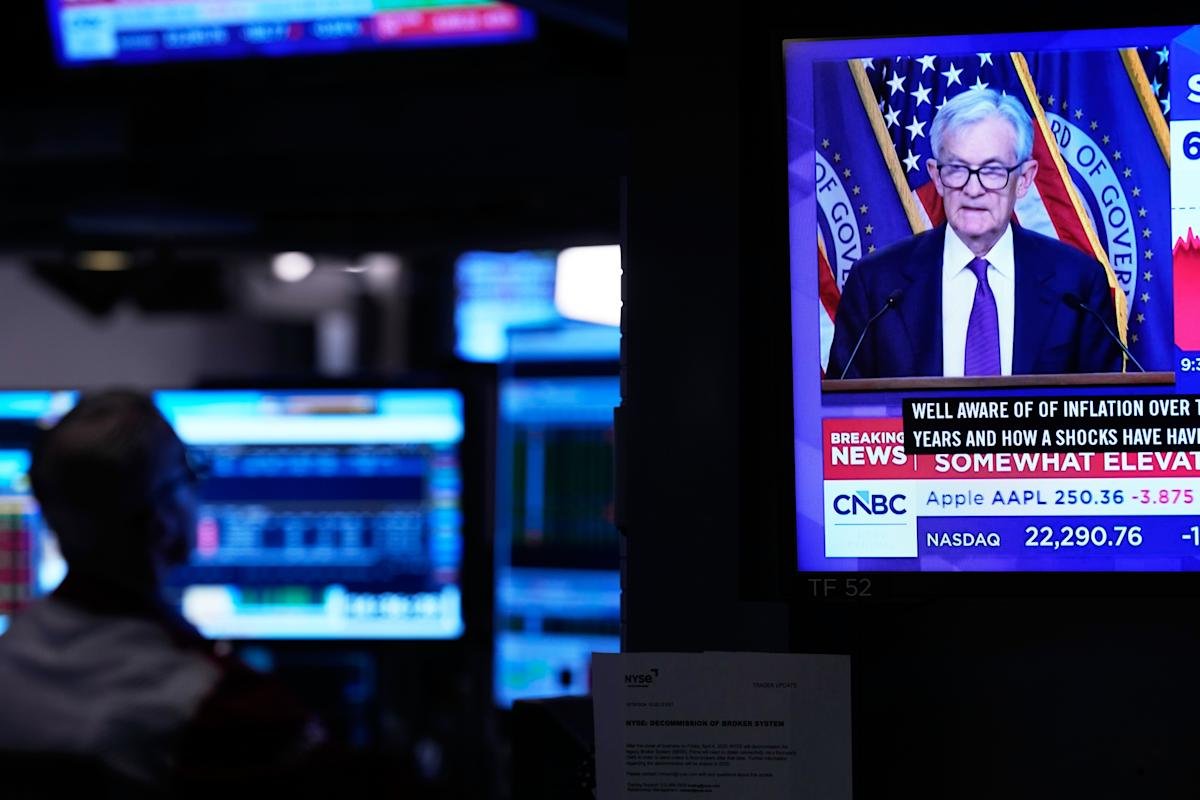
Another warning sign comes from the Treasury market, generally considered a beacon of stability. Zandi praised the appointment of Kevin Warsh to lead the Federal Reserve, but he also has concerns about the institutional buyers who continue to prop up the market.
If these hedge funds were spooked by fears of an unstable US economy, they could all flee at the same time, sending Treasury prices down and interest rates up. That type of scenario would make lending more expensive, making it difficult for borrowers to get mortgages and business loans.
Read next



![i’m-nervous,-too!-[part-2]](https://10xwealthreport.com/wp-content/uploads/2026/03/177042-im-nervous-too-part-2-1568x784.jpg)