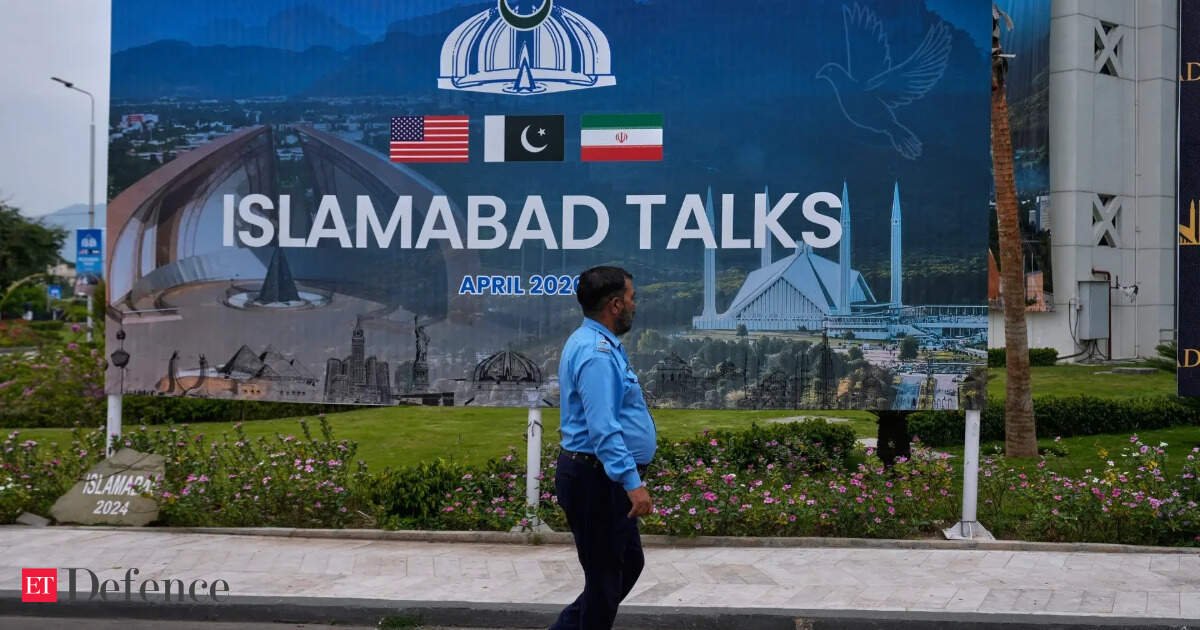
Pakistan’s brief emergence as a diplomatic bridge between the US and Iran has proven as volatile as its stock market surge. As the US-Iran talks mediated by Pakistan failed to yield any result, optimism around ceasefire talks soon gave way to renewed geopolitical anxiety, wiping out investor gains and exposing the fragility of both diplomacy and market sentiment. The sharp fall in Pakistani stocks, the KSE-100 index, on Monday underlined how tightly Pakistan’s fortunes are tied to external developments rather than internal strength. Yet, even as the initial breakthrough faltered, the country has not been pushed out of the equation. Ongoing backchannel efforts suggest Pakistan may still retain a meaningful, if precarious, role in shaping what comes next. It may still have a seat on the table.
A stock rally and diplomacy, both built only on hope
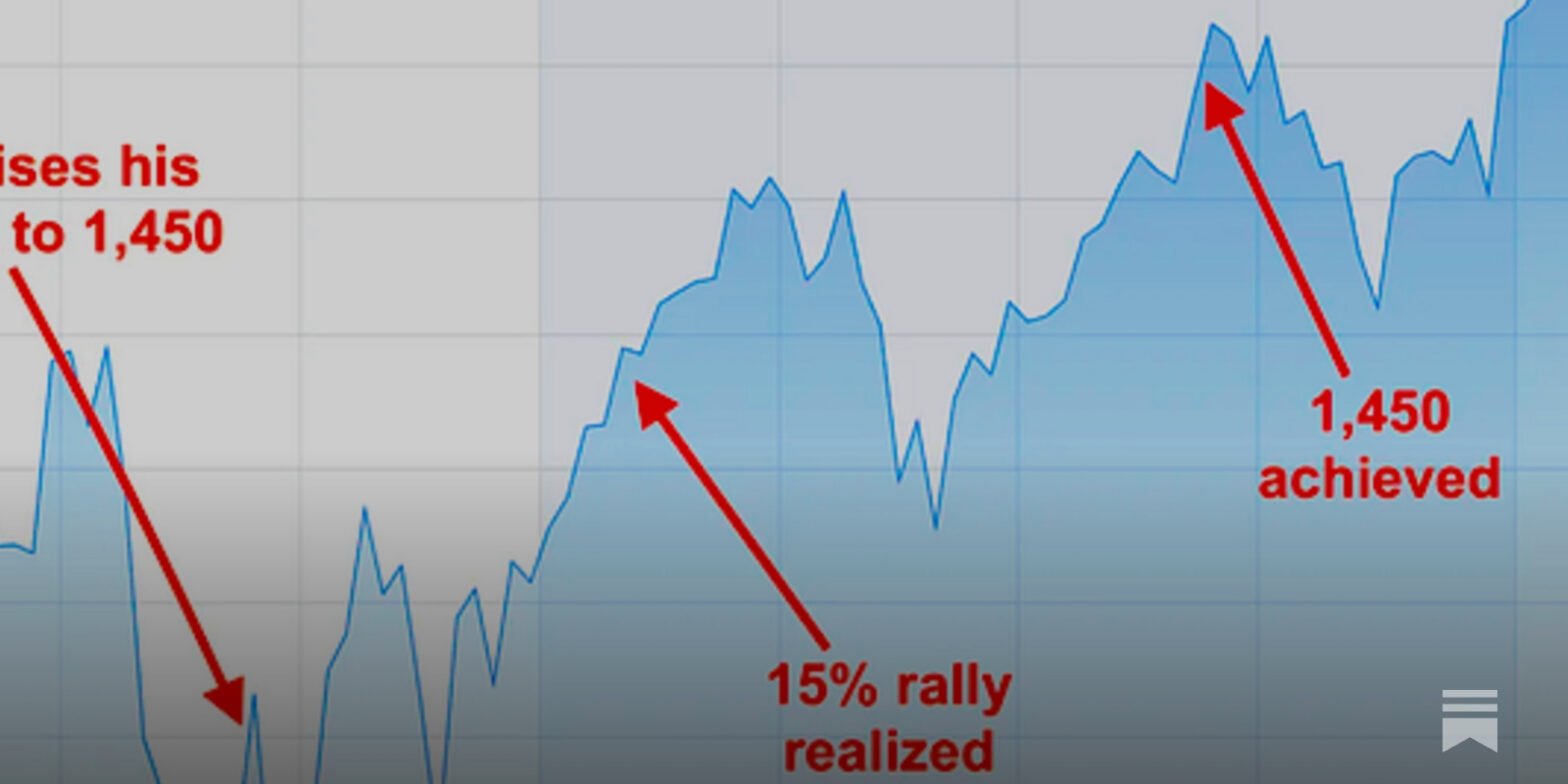
Pakistan’s equity markets had surged dramatically the previous week, buoyed by news of a temporary ceasefire between the US and Iran and the country’s unexpected role as host of high-stakes negotiations. The rally, which added over 12,000 points to the benchmark index, reflected not just optimism about regional stability but also renewed investor confidence tied to IMF-backed reforms and external inflows.
That optimism proved short-lived. As ceasefire talks in Islamabad failed to yield a concrete agreement, sentiment reversed sharply. The KSE-100 index plunged nearly 6,000 points intraday, highlighting the high-beta nature of Pakistan’s markets. The episode reinforced a familiar pattern: rallies driven by external triggers rather than structural economic improvements tend to unwind just as quickly.
The failed talks also highlighted the high-beta nature of Pakistan’s stature — from being a long-time sponsor of terror, currently torn by Baloch insurgency and entangled in an armed conflict with Afghanistan, Pakistan suddenly emerged as a global peacemaker. But that moment faded quickly within days, just as the equity rally did.
Pakistan’s recent market gains are largely tactical, supported by short-term liquidity and IMF discipline rather than deep-rooted economic transformation. Similarly, its sudden diplomatic rise was also based less on its structural strength and more on circumstantial factors such as Trump‘s admiration and utter docility of Pakistani leaders to him.
Also Read | Pakistan stock markets crash: KSE 100 plunges 6,000 points as US-Iran ceasefire talks collapse
Diplomacy’s fleeting spotlight
For a brief moment, Pakistan occupied an unusual position at the center of global diplomacy. Hosting US-Iran talks, with US Vice President JD Vance reportedly engaging Iranian negotiators, elevated Islamabad’s profile in ways not seen in years. Both Iran and the US publicly acknowledged Pakistan’s facilitative role, and today Trump praised the leadership of Prime Minister Shehbaz Sharif and army chief Asim Munir. He said the meeting, which ended without a deal between the two countries to end the Iran war, took place through the “kind and very competent leadership” of Sharif and Field Marshal Munir. “They are very extraordinary men and continuously thank me for saving 30 to 50 million lives in what would have been a horrendous war with India,”
The global recognition offered Pakistan a chance to reshape an international image long dominated by the legacy of the war on terror and the 2011 killing of Osama bin Laden on its soil. Such diplomatic openings are rare opportunities for countries seeking reputational reset.
Yet the absence of a deal exposed the limits of that moment. Without a tangible outcome, the symbolism of hosting talks quickly gave way to the reality of stalled negotiations. Pakistan’s moment under the sun faded almost as quickly as it appeared, mirroring the transient nature of its market rally.
Also Read | Trump warns of elimination if Iranian Navy ships hinder Hormuz ‘blockade’
Strategic relevance beyond mediation
Despite the setback, Pakistan’s importance in the evolving crisis extends beyond its role as a mediator. Its geography alone ensures that it remains deeply exposed to any escalation. Sharing a long border with Iran, Pakistan cannot remain insulated from instability next door. Any prolonged conflict risks spillover effects, from refugee flows to cross-border security concerns.
Energy vulnerability further amplifies the stakes. Pakistan is heavily dependent on oil and gas supplies that transit through the Strait of Hormuz and lacks any significant buffer. Disruptions in this corridor, especially amid the US naval blockade on Iran, could have severe economic consequences. Even the threat of disruption in Hormuz tends to ripple across energy-importing economies, with Pakistan among the most exposed.
Additionally, Pakistan’s defense ties with Saudi Arabia add another layer of complexity. The recent deployment of approximately 13,000 troops and a contingent of fighter jets to the kingdom under a bilateral strategic defense agreement signals a clear alignment. Under the terms of this pact, an attack on one is effectively treated as an attack on both. This not only enhances Pakistan’s strategic relevance to Gulf security but also raises the risk of entanglement should the conflict widen.
The persistence of backchannel diplomacy
While formal negotiations in Islamabad ended without a breakthrough, diplomatic efforts have not ceased. Prime Minister Shehbaz Sharif has indicated that talks are ongoing, even as he addressed his cabinet.
Axios has reported that Pakistani, Egyptian and Turkish mediators will continue talks with the US and Iran in the coming days in an effort to bridge the remaining gaps and reach a deal to end the war, according to a regional source and a U.S. official. The Axios report said all parties still believe a deal is possible. The mediators hope that narrowing the gaps could enable another round of negotiations before the ceasefire expires on April 21.
This is where Pakistan’s role retains significance. Even without a headline-grabbing agreement, the ability to facilitate continued dialogue keeps the country in the diplomatic loop. Backchannel negotiations often lay the groundwork for formal breakthroughs, and all parties reportedly still believe a deal is possible before the ceasefire deadline.
The prospect of another round of talks, potentially again hosted by Pakistan, cannot be ruled out. If realised, it would offer Pakistan a second opportunity to convert symbolic relevance into substantive diplomatic capital.
Pakistan’s recent experience illustrates a broader truth about its position in global affairs. Moments of prominence are often externally driven and inherently fragile, whether in financial markets or diplomacy. The same factors that elevate the country’s importance can just as quickly expose its vulnerabilities. Pakistan is a high-beta market as well as a high-beta nation.