The stock market has been booming since the end of the financial crisis 17 years ago. Aside from the five-week COVID-19 crash in February-March 2020 and the nine-month 2022 bear market, the Dow Jones Industrial Average (DJINDICES: ^DJI), S&P 500 (SNPINDEX: ^GSPC), and Nasdaq Composite (NASDAQINDEX: ^IXIC) have been relatively unstoppable.
Of note, the stock market has performed exceptionally well under President Donald Trump. While 26 of the previous 33 presidential terms have featured gains for the Dow Jones Industrial Average or S&P 500, annualized returns under Trump have been among the best of any president, looking back over a century.
Will AI create the world’s first trillionaire? Our team just released a report on the one little-known company, called an “Indispensable Monopoly” providing the critical technology Nvidia and Intel both need. Continue »

But these outsize gains under Donald Trump have also been accompanied by historic bouts of volatility. The aforementioned COVID-19 crash, in which the S&P 500 lost 34% of its value in 33 calendar days, and his Liberation Day tariff and trade policy announcement in early April 2025 that saw the S&P 500 endure its fifth-steepest two-day percentage decline since 1950, are perfect examples.
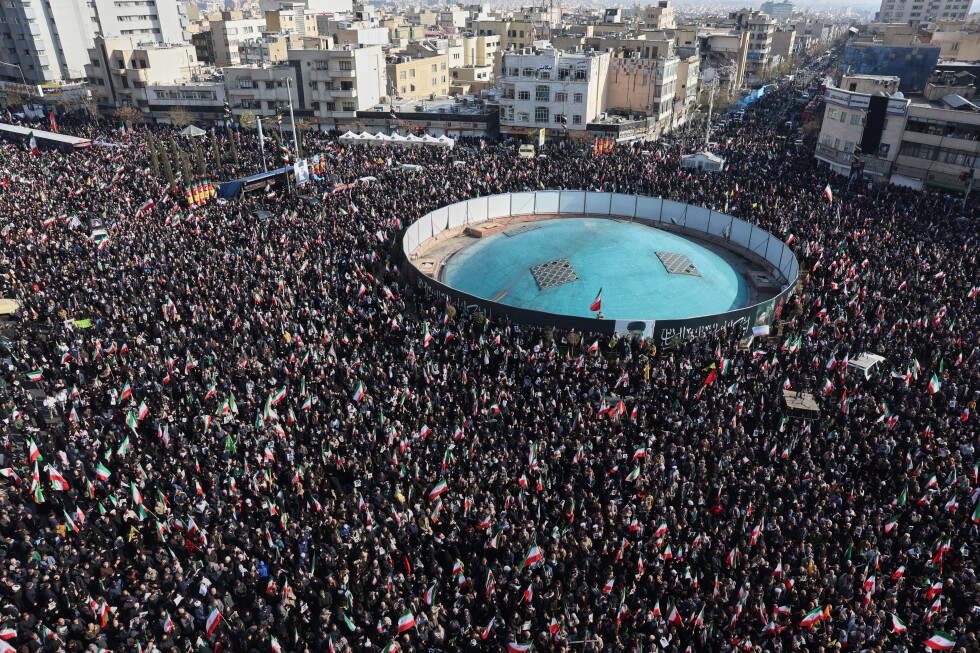
The beginning of the Iran war on Saturday, Feb. 28, is another event under President Trump that’s clearly heightened stock market volatility and put investors on edge. But when examining the stock market objectively and with a wider lens, there’s a much bigger worry for Wall Street — one that carries a $7.8 trillion tag.
Wars are unfortunate events that can cost people their lives and displace families. While the intangible costs of conflict are far greater than any monetary repercussions, the reality is that wars can lead to impacts far from where battles are being waged.
The decision by President Trump and Israel to mount an offensive against Iran can lead to unintended consequences for the U.S. economy and/or the stock market.

Topping the list is the potential for the spot price of crude oil to soar. According to the Energy Information Administration, approximately 20 to 21 million barrels of crude oil and petroleum liquids pass through the Strait of Hormuz daily. Since the attacks began, Iran has largely halted oil exports, thereby putting up to 20% of the world’s daily petroleum needs at risk.
The law of supply and demand states that if a high-demand product, such as oil, decreases in supply, its price would be expected to rise until demand tapers. In simpler terms, the U.S.-Israeli war with Iran is likely to raise per-gallon prices at the gas pump, as well as for households that rely on petroleum-based products for heating.