Stock markets may sour if this week’s US economic data casts doubt on Fed rate cut speculation.
- US retail sales may top forecasts after strong consumer confidence figures
- Markets hope January’s US jobs report will support Fed rate cut speculation
- CPI inflation data may spook traders even as the impact from tariffs fades
Blistering seesaw volatility left stock markets without a convincing lead last week. The bellwether S&P 500 stock index closed with a loss of 0.2% having been down 3.1% and up 0.9% at various points along the way. The tech-tilted Nasdaq 100 fared worse but still managed to trim its loss to 2.1% from as much as 5.6% near the weekly lows.
Defensive price action was also on display across other key markets. US Treasury bonds inched up as rates ticked lower across the yield curve. Crude oil pared earlier gains, retracing 3.5% lower after jumping 7.3% in the prior week. Meanwhile gold prices returned on offense, adding 1.7%. Bitcoin plunged 16.5%. The US dollar tiptoed cautiously higher.
Against this backdrop, here are the key macro waypoints to consider in the days ahead.
US retail sales data
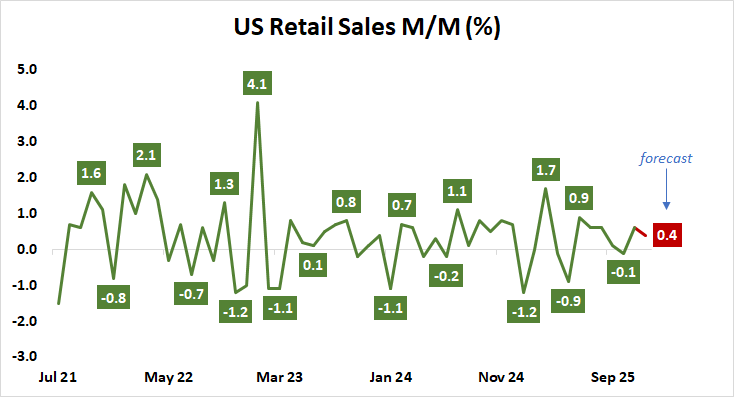
Consumers dialed back spending a bit in December, according to expectations for that month’s retail sales report. It is projected to show that receipts added 0.4%, marking a modest downshift from the 0.6% rise in November. The numbers follow last week’s University of Michigan (UofM) data pointing to consumer confidence at a six-month high.
Private consumption is the dominant driver of the US economy, accounting for nearly 70% of gross domestic product (GDP) growth. If consumers’ seemingly chipper mood translates into stronger sales than expected, the markets may question once again whether the Federal Reserve can cut interest rates as quickly and as much as they want.
Traders are pricing in 55 basis points (bps) in cuts this year, implying two 25bps cuts are firmly on the menu. They are expected in June and September. Fed officials have only signaled one cut for 2026, and Fed Chair Powell has pushed back on dovish speculation. The S&P 500 has been stuck in a choppy range since he chastised markets in October.
US labor market data
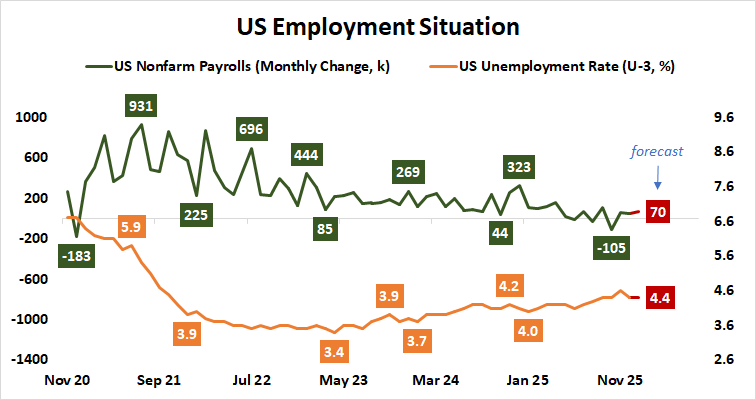
This will set the stage for the belated release of January’s employment report. A rise of 70,000 in nonfarm payrolls is expected, while the unemployment rate is seen holding unchanged at 4.4%. That would amount to a slight pickup in jobs creation from December, which recorded a payrolls rise of 50,000.
A slew of sour labor market indicators spooked investors last week. Separate reports showed that job openings fell more while planned layoffs were larger than anticipated. Meanwhile, the four-week trend in initial jobless claims turned sharply higher, pointing to a steep pickup in applications for benefits.
This seems to have primed the markets for soft results when official jobs data appears. If that proves right and yet consumption still holds up, conflicting forces pitting the Fed’s employment and inflation goals against each other may leave policymakers paralyzed. For the markets, that may look like another disappointing rate cut delay.
US consumer price index (CPI) data
Moreover, it seems plausible that jobs data might yet surprise on the upside. US economic news-flow has mostly outperformed relative to forecasts since the start of the year, according to analytics from Citigroup. That would make for an ominous lead in for January’s CPI inflation figures, due at the end of the week.
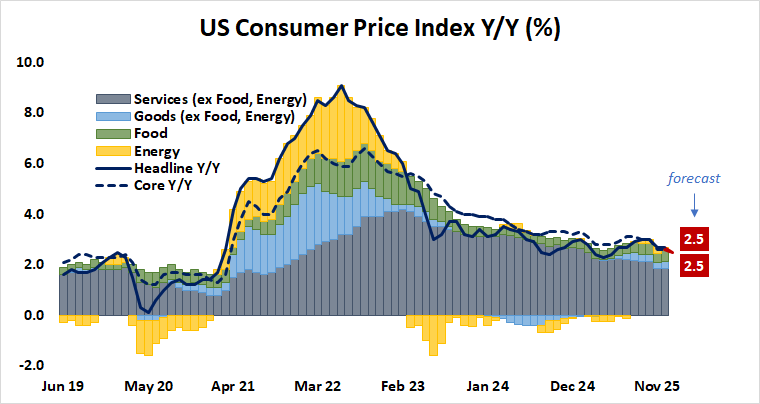
Headline price growth is expected to cool to 2.5% year-on-year, marking an eight-month low. A matching outcome for the core CPI measure excluding volatile food and energy prices – where Fed officials tend to focus – would amount to the slowest increase since March 2021, before the inflationary surge following the COVID-19 pandemic.
The Fed is betting that slower growth in services prices and the fading impact of tariffs on goods inflation calculations will bring their 2% target into view, paving the way for rate cuts. If consumers keep spending despite a limping labor market, the first part may prove wrong even if the second one does not. The markets probably won’t like that.
Ilya Spivak, tastylive head of global macro, has over 15 years of experience in trading strategy, and he specializes in identifying thematic moves in currencies, commodities, interest rates and equities. He hosts Macro Money and co-hosts Overtime, Monday-Thursday. @Ilyaspivak
For live daily programming, market news and commentary, visit tastylive.com or @tastyliveshow on YouTube
Trade with a better broker, open a tastytrade account today. tastylive, Inc. and tastytrade, Inc. are separate but affiliated companies.
Options involve risk and are not suitable for all investors. Please read Characteristics and Risks of Standardized Options before deciding to invest in options.
© copyright 2013 – 2026 tastylive, Inc.